






Definition and Meaning
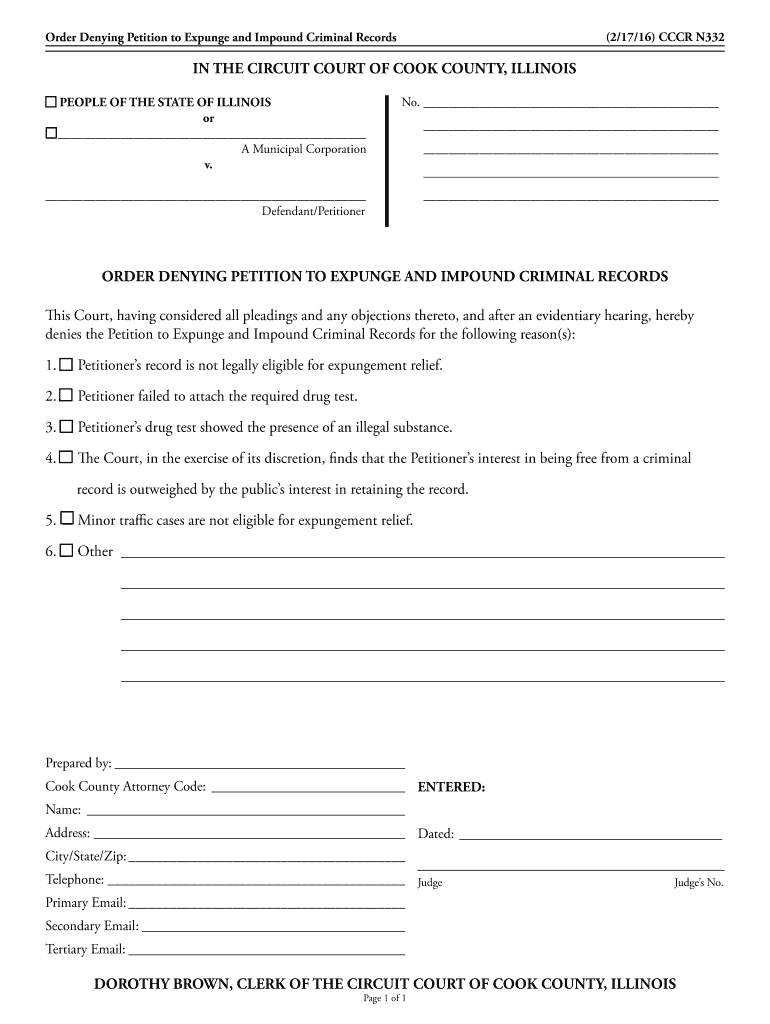
The "Order Denying Petition to Expunge and Impound Criminal Records" is a court-issued document that officially denies a request to erase or conceal criminal records. In legal contexts, "expunge" refers to the process of officially removing a criminal record from public view, effectively erasing it from a person's legal history. On the other hand, "impound" typically involves sealing the records so that they are not accessible without specific permission from the court. This order signifies that the court has decided not to approve the petitioner's request to take these actions.
The implications of receiving such an order are significant, as it means that the individual's criminal records will remain accessible in the public domain, affecting various opportunities such as employment, housing, and more. Understanding the reasons and legal basis for this denial is crucial for anyone navigating the U.S. legal system.
How to Use the Order Denying Petition
To effectively respond to an "Order Denying Petition to Expunge and Impound Criminal Records," it is crucial to follow a structured approach:
-
Review the Order: Thoroughly examine the order for details on why the petition was denied. This information will guide your next steps and decisions.
-
Consult Legal Counsel: Engage with an attorney specializing in criminal defense or expungement cases to understand the legal reasons for the denial and explore possible appeals or revisions.
-
Understand Options: Determine if there are alternative legal steps available to address the issues highlighted in the order.
-
Document Management: Keep a secure and organized record of all related documents, ensuring they are easily accessible for future legal processes.
-
Update Personal Plans: Adjust personal and professional plans to accommodate the impact of the denial on aspects such as employment or travel.
Steps to Complete the Order Denying Petition
While responding to an "Order Denying Petition to Expunge and Impound Criminal Records," ensure you are accurate and detailed:
-
Gather Necessary Information: Collect all pertinent information required for any appeals or further legal action. This includes court documents, previous petition copies, and correspondence with legal representatives.
-
Consult with Legal Advisor: Set up a consultation with a qualified attorney to assist with any paperwork or filings that may be needed for an appeal.
-
Prepare Additional Documentation: If advised to file an appeal, prepare additional documentation that might strengthen your case, such as character references, rehabilitation program completions, or other relevant documents.
-
Submit Appeal: Follow the attorney's guidance to accurately fill out and submit any appeal forms to the court within the specified deadlines.
-
Monitor Progress: Regularly check the status of the appeal and maintain communication with your lawyer and the court.
Key Elements of the Order
In understanding the "Order Denying Petition to Expunge and Impound Criminal Records," several critical components must be acknowledged:
-
Court Details: The issuing court's name, location, and case number.
-
Parties Involved: Names of the petitioner and any opposing parties.
-
Legal Reasoning: Specific reasons provided by the court for denying the petition, which may include procedural errors or failure to meet eligibility criteria.
-
Legal Language: Specialized legal terms and language used within the order that may require explanation by a legal professional.
-
Appeal Information: Instructions or deadlines for appealing the decision, if applicable.
State-Specific Rules
The rules and procedures around the denial of expungement petitions vary significantly across different states. This section offers insight into some of these variations:
-
Illinois: Processes can be complex, with eligibility criteria strictly defined. Understanding the state's exact requirements and deadlines is crucial for petitioners.
-
California: Often requires demonstration of rehabilitation and time elapsed since the sentence completion.
-
Texas: Known for a stringent policy towards expungement, requiring clear justifications and specific eligibility benchmarks for reconsideration requests.
Understanding these nuances is integral for individuals seeking to file an appeal or another petition in the future.
Legal Use of the Order
Receiving the "Order Denying Petition to Expunge and Impound Criminal Records" has serious implications in legal contexts:
-
Employment Checks: The existence of a criminal record can affect job prospects, as employers commonly use background checks.
-
Impact on Rights: Certain civil rights, like voting or owning firearms, may be restricted depending on the nature and severity of the criminal record.
-
Housing Applications: Denials in housing applications may arise due to the presence of a criminal record.
Legal professionals can provide specific advice on how the order affects personal rights and suggest strategic approaches to mitigate impacts.
Importance of Securing Legal Assistance
Legal expertise is vital when dealing with an "Order Denying Petition to Expunge and Impound Criminal Records":
-
Navigating Complex Legal Processes: Attorneys can decipher complicated legal jargon within the order and assist with potential further motions or appeals.
-
Customized Legal Advice: Every case has its unique circumstances, and a legal professional can provide advice tailored to the specific situation.
-
Reevaluation Opportunities: Experienced attorneys may identify aspects where a court decision could be challenged or readdressed.
-
Future Planning: Legal advisors can suggest actions and strategies to best move forward despite the denial of expungement.
Through professional legal guidance, individuals can make informed decisions regarding their criminal records and plan future actions accordingly.
Who Typically Uses the Order
Typically, individuals who receive an "Order Denying Petition to Expunge and Impound Criminal Records" include:
-
Individuals with Prior Convictions: Those seeking to clear their criminal history for personal or professional reasons.
-
Defense Attorneys: Legal professionals who specialize in handling expungement cases and defending clients in the courts.
-
Legal Aid Services: Organizations that support petitioners in navigating the court system and managing their cases.
Understanding the users of the order can elucidate why it is essential and procedures involved within the judicial framework.