
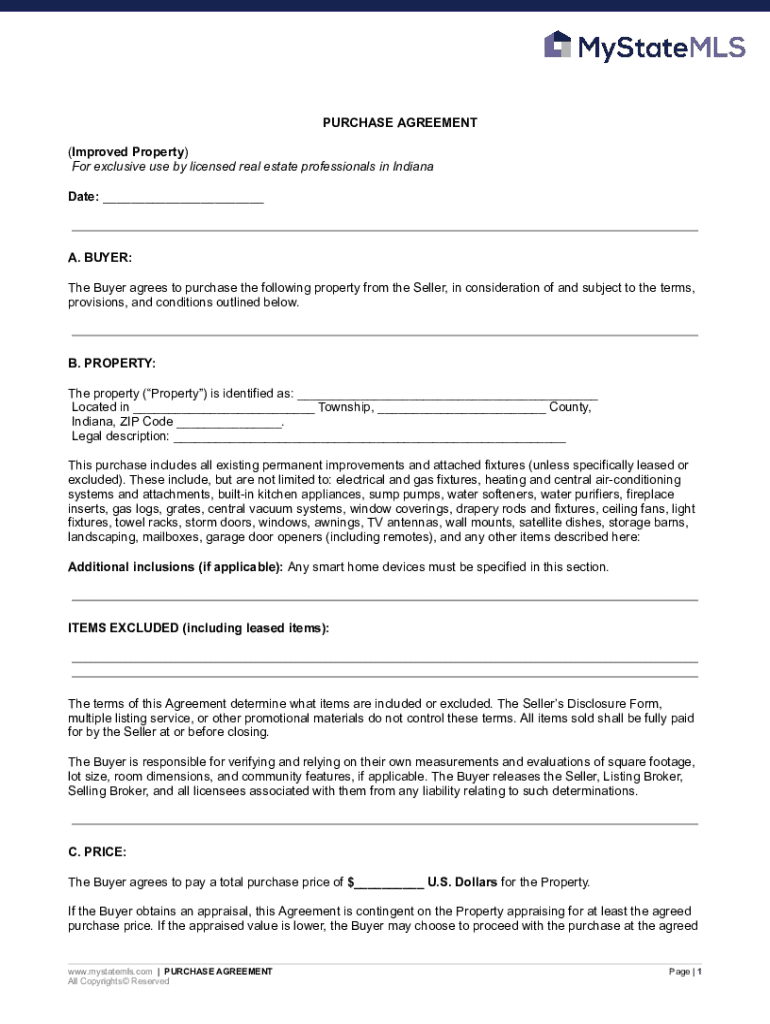







Definition & Purpose of the Indiana Purchase Agreement
The Indiana Purchase Agreement is a legally binding contract used in real estate transactions within the state of Indiana. This document outlines the terms and conditions under which a buyer agrees to purchase a property from a seller. It is crucial for defining the obligations of both parties and ensuring a transparent process. Primarily used by licensed real estate professionals, the agreement includes essential components such as the purchase price, financing terms, property description, and deadlines for inspections and closing.
Key Components of the Purchase Agreement
- Purchase Price: Defines the amount the buyer agrees to pay.
- Property Description: Provides a detailed description of the property.
- Financing Terms: Outlines how the purchase will be funded, whether by cash or mortgage.
- Inspection Contingencies: Sets the conditions under which the buyer can inspect the property.
- Closing Date: Specifies the date by which the transaction must be completed.
Completing the Indiana Purchase Agreement
Completing the Indiana Purchase Agreement involves several critical steps, ensuring a smooth transaction between the buyer and the seller. Each section of the agreement must be filled accurately to avoid misinterpretations or legal disputes.
Step-by-Step Completion Process
- Buyer and Seller Information: Enter the full legal names and contact information.
- Property Details: Include the address and any unique identifiers like parcel numbers.
- Price and Payment: Detail the purchase price and payment schedule.
- Contingencies: Specify any conditions that must be met, such as inspections or financing.
- Signatures: Both parties, along with their real estate agents, must sign the agreement to validate it.
Important Considerations
- Legal Advice: It is advisable for parties to seek legal counsel to understand each provision thoroughly.
- Due Diligence: Buyers should conduct due diligence to verify the property's condition and legal status.
Legal Requirements and Compliance
The Indiana Purchase Agreement must adhere to state-specific laws and regulations to ensure its enforceability. These legal requirements are designed to protect the interests of both parties involved in the real estate transaction.
State-Specific Legalities
- Disclosure Forms: Sellers must provide necessary disclosures about the property's condition.
- Fair Housing Laws: The agreement must comply with state and federal fair housing regulations.
- Property Taxes: Details concerning the division and payment of property taxes should be included.
Consequences of Non-Compliance
Failure to comply with legal standards can result in penalties, including the invalidation of the agreement or legal disputes. Both parties should be aware of these consequences and ensure full legal compliance.
Importance and Benefits of the Indiana Purchase Agreement
The Indiana Purchase Agreement plays a significant role in real estate transactions. Understanding its importance helps in appreciating the protection and clarity it offers to both buyers and sellers.
Advantages of Using an Indiana Purchase Agreement
- Legal Protection: Offers a legal framework for resolving disputes.
- Clarity: Clearly outlines expectations and responsibilities.
- Negotiation Tool: Serves as a basis for negotiating terms between parties.
Practical Scenarios
- Investment Properties: Investors use these agreements to acquire properties for rental purposes.
- First-Time Homebuyers: Provides a structured process for individuals purchasing their first home.
Who Uses the Indiana Purchase Agreement
Understanding the typical users of the Indiana Purchase Agreement helps clarify its broad applications in real estate. Various parties can benefit from this document, highlighting its versatility.
Common Users
- Licensed Real Estate Agents: Facilitate transactions and ensure compliance.
- Property Investors: Use it to acquire investment properties efficiently.
- Homebuyers and Sellers: Protects their interests during the property transfer process.


Scenario-Based Examples
- Real Estate Developers: Utilize it to purchase lands for development projects.
- Private Sellers: Use the purchase agreement for selling properties independently.
Document Management with DocHub
DocHub simplifies managing the Indiana Purchase Agreement through its comprehensive suite of tools. It enhances the document workflow and ensures a secure, efficient process for handling real estate contracts.
Features Beneficial for Real Estate Transactions
- Editing and Annotation: Allows for easy modifications and highlights crucial sections of the agreement.
- Digital Signatures: Facilitates secure, legally binding signatures directly from the platform.
- Collaboration Tools: Enables multiple stakeholders, such as agents and lawyers, to collaborate on the document in real-time.
Use Cases
- Remote Transactions: Perfect for completing transactions remotely with digital signatures.
- Simultaneous Review: Collaborators can review the agreement together, ensuring all parties are aligned.
Security and Privacy with DocHub
Security is paramount when dealing with legal documents like the Indiana Purchase Agreement. DocHub's security features are designed to protect sensitive information during the document lifecycle.
Security Measures
- 256-bit SSL Encryption: Ensures data is secure during transmission and storage.
- Password Protection: Offers additional security by limiting access to authorized users.
- Audit Trails: Tracks document history, providing transparency and accountability throughout the process.
Importance for Real Estate Documents
Maintaining the confidentiality and integrity of the purchase agreement is crucial in protecting the interests of all parties involved. DocHub's robust security protocols support this need effectively.
By incorporating these elements and details, this content aims to provide a comprehensive and valuable guide for users navigating the Indiana Purchase Agreement, making it a well-rounded resource for both real estate professionals and individuals engaged in property transactions.




