



01. Edit your custodian records online
Type text, add images, blackout confidential details, add comments, highlights and more.

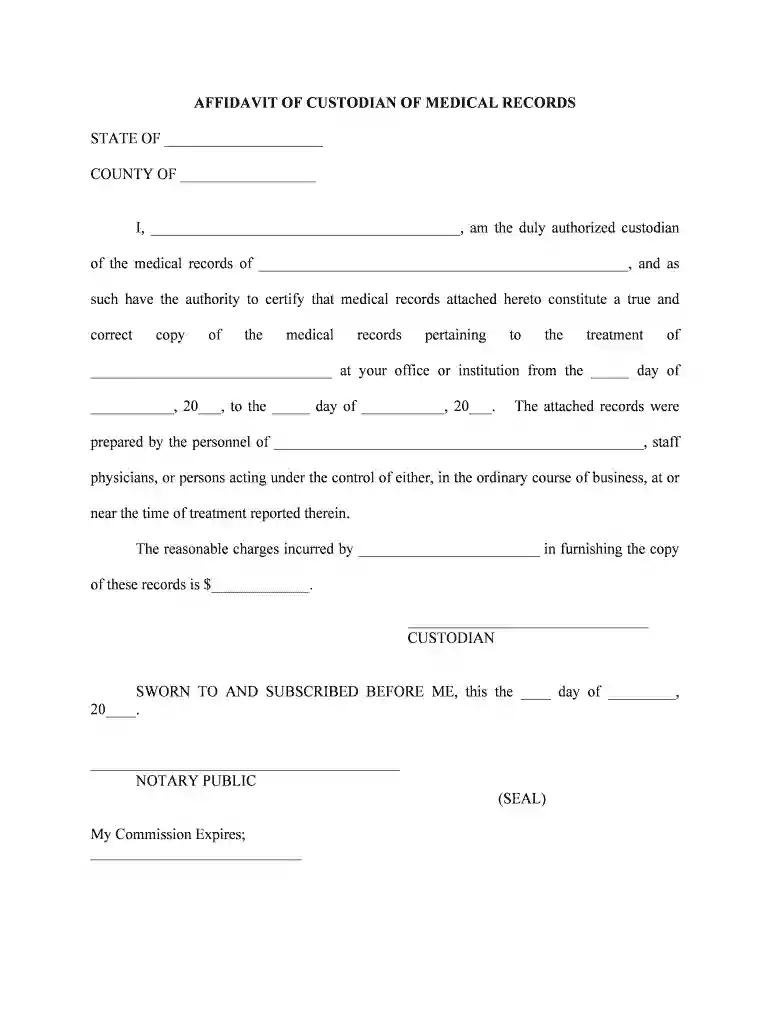
Type text, add images, blackout confidential details, add comments, highlights and more.

Draw your signature, type it, upload its image, or use your mobile device as a signature pad.

Send affidavit custodian via email, link, or fax. You can also download it, export it or print it out.
The Affidavit of Custodian of Medical Records serves as a legal document that certifies the authenticity and accuracy of medical records. It is typically utilized in legal proceedings to verify the information within medical records as being complete and genuine. By attesting to the records' integrity, the custodian acts as a trusted party, ensuring that all parties involved can rely on the submitted documents. This affidavit is crucial in contexts where medical records are used as evidence, such as in personal injury cases or medical malpractice suits.
To use the Affidavit of Custodian of Medical Records effectively, the custodian must prepare and complete the form accurately. This involves providing personal details and information about the records being certified. The custodian needs to ensure that the medical records attached are comprehensive and sorted correctly. Once completed, the affidavit is often submitted as part of a legal filing or during hearings. It is vital to ensure that the affidavit is properly notarized, which adds credibility and legal standing to the document.
Completing the Affidavit of Custodian of Medical Records necessitates the collection and attachment of several important documents. These include:
Each attachment must be an exact copy of the original documents to maintain accuracy and integrity.
The affidavit is commonly used in legal contexts where medical records play a pivotal role. It assures the court that the records are genuine and have been handled according to legal standards. It is frequently part of evidence submissions in medical malpractice claims or disputes involving healthcare services. The legal system relies on these affidavits to trust the integrity of medical data presented in trials or hearings.
Critical components of the Affidavit of Custodian of Medical Records include:
Each of these elements contributes to the affidavit’s role as a verified document, safeguarding its purpose in legal procedures.
While the general format of the affidavit remains consistent, various states may have specific requirements that need addressing. Some states mandate additional documentation, while others might have unique signing procedures or notary rules. It is crucial for custodians to understand these nuances and comply with localized legal standards when drafting the affidavit.
States may impose diverse conditions affecting how the affidavit is structured and utilized. Variations can include differences in:
Understanding these differences is essential for out-of-state legal proceedings, ensuring full compliance and validity of the affidavit across different jurisdictions.
In some cases, different forms or supplemental affidavits may be required depending on the specifics of the case or jurisdiction. Alternatives might include affidavits tailored for specific types of medical practices or institutions. Understanding the right version or alternative form can aid in avoiding unnecessary delays or legal challenges. Legal alternatives might also provide conditional compliance for institutions with specific data handling procedures.
At DocHub, your data security is our priority. We follow HIPAA, SOC2, GDPR, and other standards, so you can work on your documents with confidence.
Jul 9, 2026 Section 11 RTI Act when PIO must notice a third party before disclosure. 7-step procedure, 40-day window, public-interest override under
Jun 20, 2013 an affidavit testifying that the copies are true and correct copies and that the records were made and kept in the regular course of business.
I further DocHub that the produced records are a true copy of ALL the records requested and are kept in the course of regularly conducted activity. Executed onRead more


