






Definition & Meaning
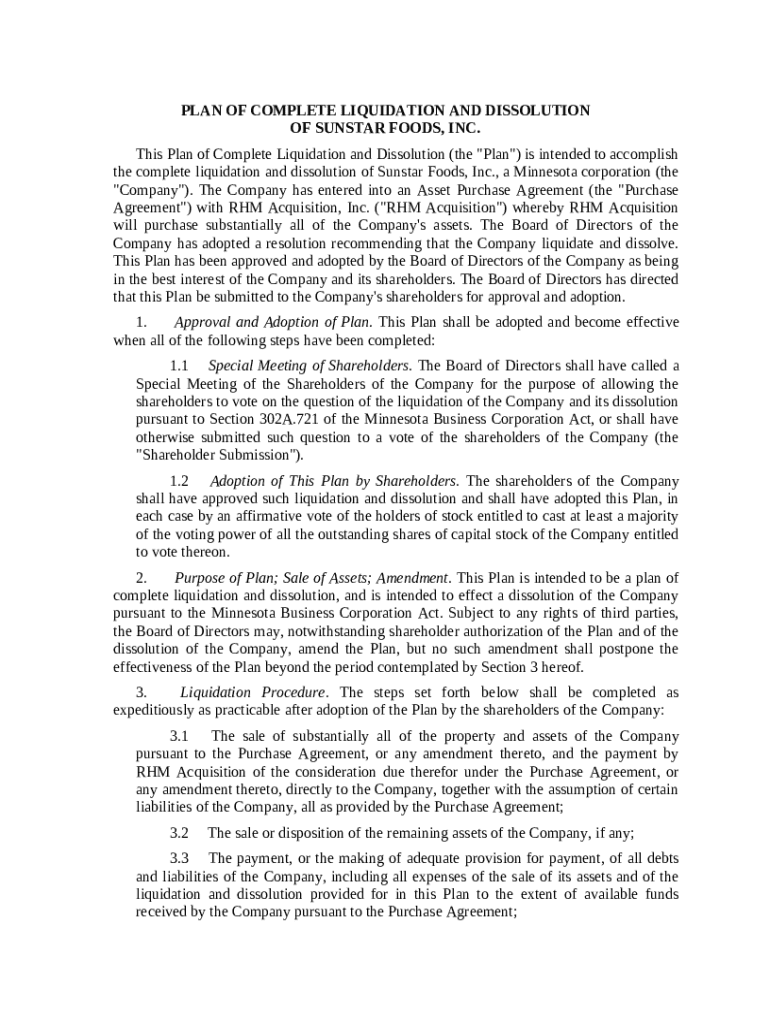
The Plan of Complete Liquidation and Dissolution outlines the process for legally dissolving a corporation and liquidating its assets. This legal document details the steps a corporation must follow to cease operations, wind down business affairs, and distribute remaining assets to creditors and shareholders. Typically, it includes information on the timeline for asset distribution, how liabilities will be addressed, and compliance with applicable legal requirements. This plan ensures that the dissolution process is conducted in an orderly and transparent manner, focusing on equitable distribution and legal compliance.
How to Use the Plan of Complete Liquidation and Dissolution
To use the plan effectively, corporations should adhere to its provisions, which usually align with state and federal regulations. The process generally begins with obtaining approval from the corporation's board of directors and shareholders. The plan then guides companies through asset liquidation, liability settlement, and required notifications to regulatory bodies. It is crucial for corporate officers to ensure all actions align with the plan to avoid legal complications. Specific steps often include holding a shareholder meeting, drafting resolutions, and formally voting on the dissolution.
Example Steps
- Board Approval: The board of directors reviews and approves the initial dissolution plan.
- Shareholder Vote: Conduct a formal meeting where shareholders vote to accept the plan.
- Asset Liquidation: Sell assets according to the terms stipulated in the plan.
- Liability Settlements: Use proceeds to settle outstanding debts.
- Distribution of Remaining Assets: Distribute any remaining assets to shareholders based on their ownership percentages.
Key Elements of the Plan of Complete Liquidation and Dissolution
Several essential elements are common in these plans and include specific details to ensure a smooth process:
- Timeline: A clear schedule for the dissolution process.
- Asset Distribution Plan: Instructions on how assets will be sold or distributed.
- Settlement of Liabilities: Outline on how debts will be paid off.
- Tax Filings: Reminders of required tax documents and filings.
- Regulatory Compliance: Ensuring all legal and procedural obligations are met.
Who Typically Uses the Plan of Complete Liquidation and Dissolution
Corporations of all sizes may require a Plan of Complete Liquidation and Dissolution when deciding to cease operations. This includes:
- Publicly Traded Companies: Often require comprehensive plans due to complex regulatory and shareholder structures.
- Private Corporations: Utilize the plan to ensure equitable treatment of all shareholders.
- Non-Profit Organizations: May also implement similar procedures adapted to their unique structural needs.


Important Terms Related to Plan of Complete Liquidation and Dissolution
Understanding the terminology associated with liquidation and dissolution can aid in comprehending the plan:
- Dissolution: The legal termination of a corporation’s existence.
- Liquidation: The process of converting assets into cash or other forms to settle liabilities.
- Creditors: Individuals or organizations to whom the corporation owes money.
- Equitable Distribution: Fair division of remaining assets among shareholders.
Legal Use of the Plan of Complete Liquidation and Dissolution
Legal adherence is vital to the effectiveness of the plan. It serves as a formal document to satisfy statutory requirements for dissolution and liquidation under state laws. Compliance with federal regulations, such as tax codes and securities laws, is also paramount. The legal framework ensures that all actions taken during dissolution protect stakeholders’ rights and satisfy all procedural mandates.
Examples of Legal Applications
- State Filings: Notify appropriate state agencies of the dissolution.
- Federal Notices: Inform the IRS of changes in the corporation’s status.
- Creditor Notices: Officially notifying creditors of asset liquidation and settlements.
State-Specific Rules for the Plan of Complete Liquidation and Dissolution
Rules governing liquidation and dissolution can vary significantly across states, requiring corporations to tailor their plans to meet specific state laws:
- California: Often involves detailed procedural requirements and numerous state agency notifications.
- Delaware: Known for corporate-friendly regulations but still requires strict adherence to procedural standards.
- Texas: Emphasizes the timely settlement of any state tax liabilities before dissolution is complete.
Filing Deadlines / Important Dates
Timeliness is critical in liquidation and dissolution processes, with several key deadlines often stipulated within the plan:
- Notice to Creditors: Usually requires timely notification within a specific period.
- Tax Filings: Essential tax documents must be filed to designated deadlines to avoid penalties.
- Final Distribution: Completing the distribution of assets by the plan’s end date ensures legal compliance.
Required Documents
To facilitate the dissolution process, certain documents are generally required:
- Articles of Dissolution: Official document filed with the state to legally dissolve the corporation.
- Resolution of Dissolution: Official documentation from board and shareholder meetings approving the liquidation process.
- Final Tax Returns: Submission of all pertinent tax documents to federal and state authorities.
IRS Guidelines
The Internal Revenue Service provides specific guidelines that must be followed during liquidation, which include:
- Tax Reporting: Requirement to report final earnings and distributions in the corporation's final tax filings.
- Asset Valuation: Accurate valuation of assets upon liquidation.
- Employee Taxes: Handling final payroll and related tax obligations correctly.