



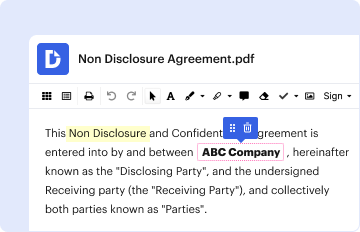
01. Edit your form online
Type text, add images, blackout confidential details, add comments, highlights and more.

Type text, add images, blackout confidential details, add comments, highlights and more.

Draw your signature, type it, upload its image, or use your mobile device as a signature pad.

Send it via email, link, or fax. You can also download it, export it or print it out.
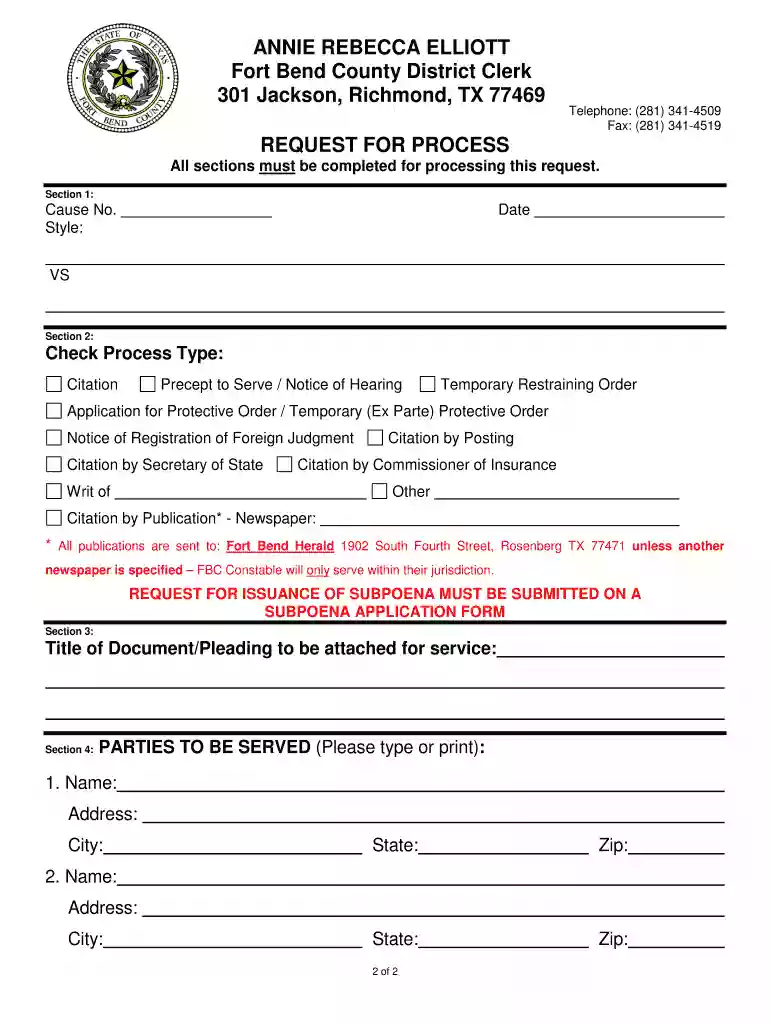
The "Texas Request for Process" is a formal document primarily used in legal contexts within the state of Texas. It serves as a formal request to initiate the issuance of legal processes related to court cases, such as summonses, subpoenas, writs, or other legal notifications. This document is crucial for ensuring that all parties involved in a legal proceeding are formally notified and can respond or appear in court as required. Understanding the specifics of this request form is essential for those involved in legal cases, ensuring appropriate compliance with Texas state laws.
The "Texas Request for Process" plays a critical role in the legal process by ensuring due process is followed. It guarantees that all parties are fairly informed about their required appearance, obligations, or duties dictated by the court. By formally issuing process requests, legal practitioners uphold the court's authority and facilitate a structured legal environment where cases are handled procedurally.
To obtain the "Texas Request for Process," individuals or legal representatives must typically access the form from the district clerk's office relevant to their specific jurisdiction, such as Fort Bend County. Depending on the county, the request form might be available online for download. Alternatively, visiting the district clerk’s office in person can provide access to physical copies of the form. Ensuring you have the correct form version is important, as variations might exist based on local regulations or updates.
Filling out the "Texas Request for Process" requires careful attention to detail to avoid delays or errors. Below are step-by-step instructions:
The legal application of the "Texas Request for Process" aligns with procedural rules governing the notification and service of legal documents within Texas. This form is used to request official court actions like serving legal papers, notifying involved parties, and ensuring procedural compliance. Its use ensures that legal actions are communicated effectively and timely, upholding the principles of fairness and due process.
The primary users of the "Texas Request for Process" include lawyers, paralegals, court officials, and individuals involved in legal proceedings. Legal practitioners frequently use these forms to facilitate court proceedings on behalf of their clients, ensuring that all necessary legal notices are issued according to state guidelines.


Texas maintains specific rules governing the use and processing of the "Texas Request for Process." These rules delineate the procedures for completing, submitting, and following up on requests within the state’s judicial framework. Adherence to these rules ensures that the process request is valid and enforceable.
When preparing a "Texas Request for Process," several essential components must be included to ensure it is processed correctly:
At DocHub, your data security is our priority. We follow HIPAA, SOC2, GDPR, and other standards, so you can work on your documents with confidence.
Feb 7, 2025 Generally, service of process needs to occur by handing the paperwork directly to the person being served. However, if the person refuses toRead more
REQUEST FOR PROCESS. Telephone: (281) 341-4509. Fax Please Note: Our office will use the e-Service email address registered with the Texas State Bar.Read more


