







Definition and Meaning of Drug and Alcohol Test Result Form
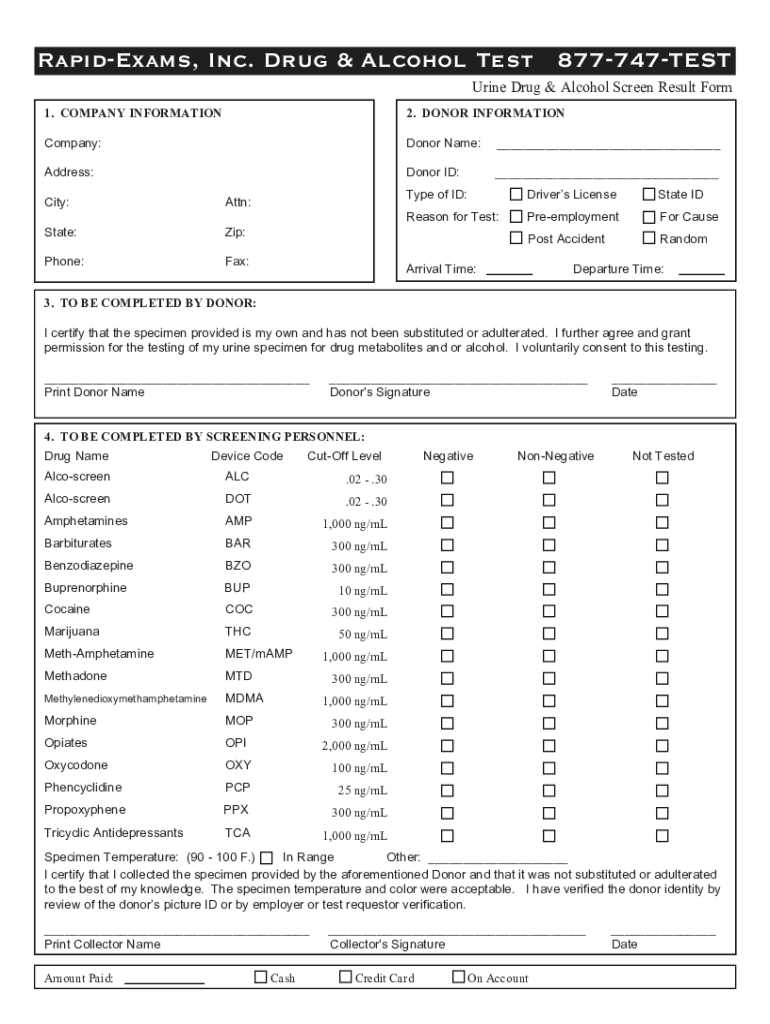
A Drug and Alcohol Test Result Form is a standardized document used to record the results of drug and alcohol screenings. These forms are typically used by employers, medical professionals, and testing agencies to ensure clarity and accuracy when documenting testing outcomes. The form captures essential data, such as the name of the individual being tested, test date, type of test performed, and the resulting findings. This documentation is crucial for maintaining records that may be needed for compliance with company policies or regulatory requirements.
Components of the Form
- Personal Information: Includes the test subject’s name, identification number, and contact details.
- Test Details: Specifies the type of test conducted (e.g., urine, blood, breathalyzer), the date and time, and the testing agency’s information.
- Results: Displays the outcome of each substance tested for, indicating whether it was positive, negative, or inconclusive.
- Certifications and Signatures: Often includes areas for certifying the accuracy of the information by the tester and, in some cases, the individual tested.
Steps to Complete the Drug and Alcohol Test Result Form
Completing a Drug and Alcohol Test Result Form requires attention to detail to ensure all information is accurate and complete. Below are the general steps typically involved in filling out this form.
- Gather Personal Information: Collect necessary details for the individual being tested, ensuring to verify any identification numbers or contact information.
- Document Test Details: Record the date, time, and nature of the test. It’s essential to include the type of substances tested for and the method used (e.g., saliva, hair).
- Input Results: Clearly indicate the results for each substance. Options typically include positive, negative, and inconclusive.
- Review for Accuracy: Ensure all information is correct and verify any discrepancies that may need to be addressed.
- Sign and Certify: The tester needs to sign and certify the form, indicating that the results have been accurately recorded.
Common Mistakes to Avoid
- Mixing up test result indicators (e.g., recording a negative result as positive).
- Omitting essential personal information, leading to potential identification issues.
- Forgetting to sign the form, which may invalidate the results.
How to Use the Drug and Alcohol Test Result Form
The Drug and Alcohol Test Result Form is of significant use in various settings, including workplaces, medical facilities, and law enforcement. Here’s how these forms facilitate different contexts:
Workplace Use
- Random Testing: Employers use these forms to document results of random drug tests to comply with workplace policies or federal regulations.
- Post-Incident Testing: After incidents or accidents at work, companies conduct tests documented using these forms to determine substance use involvement.
Medical and Clinical Applications
- Health Assessments: Clinics incorporate these forms when conducting comprehensive health assessments that include drug and alcohol screenings.
- Rehabilitation Monitoring: These forms assist in tracking progress and ensuring adherence to treatment plans in rehab programs.
Real-World Example
A trucking company routinely uses drug and alcohol testing forms to maintain compliance with Department of Transportation regulations, safeguarding both their drivers and public safety.
Legal Use of the Drug and Alcohol Test Result Form
The legal implications tied to the Drug and Alcohol Test Result Form highlight its critical role in regulatory compliance and evidence-gathering processes.
Compliance Guidelines
- Employment Law: Certain industries, like transportation, have federal mandates requiring regular testing and proper documentation using these forms.
- Privacy Regulations: Forms must be handled in accordance with privacy laws, ensuring that sensitive information is securely stored and only accessible to authorized individuals.
Legal Scenarios
- Dispute Resolution: Forms can be critical in resolving disputes related to disciplinary actions or employment terminations tied to substance use.
- Evidence in Legal Proceedings: In cases where substance use is a factor, these forms may serve as evidence in administrative or legal proceedings.
Key Elements of the Drug and Alcohol Test Result Form
The form’s detailed structure allows for versatility, accuracy, and compliance with legal standards. Here are the key elements you should be aware of:
Core Sections
- Identification Area: Includes the individual’s full name, date of birth, and identification number.
- Test Specifications: Documents specific substances tested, methodologies employed, and rationale for test selection.
- Result Interpretation Guidelines: Offers reference values or descriptions helping interpret results effectively.
Enhancements for Clarity
- Comments Section: Allows testers to note any extraordinary circumstances or observations during the testing procedure.
- Barcode/QR Sections: Some forms integrate scannable codes to streamline digital record-keeping and integration with company systems.
Who Typically Uses the Drug and Alcohol Test Result Form
Understanding who uses these forms can provide insights into their application and importance across sectors.


Industries and Professionals
- Human Resources Personnel: Crucial for HR teams managing employee records, ensuring compliance with workplace safety regulations.
- Medical Professionals: Used in clinical settings for patient assessments or ongoing treatment plans.
- Legal Authorities: Utilized by law enforcement and legal teams for substantiating claims or evidence in legal proceedings.
State-Specific Rules for the Drug and Alcohol Test Result Form
While the form itself is often standardized, variations in application can occur depending on state-specific legislation.
Regulatory Variations
- Testing Frequency and Conditions: Some states mandate specific conditions under which testing must occur, and these conditions should be noted on the form.
- Data Protection Requirements: Differences in how results must be stored and shared can impact form completion and submission procedures.
Considerations
Professionals using the form must be aware of state laws affecting drug and alcohol testing protocols, particularly regarding privacy and consent requirements.
By maintaining comprehensive knowledge of the Drug and Alcohol Test Result Form, individuals and organizations can ensure accurate documentation, compliance with legal standards, and effective data management for a range of purposes.




