







Definition & Meaning
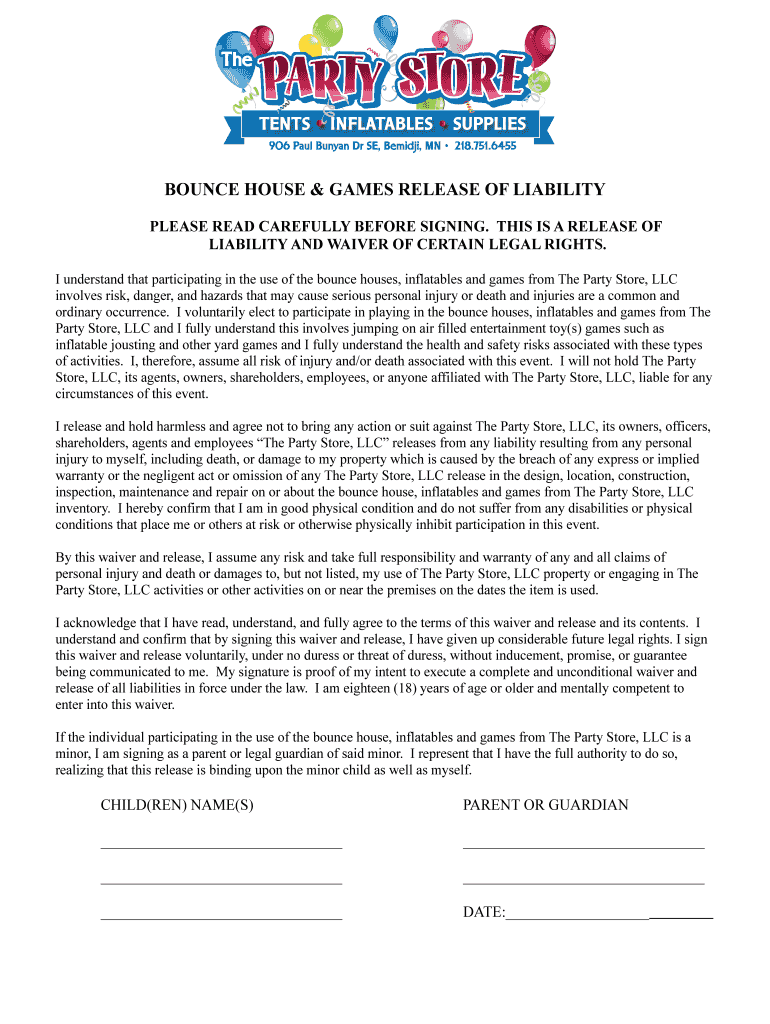
The Bounce House Liability Waiver is a legal document that releases the provider of a bounce house or inflatable play structure from liability in the event of injury or damage during its use. This waiver is designed to protect businesses that rent out inflatable equipment by transferring the risk to the user. It typically includes terms that notify participants about the potential risks involved in using the equipment and obtains their consent to assume these risks. By signing the waiver, the participant agrees not to hold the provider legally responsible for any accidents or injuries that may occur.
How to Use the Bounce House Liability Waiver
Using the Bounce House Liability Waiver involves several key steps to ensure it is correctly executed and legally binding. Businesses must present the waiver to participants or guardians before using the equipment. The waiver should be read thoroughly, ensuring that the signer understands all terms and conditions. Proper completion requires the participant to print their name, provide a signature, and list any minors they are responsible for who will also use the bounce house. It is advisable for businesses to keep copies of the signed waivers for their records as evidence of compliance and due diligence.
Steps to Complete the Bounce House Liability Waiver
- Read the Waiver Completely: Participants should read every section of the waiver to understand the implications and terms they are agreeing to.
- Fill in Required Information: This includes the participant’s name, address, phone number, and any additional required details such as the event location or date.
- List Minors: If applicable, include names of any minors who will be using the bounce house under the participant’s supervision.
- Sign and Date: The participant must sign and date the document to acknowledge their acceptance of the terms. If the participant is underage, a parent or legal guardian must sign on their behalf.
- Return to Provider: Once completed, the waiver should be returned to the business or party providing the bounce house for validation.
Key Elements of the Bounce House Liability Waiver
The Bounce House Liability Waiver should include several critical elements to ensure its legal effectiveness:
- Assumption of Risk: A statement acknowledging the inherent risks associated with using the equipment.
- Release of Liability: A clause releasing the provider from legal accountability for injuries or damages.
- Participant Acknowledgment: Confirmation that the participant has read and understood the document.
- Signatory Details: Spaces for the participant’s name, signature, date, and information of minors under their care.
Legal Use of the Bounce House Liability Waiver
The Bounce House Liability Waiver is used legally to limit a business's exposure to lawsuits related to personal injury during the use of a bounce house. It must comply with state-specific legal requirements to be enforceable. Effective waivers should be clearly written in plain language, free of ambiguity, and signed voluntarily. Businesses are encouraged to consult legal professionals when drafting or modifying the waiver to ensure that it adheres to local laws and fully protects their interests.
Who Typically Uses the Bounce House Liability Waiver
Typically, businesses that rent out inflatable play structures such as bounce houses, slides, or obstacle courses use liability waivers. Clients or event organizers who rent these structures for parties, fairs, or festivals are also common users. Additionally, schools or community centers that include inflatable equipment as part of their recreational activities might employ these waivers to mitigate legal risks.


Important Terms Related to Bounce House Liability Waiver
- Indemnity: A security or protection against a loss or other financial burden.
- Negligence: Failure to exercise appropriate and/or ethical care expected to be exercised amongst specified circumstances.
- Waiver: The voluntary relinquishment or surrender of some known right or privilege.
- Assumption of Risk: Accepting the possibility of injury and understanding the nature of the activity.
State-Specific Rules for the Bounce House Liability Waiver
State-specific rules can affect the enforceability of a Bounce House Liability Waiver. Certain states may impose restrictions or require particular language within the waiver to guard against deceptive practices. For instance, some states do not allow waivers to cover gross negligence. It's crucial for businesses to understand and comply with these regional nuances when drafting their waivers to ensure validity and legal protection across different jurisdictions.




