







Definition & Meaning
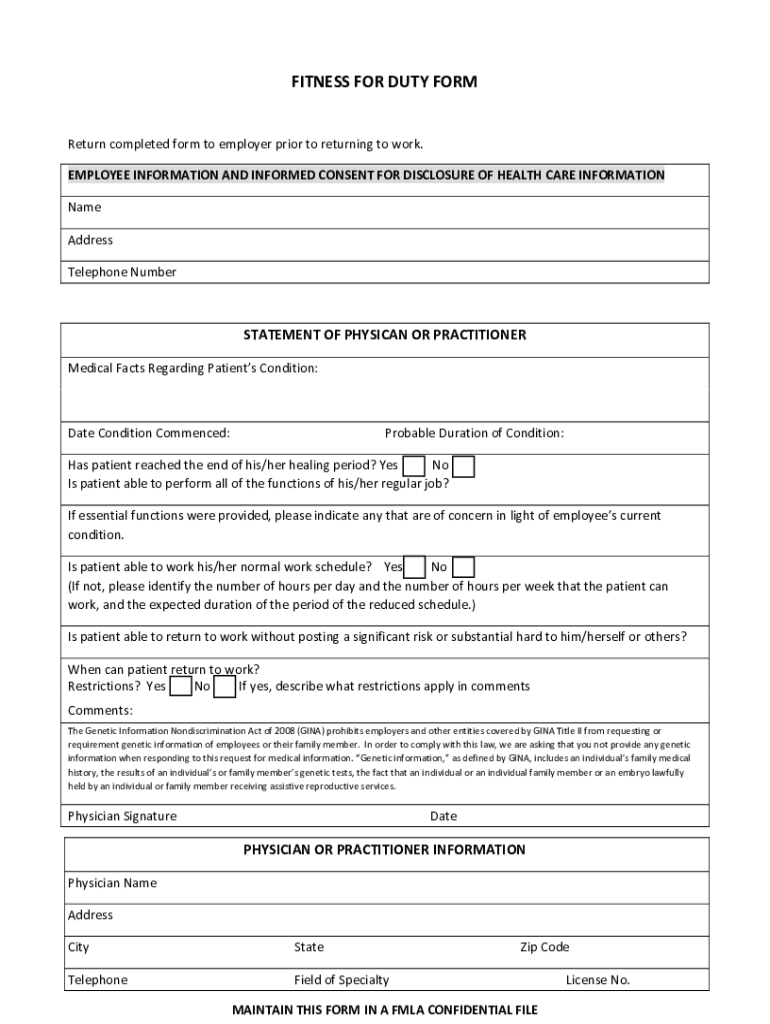
The Fitness for Duty Form is a critical document used by employers to assess an employee's physical and mental capability to perform essential job duties safely. Typically, it is required after a medical leave, accident, or illness, to confirm that the individual can re-engage with workplace responsibilities without risk to themselves or others. This form often forms part of an organization's safety and health policy, ensuring compliance with workplace regulations and promoting a safe working environment.
Key Components of the Form
- Employee Information: This section includes basic details such as the employee's name, contact information, and position within the company.
- Physician's Statement: A medical professional must complete this part, providing essential information regarding the employee’s medical condition and the ability to perform job duties. It includes:
- Date and nature of the medical condition.
- Treatment details and recovery prognosis.
- Specific job functions the employee can or cannot perform.
- Consent for Information Release: Employees must authorize the release of medical information to their employer, ensuring privacy compliance.
How to Use the Fitness for Duty Form
Using the Fitness for Duty Form effectively involves several steps to ensure it fulfills its purpose:
- Determine Necessity: Assess when the form is needed, typically after medical leave or a health incident.
- Engage a Healthcare Professional: The form should be completed by a licensed physician who understands the employee's health and job requirements.
- Review and Evaluate: Upon receiving the completed form, the employer should review the information to determine if the employee can safely return to work or if accommodations are necessary.
Practical Examples
- If an employee returns from a major surgery, the form provides a structured way to assess their readiness without breach of privacy.
- During the COVID-19 pandemic, many organizations used similar forms to determine if employees were safe to return to work.
Steps to Complete the Fitness for Duty Form
Completing a Fitness for Duty Form requires careful attention to detail:
- Fill Out Employee Information: The employee or HR representative should complete personal details and job title.
- Obtain Medical Assessment: The employee’s healthcare provider must fill in the sections regarding medical history and the current health status.
- Authorization and Consent: Ensure the employee signs the form to allow the sharing of their health information.
- Review and Submit: The completed form should be reviewed by both the employer and employee before submission to ensure accuracy.
Detailed Breakdown
- Medical Facts: The physician should give a thorough account of the patient’s condition, outlining any functional limitations.
- Functional Assessment: Must include a clear statement as to whether the employee can perform their job duties.
- Job Accommodation: Recommendations for necessary workplace adjustments should be considered and documented.
Who Typically Uses the Fitness for Duty Form
The Fitness for Duty Form is primarily used by:
- Employers: Especially in industries with physical labor or health risks, such as construction or healthcare.
- HR Professionals: To manage employee records and ensure workplace safety.
- Healthcare Providers: To provide a formal medical opinion on an employee’s ability regarding work tasks.


Industries with High Utilization
- Healthcare: Ensuring nurses or doctors are healthy to perform their duties.
- Manufacturing and Construction: Where physical capability is crucial for safety.
- Transport and Logistics: For drivers or pilots where health impacts safety directly.
Legal Use of the Fitness for Duty Form
Legally, the Fitness for Duty Form is a tool to balance workplace safety and employee rights. It is essential for:
- Compliance with ADA: Ensuring accommodations align with the Americans with Disabilities Act.
- Protection of Employee Privacy: Medical details should be handled per HIPAA regulations.
- Prevention of Workplace Incidents: Confirming employees are fit to avoid accidents or injuries.
Considerations for Employers
- Consent Requirements: Must have explicit consent from employees.
- Clear Communication: Ensure employees understand why and how the form is used.
Important Terms Related to Fitness for Duty Form
Understanding terminology within the form can lead to accurate completion and interpretation:
- Condition Commencement: The date when a medical condition began.
- Probable Duration: Expected recovery period provided by the physician.
- Healing Period: Time expected for full recovery.
Examples of Terms in Context
- Light Duty: A term indicating modifications to regular duties based on medical advice.
- Functional Capacity: The employee’s ability to perform job tasks.
Key Elements of the Fitness for Duty Form
The form is crafted to cover all essential areas of a medical evaluation for workplace purposes:
- Detailed Medical Information: Clarity on the employee’s condition and limitations.
- Workplace Accommodations: Suggestions for adaptations or adjustments required.
- Employee and Employer Agreement: Sign-off from both parties to acknowledge and adhere to recommendations.
Example Forms
- Standard vs. Customized: Some organizations may have specialized forms tailored to specific roles or environments.
- Manual vs. Digital Forms: Depending on company resources and policies, forms can be either printed or filled online for ease of access.
Examples of Using the Fitness for Duty Form
Examples provide clarity in diverse situations:
- Post-Surgery Assessment: Ensuring an employee who underwent surgery can safely return.
- Chronic Illness Management: Ongoing management for conditions like diabetes or asthma to avoid work disruptions.
- Injury Recovery: Assessing an employee’s return after a fracture or strain, focusing on mobility and strength requirements.
Practical Scenario
- Tom, a Construction Worker: Post-knee surgery, Tom’s form confirms his ability to work with restrictions, such as avoiding climbing or heavy lifting. His employer uses the information to reassign him temporarily to a less physically demanding role until full recovery.




