




Definition and Meaning of California Statement of Information
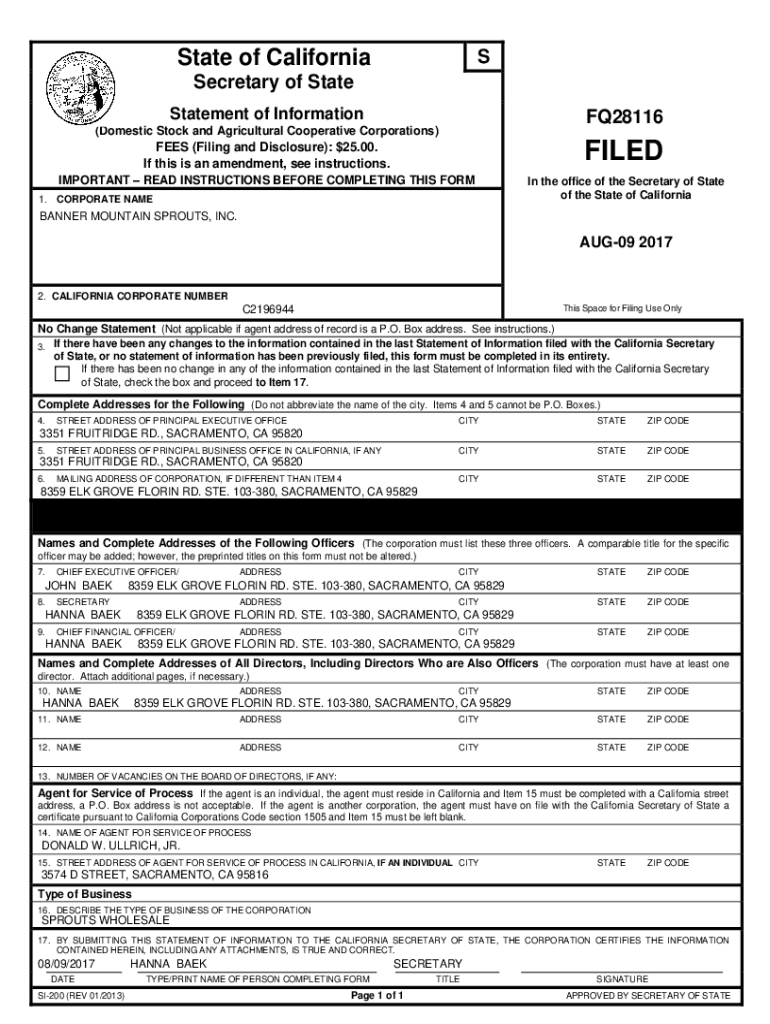
The California Statement of Information is a mandatory disclosure document that businesses registered in California are required to file with the Secretary of State. This document provides essential information about the business, such as the address, officers, directors, and agent for service of process. The primary purpose is to maintain transparency and keep the state's records up-to-date with the current operational details of businesses operating within California. Corporations, limited liability companies (LLCs), and other business entities must complete this form to comply with state regulations.
Importance of Filing the California Statement of Information
Filing the California Statement of Information is crucial for various reasons. Firstly, it ensures that a business remains in good standing with the state, providing legitimacy and enabling it to continue operations without legal hindrances. Secondly, accurate and timely filing helps protect a business entity from administrative penalties or suspension. It also plays a role in public transparency, allowing stakeholders and business partners to access updated company information.
Steps to Complete the California Statement of Information
-
Gather Required Information: Collect essential details including the entity name, Secretary of State entity number, complete address for the principal executive office, and the name and address of the agent for service of process.
-
Identify Officers and Directors: For corporations, list all current officers and directors along with their complete addresses. LLCs need to provide information about managers and members.
-
Complete the Form: Use the official form provided by the California Secretary of State, ensuring all fields are filled accurately.
-
Choose the Method of Submission: Decide whether to file online, by mail, or in person. Online submission is often faster and offers immediate confirmation.
-
Pay the Required Fee: A filing fee, usually $25, is associated with submitting the form. Be sure to include payment if filing by mail.
-
Verify and Submit: Double-check all entries for accuracy and completeness before submission in your chosen method.
Who Typically Uses the California Statement of Information
The primary users of the California Statement of Information include business owners, corporate executives, registered agents, and legal advisors. It's a form used by various types of business entities, including domestic stock corporations, agricultural cooperatives, and LLCs, to report key organizational details to the state. Legal firms and compliance officers also frequently engage with this document to ensure that all business filings are in order.


Key Elements of the California Statement of Information
- Entity Information: Includes the legal name and identification number of the entity.
- Business Address: The primary business location and mailing address.
- Officers or Members: Names and addresses of all significant company personnel.
- Agent for Service of Process: Designated individual or entity authorized to receive legal notices or documentation.
These elements are designed to capture the complete and most up-to-date picture of the business structure and its operations.
Legal Use of the California Statement of Information
The legal use of the California Statement of Information is primarily for registration and compliance purposes within the state. It is a critical document for ensuring that a business entity is recognized as legitimate and operational under California law. The information provided can also be used in legal proceedings or official business verifications when necessary.
Filing Deadlines and Important Dates
Corporations are required to file the Statement of Information annually or biennially, depending on their entity type. This filing must be submitted within two years of the previous filing anniversary date. It is imperative to adhere to these deadlines to avoid penalties or the risk of administrative dissolution.
Penalties for Non-Compliance
Failure to comply with the California Statement of Information filing requirements can result in significant penalties. Businesses may face late fees or, in severe cases, suspension or forfeiture of their business status within the state, which can severely affect business operations. To avoid these outcomes, timely submissions are crucial.
Methods of Form Submission: Online, Mail, and In-Person
The California Statement of Information can be submitted through multiple channels:
- Online: This is generally the most efficient method, providing immediate submission and confirmation.
- Mail: Traditional paper submission option, which may take longer for processing.
- In-Person: Direct submission at designated state offices, allowing for immediate receipt verification.
Choosing the right method depends on the urgency of the filing and the convenience for the business entity.