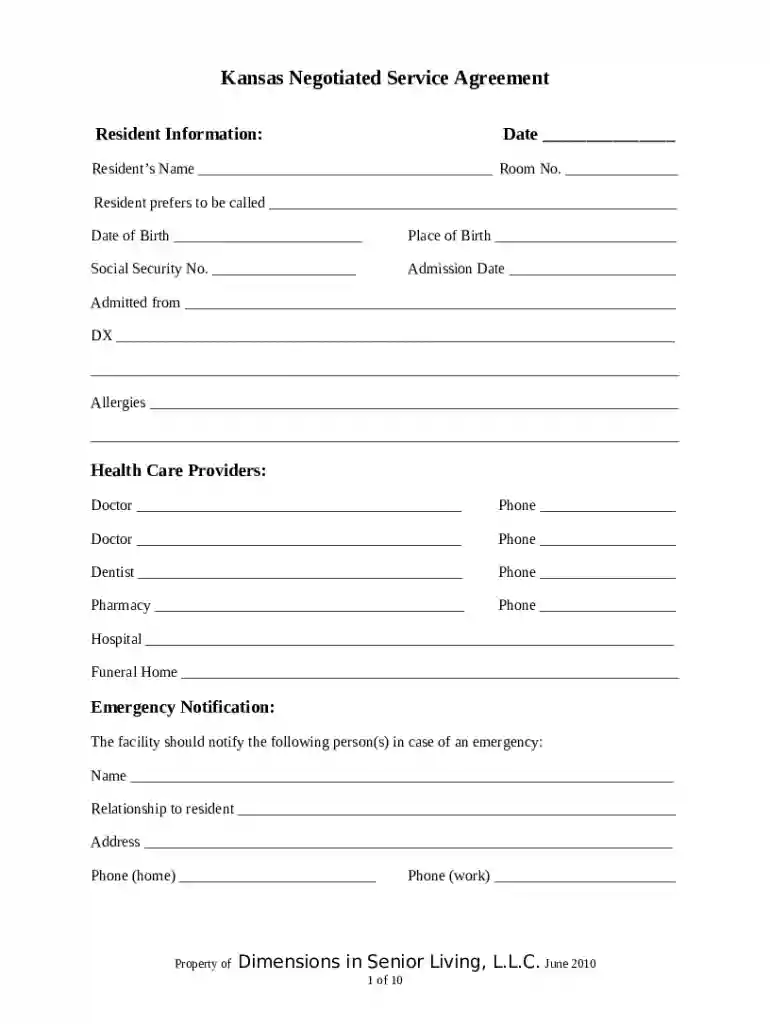
Definition & Meaning
The Kansas Negotiated Service Agreement (KNSA) is a formal, contractual arrangement tailored for specific services within the state of Kansas. It outlines the terms and conditions agreed upon by the involved parties, detailing obligations, deliverables, compensation, and dispute resolution mechanisms. The agreement ensures clarity and mutual understanding between service providers and clients, reducing the likelihood of disputes. In particular, such an agreement is crucial for businesses and individuals seeking to formalize service expectations and deliverables, ensuring that both sides clearly understand their rights and responsibilities under Kansas law.
How to Use the Kansas Negotiated Service Agreement
To effectively utilize the KNSA, both parties should engage in a thorough review and discussion process before finalizing the document. Key steps include:
- Identification of Parties: Clearly specify the service provider and the client, including contact information and any relevant identification numbers.
- Scope of Services: Detail the services to be rendered, including any specific tasks, deliverables, and expected outcomes.
- Compensation Structure: Outline payment terms, including amounts, payment schedules, and any contingencies for additional compensation based on performance or unforeseen circumstances.
- Timeframes: Define start and end dates for the agreement, with considerations for any milestones or deadlines.
- Dispute Resolution: Include provisions for conflict resolution, such as mediation or arbitration options.
Steps to Complete the Kansas Negotiated Service Agreement
Completing the KNSA requires careful attention to detail and a methodical approach:
- Download or Obtain the Form: Acquire the latest version of the form from Kansas's official channels or a trusted legal document provider.
- Fill Out Initial Information: Include all necessary personal and organizational details for both parties.
- Detail the Agreement: Complete sections on service scope, compensation, and timelines.
- Review Legal Clauses: Ensure all legal terms, including termination conditions and confidentiality requirements, are agreed upon.
- Consult Legal Counsel: Seek professional legal guidance to verify the agreement's compliance with applicable laws.
- Obtain Signatures: Have all parties sign and date the agreement, ensuring all signatures are witnessed if necessary.
Important Terms Related to Kansas Negotiated Service Agreement
Understanding specific terms within the KNSA can prevent misunderstandings and ensure compliance:
- Breach of Contract: Failure to perform any term of the contract without a legitimate legal excuse.
- Confidentiality Agreement: Provisions within the KNSA that restrict the disclosure of private or proprietary information shared between parties.
- Force Majeure: A clause that frees both parties from liability or obligation when an extraordinary event or circumstance beyond their control prevents one or both from fulfilling their contractual obligations.
Legal Use of the Kansas Negotiated Service Agreement
The KNSA is legally binding and enforceable under Kansas state law. Utilizing the agreement can:
- Protect rights and define responsibilities.
- Mitigate risks by clarifying service expectations and contingencies.
- Provide a legal foundation for seeking recourse in the event of a disagreement or breach.
Key Elements of the Kansas Negotiated Service Agreement
Successful use of a KNSA hinges on effectively including critical components:
- Detailed Service Descriptions: Specifics on what services include and exclude.
- Performance Metrics: Criteria for evaluating the success or completion of services.
- Termination Conditions: Circumstances under which the agreement can be prematurely ended.
State-Specific Rules for the Kansas Negotiated Service Agreement
Kansas imposes specific legislative requirements for service agreements, mandating compliance with:
- State Service Standards: Services must adhere to regulations and standards specific to Kansas.
- Local Jurisdiction Compliance: Any municipal ordinances that affect service provision must be acknowledged within the KNSA.
Who Typically Uses the Kansas Negotiated Service Agreement
This agreement serves various entities:

- Small and Medium Enterprises (SMEs): To formalize engagements with local contractors.
- Non-Profit Organizations: When negotiating services, such as event management or outsourcing.
- State Agencies: During collaborations with private firms or other governmental bodies for service provision.