




01. Edit your form online
Type text, add images, blackout confidential details, add comments, highlights and more.

Type text, add images, blackout confidential details, add comments, highlights and more.

Draw your signature, type it, upload its image, or use your mobile device as a signature pad.

Send it via email, link, or fax. You can also download it, export it or print it out.
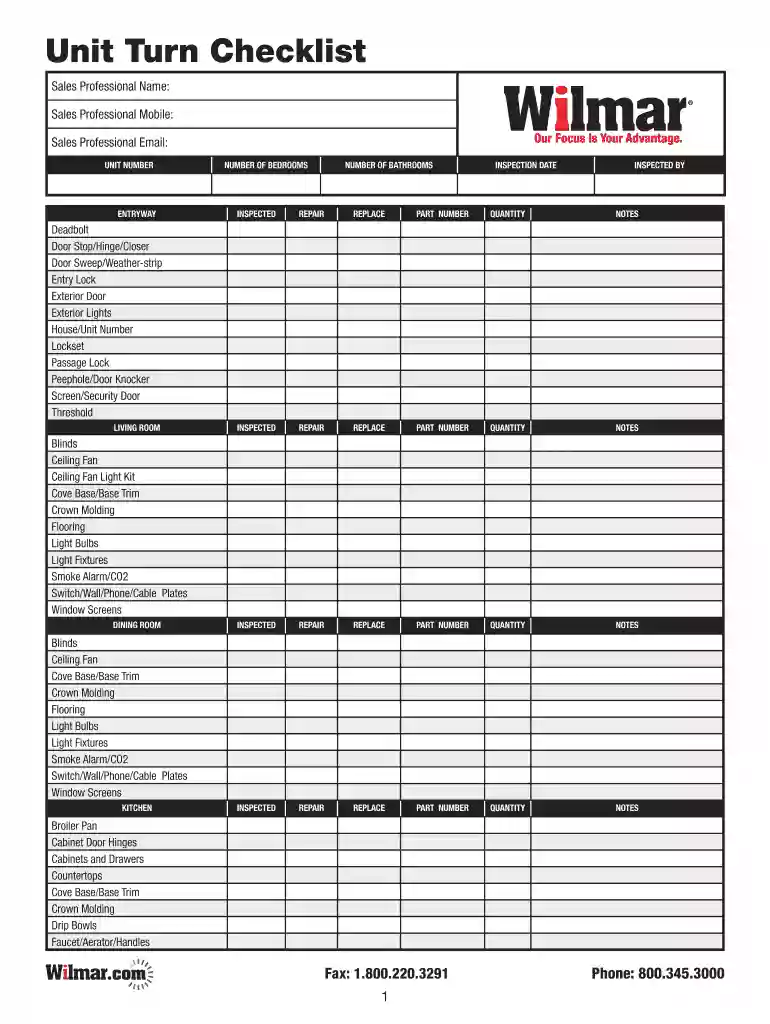
A Unit Turn Checklist serves as a comprehensive guide to ensure that a property, typically a rental unit, is thoroughly inspected and prepared for new occupancy. This structured form assists property managers and maintenance staff in systematically evaluating a unit's condition post-tenancy. By following a standardized checklist, teams can efficiently identify necessary repairs, replacements, and cleaning tasks that should be completed prior to a new tenant moving in. The primary objective is to maintain high standards of living conditions while minimizing turnover time, thus ensuring tenant satisfaction and optimizing rental operations.
A well-designed Unit Turn Checklist typically includes various components that address essential aspects of unit preparation:
Each checklist item is crucial in identifying potential issues early, preventing future tenant complaints, and prolonging the lifespan of unit features.
Completing a Unit Turn Checklist involves a methodical process to accurately assess the state of the unit:
Acquiring a Unit Turn Checklist can often be as simple as reaching out to your property management software provider or associated industry stakeholders. Many property management companies provide standardized templates as part of their operational tools.
Utilizing a Unit Turn Checklist is critical for several reasons:
The checklist is an investment in maintaining property value while providing a clear framework for turnover operations.
The primary users of a Unit Turn Checklist are individuals and teams directly involved in property management and maintenance:
Collaborating efficiently among these parties is critical to executing a unit turnover smoothly and successfully.


Real-world scenarios of Unit Turn Checklist application include:
These examples illustrate the checklist's versatility and significance in various operational contexts.
Advancements in technology have elevated the use of digital Unit Turn Checklists:
Despite these benefits, paper versions may still be preferred where technology is limited or in environments requiring physical documentation. It's essential to evaluate whether a digital approach aligns with your team's capabilities and infrastructure.
At DocHub, your data security is our priority. We follow HIPAA, SOC2, GDPR, and other standards, so you can work on your documents with confidence.
Wipe down cabinets and drawers. Scrub shower walls and fixtures. Disinfect the tub. Clean the mirror. Scrub sink, counter, and faucet.Read more
The outdoor unit fan does not turn. Check fan motor voltage, fan speed controller output and fan operation. Humidifier not humidified. The HumidificationRead more


