




01. Edit your form online
Type text, add images, blackout confidential details, add comments, highlights and more.

Type text, add images, blackout confidential details, add comments, highlights and more.

Draw your signature, type it, upload its image, or use your mobile device as a signature pad.

Send it via email, link, or fax. You can also download it, export it or print it out.
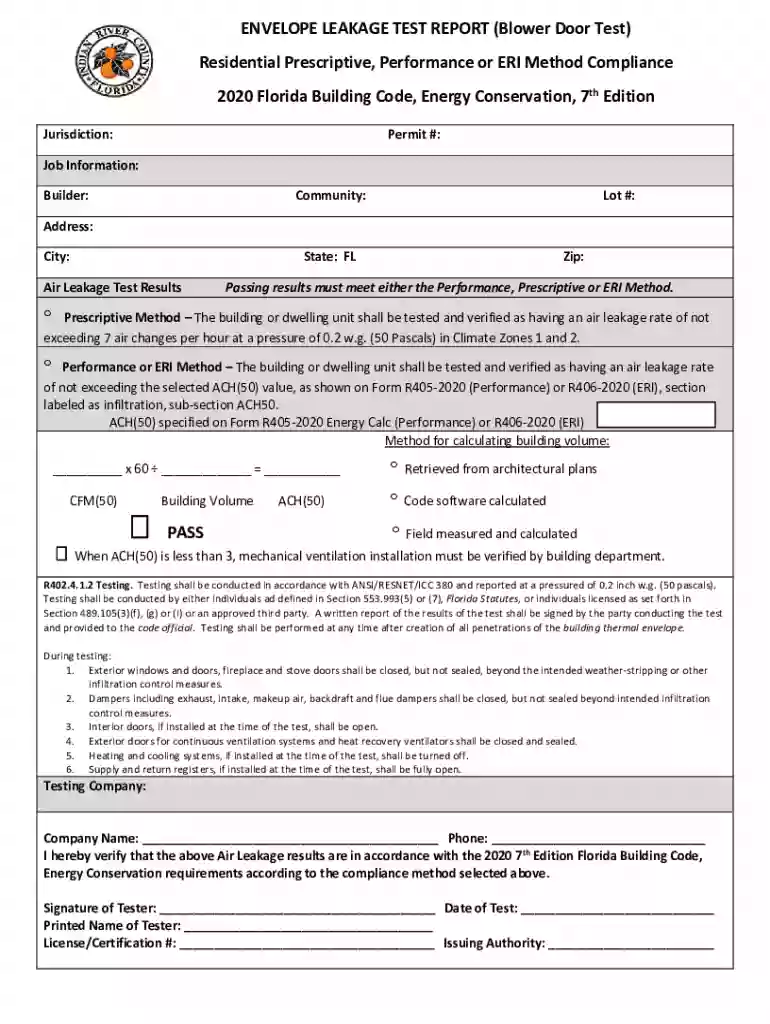
The Florida Blower Door Test Report is an essential document used to determine the airtightness of homes and buildings, as mandated by the 2020 Florida Building Code, Energy Conservation, 7th Edition. The envelope leakage test, generally referred to as a blower door test, assesses the air leakage rate and its impact on energy efficiency. This test helps builders, inspectors, and homeowners ensure compliance with energy conservation standards specified by Florida state regulations. By quantifying air infiltration rates, the report allows stakeholders to identify necessary improvements before issuing a certificate of occupancy.
Preparation for Testing:
Conducting the Test:
Data Recording:
Analyzing Results:
Finalizing the Report:
The blower door test report is vital for ensuring adherence to energy efficiency standards. It helps:
Legally, the blower door test report is a requisite document in the building permit process within Florida. It is utilized by local building departments to certify that new constructions or major renovations meet mandated energy efficiency criteria. Failure to provide an accurate and compliant report can result in delays in receiving a certificate of occupancy and possible financial penalties.


Florida’s building code has precise prescriptions for performing and documenting blower door tests. These requirements include the qualifications of the individual performing the test, standardized methods for testing, and specific upper limits for acceptable air leakage. Variations in climate zones within Florida also necessitate slight adjustments to testing protocols to ensure accurate representations of a home's efficiency in different weather conditions.
Residential Construction:
Retrofitting Older Homes:
Building Performance Programs:
By thoroughly understanding and implementing these aspects of the Florida Blower Door Test Report, stakeholders can ensure effective energy management, reduce operating costs, enhance comfort, and comply with regulatory requirements.
At DocHub, your data security is our priority. We follow HIPAA, SOC2, GDPR, and other standards, so you can work on your documents with confidence.
R402.4.1.2 Testing. The building or dwelling unit shall be tested and verified as having an air leakage rate not exceeding seven air changes per hour inRead more
Free Product Letter Report (JMM, 1992a). Pumping Tests and Product Thickness Test Letter Report (JMM, 1992b). Remedial Options Letter Report (JMM, 1993a).Read more
Jun 15, 2018 This project is intended to answer the following four questions regarding residential building air leakage. (blower door) testing and whole-Read more


