




01. Edit your form online
Type text, add images, blackout confidential details, add comments, highlights and more.

Type text, add images, blackout confidential details, add comments, highlights and more.

Draw your signature, type it, upload its image, or use your mobile device as a signature pad.

Send it via email, link, or fax. You can also download it, export it or print it out.
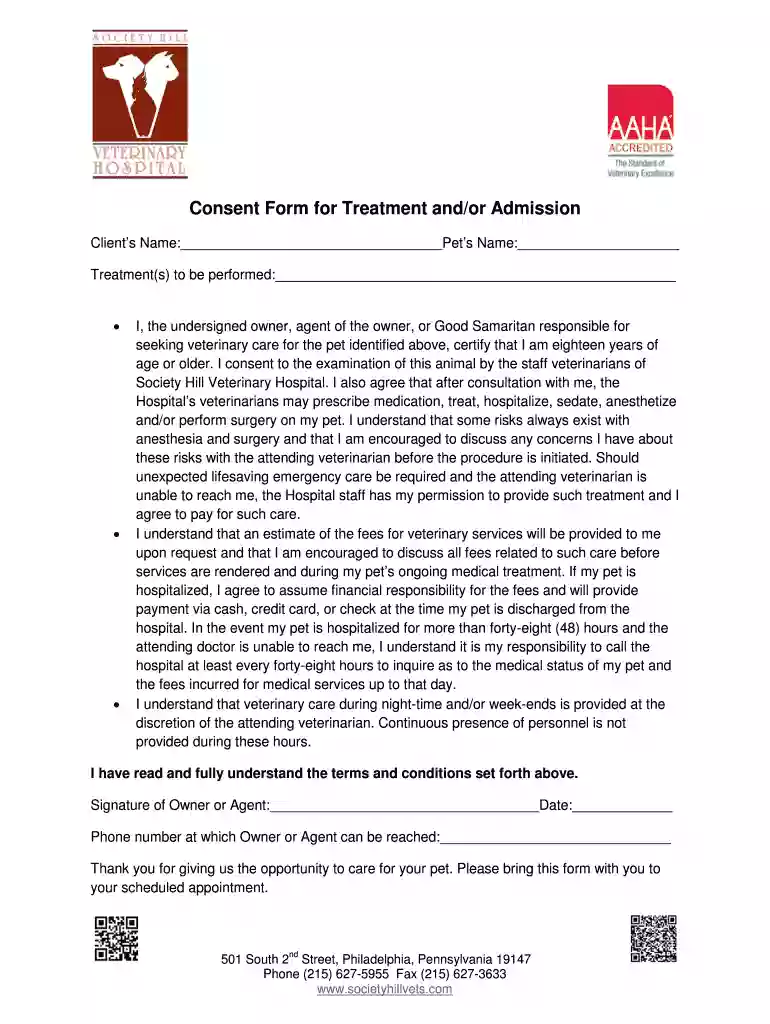
The Veterinary Treatment Consent Form is a critical document used in the veterinary industry to authorize and facilitate the administration of medical treatments to animals. This form typically requires the signature of the owner, agent of the owner, or an individual responsible for the animal, acknowledging that they understand and agree to the proposed treatments. By providing consent, the signatory permits the veterinary professionals to proceed with specific medical procedures or treatments, ensuring that the pet receives the necessary care while legally protecting the veterinary clinic.
The primary purpose of this form is to outline the treatments to be performed and to obtain explicit permission from the responsible party. It serves as a legal record, documenting the informed consent process. The form can be used in emergency situations, routine check-ups, or specialized procedures. It guarantees transparency in the treatment process, ensuring that animal owners are informed about the details, risks, and benefits of the treatments administered to their pets.
When using a Veterinary Treatment Consent Form, it is important to follow a structured process to ensure that all necessary information is correctly recorded. The following steps outline how to effectively utilize the form:
Consult with the Veterinarian: Before filling out the form, discuss the upcoming treatments with the veterinary professional. Understand the procedures, potential risks, and expected outcomes.
Complete the Form Details: Enter essential details such as the owner's name, the pet’s name, and the specific treatment to be administered.
Review the Information: Ensure that all information on the form is accurate and complete. Double-check the spelling of names and the description of the treatment.
Acknowledge Understanding: By signing the form, the owner or responsible party acknowledges understanding of the treatment plan and agrees to the procedures outlined.
Provide Contact Information: Include up-to-date contact details for follow-up or emergency contact if needed.
Submit the Form: Once completed and signed, submit the form to the veterinary clinic. The clinic may retain a digital or physical copy for their records.
Retain a Copy: It is advisable for the pet owner to keep a copy of the signed consent form for their records.
Obtaining a Veterinary Treatment Consent Form can be done through several channels:
Visit a Veterinary Clinic: Most clinics will provide you with a form when you bring your pet for an appointment.
Online Download: Many veterinary clinics offer downloadable versions of the form through their websites. You can print and fill it out at home.
Veterinary Websites: Some dedicated veterinary or pet care websites provide generic consent forms that you can download and use as needed.
DocHub Integration: Platforms like DocHub allow for the creation and management of fillable forms, which can be customized for veterinary treatment consent purposes.
To complete the Veterinary Treatment Consent Form effectively, follow these steps to ensure accuracy and completeness:
Gather Information: Have your pet's information ready, including medical history and any current medications.
Fill Out Personal Details: Start by entering the owner's name, address, and contact information.
Input Pet Information: Include your pet's name, breed, age, and identification details, such as microchip number.
Specify Treatments: Clearly describe the proposed treatments or procedures, including any anesthesia that may be used.
Discuss Risks and Complications: Read the section that discusses potential risks or complications. This ensures you are informed about the treatments.
Review Legal Disclaimers: Ensure you understand any legal statements or disclaimers regarding the treatments and liability.
Sign the Form: Complete the signature section, ensuring the signature matches the name of the responsible party listed.
Submit and Confirm: Return the completed form to the clinic staff, and confirm that they have received and recorded it properly.
The Veterinary Treatment Consent Form provides numerous benefits for both pet owners and veterinary professionals:
Informed Decision-Making: Ensures that pet owners have all necessary information regarding the treatments before consent is granted.
Legal Protection: Protects veterinary clinics from legal liabilities, as consent is documented and authenticated.
Clear Communication: Facilitates improved communication between pet owners and veterinary staff, minimizing the chance for misunderstandings.
Documentation of Care: Offers a detailed record of agreed-upon treatments, procedures, and any associated risks.
Safety and Compliance: Guarantees that animal treatments align with ethical and professional standards, safeguarding the well-being of pets.
A detailed Veterinary Treatment Consent Form will generally include the following key elements:
Owner and Pet Information: Clearly outlines who is responsible for the pet and detailed pet identification.
Treatment Description: Precise explanation of the intended treatments and procedures.
Risk Disclosure: Information on potential risks or side effects associated with the treatment.
Consent Statement: Formal acknowledgment and acceptance of the treatment plan.
Signature Lines: Spaces for the signatory’s signature and date to confirm informed consent.
Contact Information: Necessary details for follow-up communication.
By ensuring these elements are covered, the form can serve as a comprehensive consent document, meeting both legal and ethical requirements.
The legal utilization of a Veterinary Treatment Consent Form is vital to maintain professional integrity and protect all parties involved in veterinary care:
Informed Consent: Legally, consent must be informed, clearly communicated, and documented, complying with state and federal veterinary laws.
Compliance with the ESIGN Act: For electronic forms and signatures, adherence to the ESIGN Act ensures that electronic documents are legally binding.
Jurisdictional Requirements: Variations in state laws may dictate specific requirements for consent forms. It’s crucial to customize the form according to jurisdictional regulations.
By understanding and adhering to these legal requirements, veterinary clinics ensure compliance and uphold the standards of veterinary practice.
Each state may have specific regulations concerning Veterinary Treatment Consent Forms. It is important to understand these variations to ensure compliance:
Consent Thresholds: States may vary on what constitutes informed consent, including the threshold of information disclosed to the pet owner.
Mandatory Disclosures: Certain states might require additional disclosures, such as treatment alternatives or more detailed risk information.
Signature Requirements: Some jurisdictions may impose strict rules on who can sign, particularly for emergency treatments or when the pet owner is not available.
Record Keeping: Rules on how long veterinary practices must retain consent forms may differ by state.
Familiarizing oneself with these state-specific regulations ensures that veterinary treatment practices are both ethical and legally compliant.
Real-world scenarios illustrate the essential role of the Veterinary Treatment Consent Form in various situations:
Routine Vaccinations: For annual vaccinations, a consent form informs the owner about the vaccine's purpose and any potential side effects.
Emergency Surgeries: In cases where immediate surgical intervention is necessary, the form documents consent for treatments that may not have been previously considered.
Dental Procedures: The form is used to authorize anesthesia and specific dental treatments, such as extractions or cleanings.
Specialized Treatments: Consent forms are crucial when introducing newer treatments or experimental procedures, ensuring the owner acknowledges all associated risks.
These examples demonstrate the form's flexibility and necessity in diverse veterinary settings, emphasizing its role in fostering trust and clarity between pet owners and veterinary care providers.
At DocHub, your data security is our priority. We follow HIPAA, SOC2, GDPR, and other standards, so you can work on your documents with confidence.
I authorize any amount necessary for the treatment of my pet. I authorize a maximum of $ to be used towards my pets care. The following individual willRead more
by C Gray 2020 Cited by 12 Consent forms were used to authorise procedures, to define proposed treatment, to offer or recommend additional procedures, to convey the risks of treatment.Read more


