





Definition and Meaning
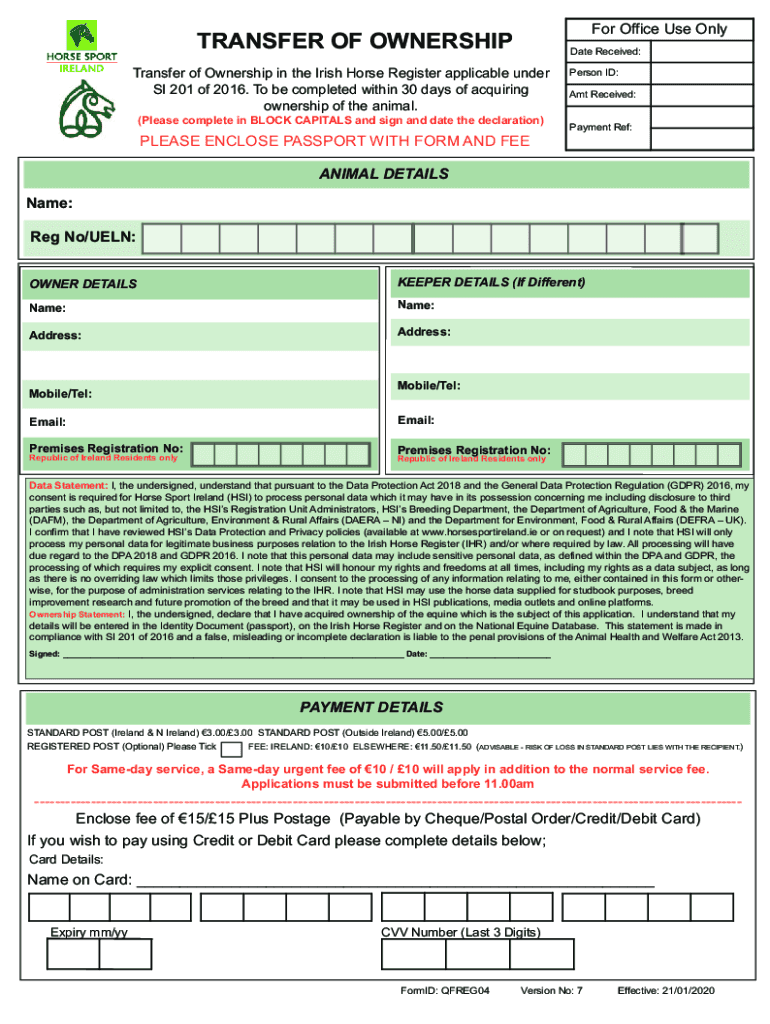
The "Transfer of Ownership Form" is a critical legal document used across various industries to officially register the change of ownership of an asset. Whether you're transferring ownership of a vehicle, property, or business, this form serves as an official record that details the transition from the current owner to the new owner. The form typically contains essential information such as the names and signatures of the involved parties, a description of the asset, and the date of transfer. Understanding the nuances of this document ensures a smooth transition and mitigates potential legal disputes.
How to Use the Transfer of Ownership Form
Utilizing a Transfer of Ownership Form involves a series of steps to ensure the document is completed accurately and legally binding. Initially, gather all necessary personal information of the buyer and seller, including official identification details. Next, detail the asset being transferred, specifying its characteristics like make, model, and any identification numbers. Both parties should thoroughly review the form for accuracy before signing it. Once signed, the form often requires submission to a relevant authority or agency to formalize the ownership transfer. This process may vary based on the type of asset and jurisdiction, so it is crucial to adhere to specific requirements for each situation.
Steps to Complete the Transfer of Ownership Form
- Gather Information: Acquire all necessary details about the asset and involved parties, including names, contact details, and official identification.
- Detail the Asset: Provide a thorough description of the asset, ensuring accuracy in identifying details such as serial or VIN numbers.
- Complete the Form: Fill out the form, ensuring all required fields are completed accurately.
- Review and Sign: Both parties should carefully review the document, making corrections as needed, before appending their signatures.
- Submit the Form: Submit the completed form to the relevant authority, whether a government agency or private entity, depending on the asset.
Required Documents
The completion of a Transfer of Ownership Form often necessitates the submission of accompanying documents to verify identity and asset specifications. Typically, the required documents include government-issued identification for both parties, proof of ownership (like a title or deed), and any previous registration documents. For vehicles, a current odometer reading might be necessary. These documents serve as supporting evidence, ensuring that the transaction is legitimate and that the form is processed smoothly.
Legal Use of the Transfer of Ownership Form
Legally, the Transfer of Ownership Form plays a vital role in validating the change in ownership of an asset. It acts as an official record that can be used in legal contexts to confirm that ownership has been transferred in compliance with relevant laws and regulations. This document usually serves to protect both parties' rights, providing a clear point of reference should disputes arise. Compliance with legal requirements is paramount when completing this form, to safeguard against potential challenges and to ensure all parties are legally protected.
Important Terms Related to Transfer of Ownership Form
- Grantor: The current owner who is transferring the asset.
- Grantee: The new owner receiving the asset.
- Consideration: The value exchanged in the transfer, often monetary.
- Encumbrances: Claims or liens on the asset that might affect the transfer.
- Escrow: Third-party service holding assets or funds until conditions of the transfer are met.
Understanding these terms is essential for accurately completing the form and ensuring all parties are clear on the transaction's nature and implications.
State-Specific Rules for the Transfer of Ownership Form
State-specific regulations significantly impact how Transfer of Ownership Forms are processed. Each state may have distinctive requirements regarding documentation, fees, and procedures. For instance, certain states mandate notarization of the form, while others may require additional documentation specific to the asset type. It is crucial to consult local statutes and guidelines to ensure that the form submission adheres to all applicable state-specific rules, thereby ensuring a seamless transfer process.
Key Elements of the Transfer of Ownership Form
- Identification Information: Details of both the current and new owner.
- Asset Description: Comprehensive description including any unique identifiers.
- Signatures: Binding element confirming agreement of all parties involved.
- Date: Records the official transfer date, crucial for legal validation.
- Conditions of Transfer: Any specific terms or conditions agreed upon by the parties.
These elements form the core of the Transfer of Ownership Form, ensuring it fulfills its legal purpose.
Examples of Using the Transfer of Ownership Form
Consider a scenario where an individual is selling a vehicle. Upon reaching a sale agreement, both the seller and the buyer must complete a Transfer of Ownership Form specifying the vehicle's details, sale price, and any pertinent terms. Once both parties have signed, the form needs to be submitted to the local Department of Motor Vehicles, along with supporting documents like the vehicle title and identification. The careful execution of each step ensures the vehicle's transfer aligns with legal standards, protecting both the seller's and buyer's interests.