






Definition & Meaning
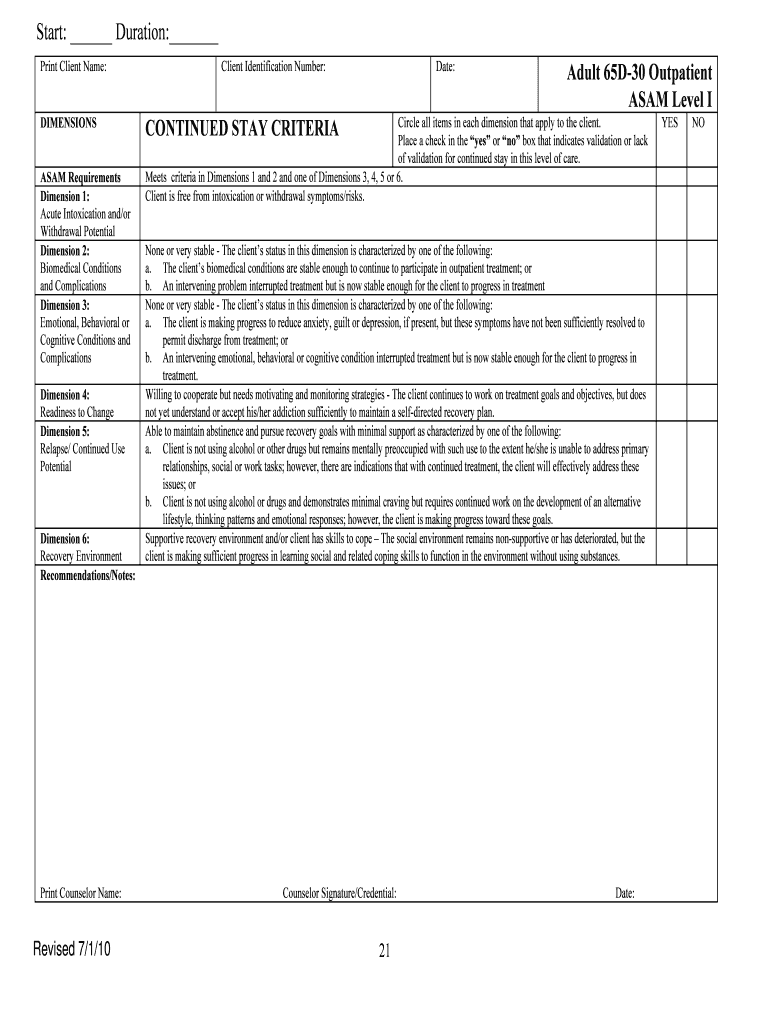
The ASAM Level I Outpatient Treatment Criteria Form is a standardized tool used in assessing an individual's need and suitability for outpatient substance use treatment. This form is part of the American Society of Addiction Medicine's (ASAM) criteria, which are guidelines used by clinicians to provide a comprehensive, evidence-based approach to substance use disorder treatment. The criteria assist in determining the appropriate level of care according to the patient's specific needs, considering aspects such as severity of addiction, presence of co-occurring disorders, and the social environment.
Key Features
- Assessment Tool: Evaluates various dimensions such as withdrawal potential, biomedical conditions, and emotional stability.
- Guideline Compliance: Aligns with ASAM criteria, ensuring adherence to recognized best practices in addiction medicine.
- Customization: Adaptable to individual patient needs based on a thorough evaluation.
Steps to Complete the ASAM Level I Outpatient Treatment Criteria Form
Completing the ASAM Level I Outpatient Treatment Criteria Form requires a methodical approach to ensure all relevant information is accurately captured.
- Collect Patient Information: Gather detailed personal information from the patient, including medical history and current health status.
- Evaluate Each Dimension:
- Dimension 1: Acute Intoxication/Withdrawal: Assess withdrawal risks or presence of intoxication.
- Dimension 2: Biomedical Conditions: Determine any significant physical health issues.
- Dimension 3: Emotional/Behavioral Conditions: Evaluate mental health status and emotional stability.
- Determine Level of Motivation: Explore the patient’s readiness and motivation for change through interviews and assessments.
- Review Social Environment: Assess the patient's living environment and available support systems that might impact treatment.
- Summarize Findings: Document and analyze findings to develop a treatment plan that aligns with the patient’s identified needs and ASAM criteria.
Practical Example
A patient presenting with mild withdrawal symptoms, stable physical health, but low motivation to quit substance use might be considered suitable for an outpatient treatment program, allowing them to stay integrated in their community during treatment.
Important Terms Related to ASAM Level I Outpatient Treatment Criteria Form
Understanding specific terminology is essential for completing and interpreting the ASAM Level I form accurately.
- Withdrawal Potential: The likelihood of withdrawal symptoms if substances are reduced or stopped.
- Biomedical Conditions: Physical health disorders that may complicate addiction treatment.
- Motivational Readiness: The patient's willingness and commitment to change substance use behaviors.
Comprehensive Breakdown
- Withdrawal Management: Planning for safe withdrawal based on potential severity.
- Co-occurring Disorders: Integration of mental health treatment with substance use interventions.
- Sociocultural Factors: Consideration of cultural background and lifestyle in treatment planning.
Why Use the ASAM Level I Outpatient Treatment Criteria Form
Employing the ASAM Level I Outpatient Treatment Criteria Form ensures that treatment interventions are personalized, efficient, and effective. This form provides a structured approach to assess individual needs, offering several benefits.
Benefits
- Standardization: Ensures uniform application of treatment criteria across different institutions.
- Precision: Offers a detailed, nuanced view of a patient’s condition beyond basic diagnostic categories.
- Comprehensive Care: Supports integration of medical, emotional, and social aspects of care.
Key Elements of the ASAM Level I Outpatient Treatment Criteria Form
The form's design includes several key sections critical to assessing outpatient treatment needs.
- Patient Demographics: Captures essential identifying information and contact details.
- Medical History: Documents previous medical and psychiatric treatments.
- Substance Use History: Tracks current and past use patterns.
- Dimension Assessments: Detailed analysis of each functional domain affecting treatment.
Specific Section Details
- Risk Assessment: Identifies potential barriers or risks to achieving treatment goals.
- Support Systems: Gauges availability and extent of external support such as family or community services.
- Legal and Employment Status: Assesses any legal issues or job-related challenges that might impact treatment.
How to Use the ASAM Level I Outpatient Treatment Criteria Form
The form is designed for use by healthcare professionals who are trained in addiction treatment assessment.
- Clinical Training: Ensure that users are familiar with ASAM criteria and have relevant professional training.
- Procedure Adherence: Follow the structured process for gathering and analyzing patient data.
- Treatment Planning: Use the completed form to inform individualized treatment strategies.
Application in Practice
Healthcare providers should incorporate findings into comprehensive treatment plans that are regularly reviewed and adjusted based on ongoing assessments and patient progress.
Who Typically Uses the ASAM Level I Outpatient Treatment Criteria Form
The form is most commonly utilized by addiction treatment professionals, including:
- Clinical Psychologists: For behavior-related assessments.
- Addiction Counselors: To guide therapeutic interventions.
- Medical Doctors: When medical evaluation is part of the treatment.


Broader Use Cases
- Rehabilitation Centers: As part of intake assessments.
- Community Health Clinics: For outpatient program enrollments.
- Private Practices: Integrated into individualized patient care plans.
Legal Use of the ASAM Level I Outpatient Treatment Criteria Form
The form’s use is grounded in legal standards governing healthcare and addiction treatment in the U.S.
Compliance Aspects
- HIPAA Regulations: Safeguard patient confidentiality during data handling.
- ESIGN Act: Ensure electronic records and signatures retain legal validity.
State-Specific Rules for the ASAM Level I Outpatient Treatment Criteria Form
Different states may have additional standards or complementary guidelines regarding the use of ASAM criteria.
Examples of State Variations
- California: Might require inclusion of specific cultural competency considerations.
- Texas: Could have unique protocols for integrating pharmacotherapy in treatment plans.
Understanding these jurisdictional differences ensures practitioners remain compliant with local regulations.