




01. Edit your form online
Type text, add images, blackout confidential details, add comments, highlights and more.

Type text, add images, blackout confidential details, add comments, highlights and more.

Draw your signature, type it, upload its image, or use your mobile device as a signature pad.

Send it via email, link, or fax. You can also download it, export it or print it out.
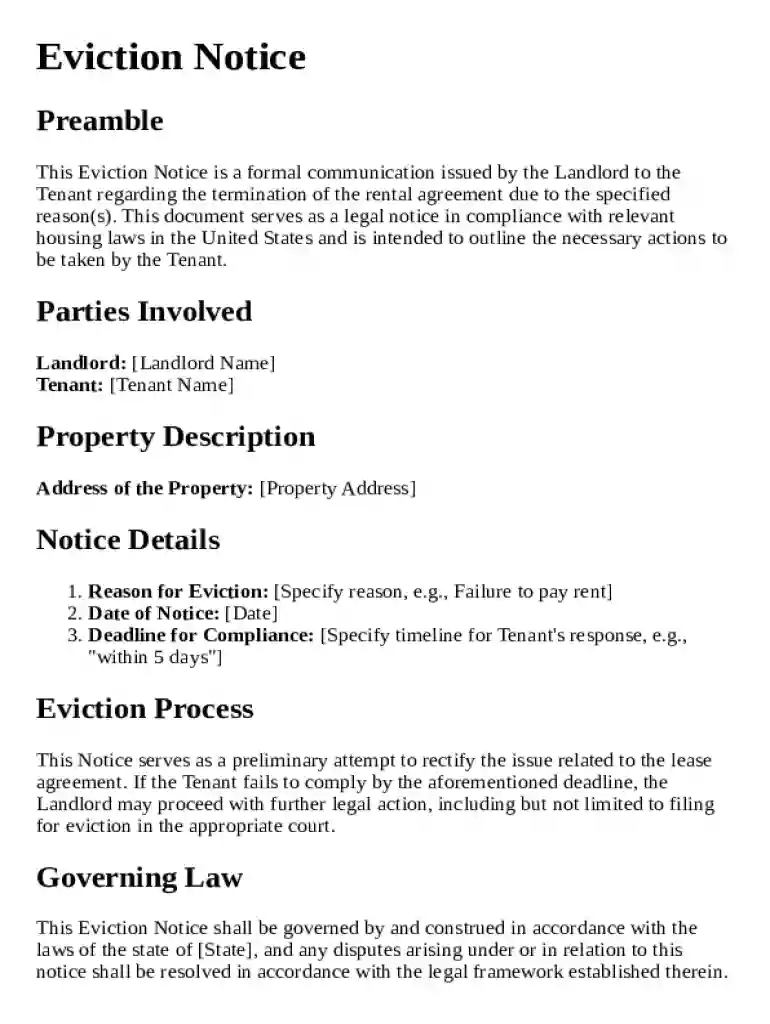
An eviction notice template is a document used by landlords to formally inform tenants of the termination of their lease or rental agreement. The notice outlines specific actions that the tenant needs to take, such as vacating the property by a certain date. Typically, this document is used when tenants have violated terms of the rental agreement or failed to pay rent. It is legally recognized within the United States, ensuring landlords can rightfully reclaim possession of their property.
Proper usage of the eviction notice template involves several steps to ensure both legal validity and clear communication.
Identify the Breach: Clearly specify the reason for eviction, whether it’s due to unpaid rent, violation of lease terms, or other legal reasons. This clarity helps in avoiding disputes.
Customize the Template: Tailor the standard eviction notice to your particular situation by inputting specific details such as tenant name, address, and termination date.
Deliver the Notice: It's important to serve the notice according to your state laws, either through direct hand delivery, certified mail, or a method that can be legally recognized.
Document the Process: Keep a record of all communications related to the eviction notice to protect against legal challenges.
A few key terms are frequently associated with eviction notices, each carrying significant legal implications.
Notice Period: The defined time frame given to the tenant for leaving the property, which varies by state law.
Cure or Quit Notice: A notice that allows tenants to correct a lease violation within a specific period to avoid eviction.
Unconditional Quit Notice: This is issued when the tenant is required to vacate without the opportunity to correct the issue.
Using an eviction notice template legally requires adherence to both federal and state-level housing laws.
State Regulations: Each state has unique requirements for what constitutes a valid eviction notice, including the notice period and acceptable methods of delivery.
Fair Housing Laws: Landlords must ensure that eviction actions do not violate anti-discrimination laws set forth by the Fair Housing Act.
Court Procedures: Following an eviction notice, landlords may need to file for an eviction lawsuit if the tenant refuses to vacate, involving additional legal procedures.
An effective eviction notice template includes several essential components to ensure clarity and compliance.
Tenant and Landlord Information: Complete details of both parties involved in the lease or rental agreement.
Specific Breach Description: Detailed explanation of the lease violation or reason for eviction.
Deadline for Tenant Action: The final date by which the tenant must vacate the premises or rectify the breach.
Signature: Authenticates the document as legally binding.
Eviction notice requirements vary significantly from state to state, which affects how landlords should draft and deliver notices.
California: Requires a three-day notice for non-payment of rent while allowing additional time if the tenant is receiving government assistance.
Texas: Strictly observes a three-day notice requirement but provides discretion for landlords to offer more time.
New York: Mandates a longer notice period for tenants who have occupied a property for more than a year.
Completing an eviction notice template involves a systematic approach to ensure it meets legal criteria.
Gather Information: Collect all necessary tenant and lease details.
Select Appropriate Notice Type: Determine if it's a pay-or-quit, cure-or-quit, or unconditional quit notice.
Complete Notice Details: Include all pertinent information such as notice period, description of breach, and tenant remedies.
Review Legal Compliance: Verify the notice aligns with applicable state laws and regulations.
Serve Notice: Deliver the notice through a legally accepted method and note the delivery details.
Practical application of eviction notices can vary, showcasing different use scenarios.
Non-Payment of Rent: A landlord issues a pay-or-quit notice when rent is overdue by more than the agreed grace period.
Lease Violation: If a tenant keeps pets when the lease prohibits it, a cure-or-quit notice might be appropriate, offering time to correct the violation.
Property Damage: Issuing an unconditional quit notice when a tenant causes intentional property damage, requiring them to vacate immediately without remedial action.
Landlords have several template options or alternatives depending on the situation.
30-Day Notice: Typically used for month-to-month tenancies, allowing either party to terminate the agreement with a thirty-day notice.
60/90-Day Notice: Used in long-term leases requiring a longer period for either party to terminate the agreement.
Notice to Quit for Health Hazard: Specific templates address severe violations like health or safety hazards, demanding urgent action.
At DocHub, your data security is our priority. We follow HIPAA, SOC2, GDPR, and other standards, so you can work on your documents with confidence.


