






Definition and Meaning of the Certified Pre-Owned Vehicle Inspection Checklist
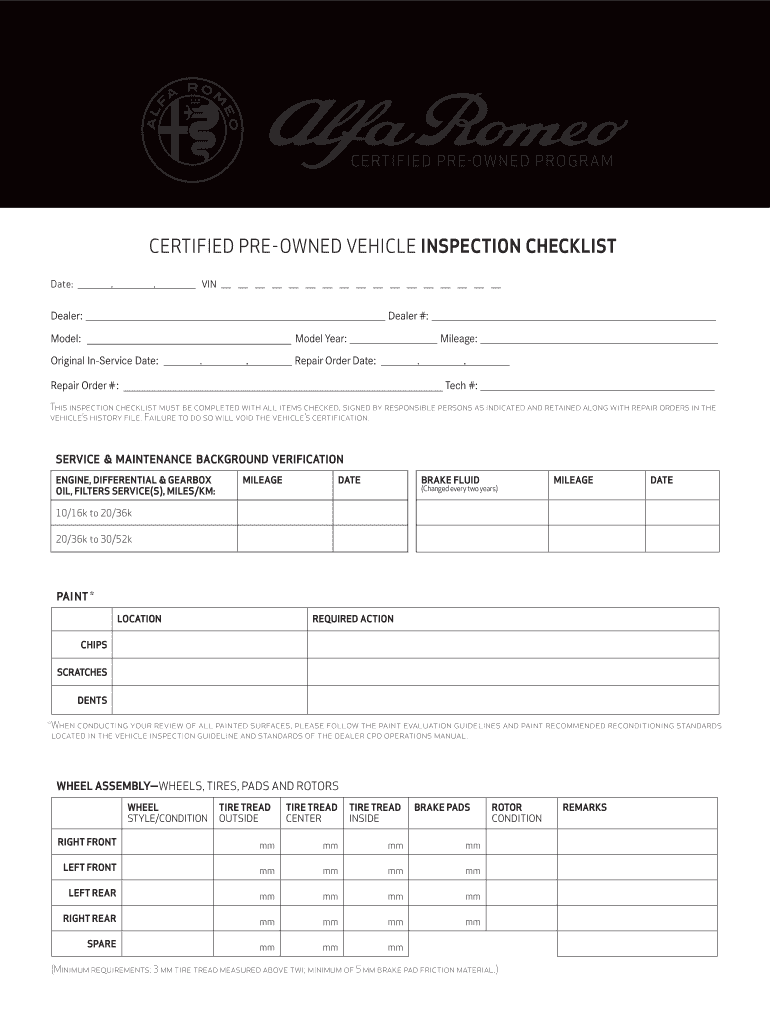
The Certified Pre-Owned (CPO) Vehicle Inspection Checklist is a comprehensive document used to evaluate the condition of a pre-owned vehicle before it is sold as a certified unit. Typically used by dealerships and automotive professionals, this checklist ensures that a vehicle meets specific manufacturer or industry standards, proving its reliability and quality to potential buyers. This checklist is crucial for maintaining a high standard of safety and performance, often comprising inspections of various components such as engine condition, transmission efficiency, and brake functionality.
Importance in the Automotive Industry
- Quality Assurance: Ensures the vehicle meets quality standards before certification.
- Consumer Trust: Builds buyer confidence through documented assessments.
- Legal Compliance: Adheres to industry regulations and guidelines.
Common Components Inspected
- Mechanical Systems: Engine, transmission, exhaust system.
- Safety Features: Brakes, airbags, seatbelts.
- Electrical Systems: Battery, lights, dashboard indicators.
- Aesthetic and Functional Checks: Body condition, tire tread, interior features.
Steps to Complete the Certified Pre-Owned Vehicle Inspection Checklist
Completing this checklist involves a series of detailed inspections conducted by a qualified technician. Each step aims to meticulously examine different vehicle components to ensure they meet the required standards.
Step-by-Step Process
-
Initial Assessment:
- Check vehicle identification numbers (VIN) for match and accuracy.
- Review maintenance history for consistency.
-
Engine and Transmission:
- Inspect for leaks, noise, or unusual vibrations.
- Evaluate engine performance during idle and driving tests.
-
Safety Feature Inspection:
- Test airbag functionality and safety belt retraction.
- Ensure brake responsiveness and proper alignment.
-
Exterior and Interior Examination:
- Inspect paint condition, panel alignment, and rust.
- Check electronic systems such as windows, mirrors, and climate control.
-
Documentation and Approval:
- Document findings and assess any reparations needed.
- Obtain sign-off from credentialed inspection personnel.
Importance of Each Step
- Thoroughness: Ensures no aspect of the vehicle is overlooked.
- Accuracy: Provides precise documentation for buyer assurance.
- Responsibility: Certification impacts liability and consumer satisfaction.
Why Use a Certified Pre-Owned Vehicle Inspection Checklist
This checklist is a critical tool for dealerships and consumers alike, providing tangible evidence of a vehicle's quality.
Key Benefits
- Consumer Protection: Guards buyers against potential mechanical failures post-purchase.
- Standardization: Promotes uniformity in vehicle evaluations across dealerships.
- Resale Value: Enhances vehicle desirability and secures better pricing.
Key Elements of the Certified Pre-Owned Vehicle Inspection Checklist
A standard checklist includes numerous critical checkpoints, ensuring that all aspects of vehicle integrity are scrutinized.
Primary Components Included
- Mechanical Health: Engine diagnostics, transmission, braking system.
- Structural Integrity: Body condition, frame analysis, impact resistance.
- Operational Functionality: Electrical systems, fluid levels, control inputs.
Documentation Practices
- Record Keeping: Logs each inspection result for transparency.
- Repair Notes: Details necessary and completed repairs.
- Certification Sign-off: Final approval by authorized inspectors.
Who Typically Uses the Certified Pre-Owned Vehicle Inspection Checklist
The CPO Vehicle Inspection Checklist is tailored for use by professionals in the auto industry, but its results benefit a broad audience.


Primary Users
- Dealerships: To certify vehicles as pre-owned for consumer purchase.
- Auto Mechanics: Conduct thorough vehicle evaluations and repairs.
- Consumers: Verify vehicle quality and make informed purchasing decisions.
Benefits to Each User Type
- Dealerships: Uphold brand integrity and increase sales.
- Mechanics: Ensure precise diagnostics and enhance service quality.
- Consumers: Gain confidence in vehicle purchases.
Examples of Using the Certified Pre-Owned Vehicle Inspection Checklist
Real-world applications of this checklist illustrate its practicality and necessity in vehicle sales and certification.
Example Scenarios
- Certified Sales Verification: A dealership uses the checklist to certify a sedan before adding it to their CPO inventory.
- Resale Value Enhancement: A mechanic utilizes the checklist to enhance an SUV’s resale value by addressing potential repair needs pre-listing.
- Safety Assurance: A buyer requests a checklist completion to ensure a pre-owned truck’s safety features are fully functional before purchase.
Legal Use of the Certified Pre-Owned Vehicle Inspection Checklist
Ensuring compliance with legal and industry standards is crucial for all parties involved in the sale of certified pre-owned vehicles.
Regulatory Requirements
- Industry Standards: Aligns with manufacturer certification protocols.
- Liability Coverage: Provides documented evaluations to reduce legal risks.
- Consumer Protection Laws: Assures compliance with state and federal regulations regarding vehicle sales and quality standards.
Practical Application
- Standard Compliance: Checks reinforce adherence to consumer protection acts.
- Certification Verification: Essential for registering vehicles as certified pre-owned under dealership programs.
Incorporating this checklist into standard operating procedure allows businesses to enhance vehicle quality assurance, improve consumer trust, and ensure legal compliance, enhancing overall operational effectiveness.