




01. Edit your form online
Type text, add images, blackout confidential details, add comments, highlights and more.

Type text, add images, blackout confidential details, add comments, highlights and more.

Draw your signature, type it, upload its image, or use your mobile device as a signature pad.

Send it via email, link, or fax. You can also download it, export it or print it out.
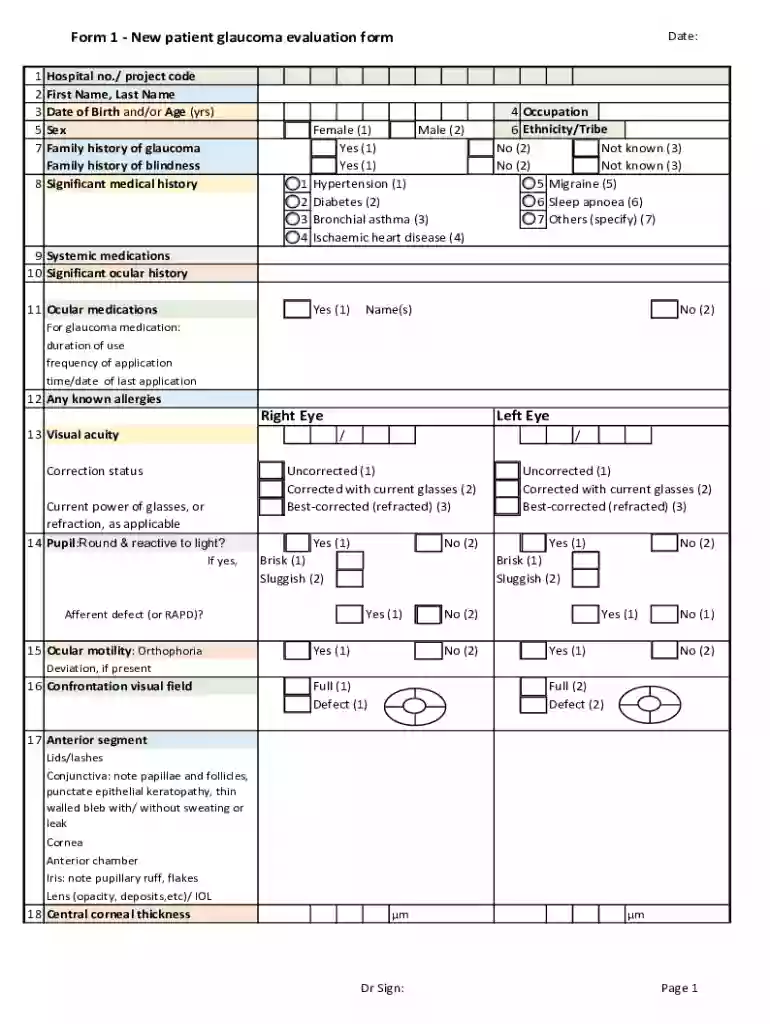
The New Patient Glaucoma Evaluation Form serves as a comprehensive tool for eye care professionals to document essential information when examining patients suspected of or suffering from glaucoma. This form captures various health metrics, patient history, and any relevant symptoms, allowing for an accurate and efficient clinical evaluation. By systematically organizing critical data points, such as familial medical history and specific ocular measurements, the form aids in formulating a personalized treatment and management plan. The form ensures that eye care specialists can maintain a consistent approach to diagnosing and monitoring glaucoma, which is key to preventing vision loss and managing the disease effectively.
Patient Identification: Begin by accurately recording the patient’s personal details, such as name, date of birth, and contact information. This ensures clear identification and aids in maintaining records.
Medical and Family History: Document the patient’s general medical history, with particular attention to any family history of glaucoma or blindness. This section is crucial in assessing genetic risk factors.
Symptoms and Visual Complaints: Record any symptoms the patient is experiencing, such as vision disturbances or eye discomfort. Detail the duration and severity to assist in diagnostic evaluation.
Eye Examination Findings: Include findings from physical and clinical assessments, including intraocular pressure measurements, visual field testing, and optic nerve evaluation. Consistent documentation in these areas helps track disease progression.
Diagnosis and Recommendations: Based on the collected data, provide a preliminary diagnosis and suggest next steps, such as additional tests or a referral to a specialist. Documenting recommendations ensures clarity for both the patient and other healthcare providers.


Ophthalmologists and Optometrists: Primary users who conduct detailed glaucoma assessments and manage ongoing treatment plans. This form ensures all critical information is available for accurate diagnosis and treatment monitoring.
General Practitioners: Can use the form to provide a preliminary assessment before referring patients to specialized eye care professionals. It aids in creating an initial profile of the patient’s eye health status.
Clinical Staff and Assistants: Assist in collecting data and preparing the patient for examination, ensuring the process is swift and efficient for both practitioner and patient.
Personal Information: Captures basic identifiers like name and DOB.
Ocular History: Records previous eye conditions, surgeries, or treatments that may influence current evaluations.
Family History: Details relatives’ ocular health, identifying hereditary risks.
Clinical Observations: Focuses on visual acuity, intraocular pressure, corneal thickness, and optic nerve appearance.
Symptom Documentation: Lists patient-reported symptoms like halos around lights or loss of peripheral vision.
Risk Factors: Accounts for lifestyle or medical conditions like diabetes that may exacerbate glaucoma.
Completion and use of the New Patient Glaucoma Evaluation Form ensure compliance with medical documentation standards. Accurate field entries uphold data integrity, vital for legal tracking and patient management.
Confidentiality: All patient data recorded must be protected under HIPAA regulations, ensuring privacy and data security.
Record Keeping: Accurate and thorough documentation is legally necessary to support clinical judgments and treatment decisions. This documentation can also serve as evidence in dispute resolution or audits.
Consent and Authorization: Patients must provide informed consent to collect and use health information detailed in the form, complying with federal and state laws on patient data management.
Some regions might adjust the form to comply with local regulations or clinical focus points. While the core elements of the evaluation remain consistent, practitioners should always verify if state-specific modifications or additional requirements are necessary.
State Differences: Include any specific legal requirements for documentation or variations in diagnostic criteria that might exist between states.
Customized Forms: Certain clinics may modify the form to include additional fields that align with their procedural protocols or patient demographics.
Case Study: Early Detection: A patient visits for a routine eye check-up but reports mild discomfort. Through the comprehensive use of the form, risk factors such as a family history of blindness are flagged. The optometrist initiates early intervention, slowing the disease progression.
Collaborative Care: A general practitioner uses the form to gather initial data on a patient with known risk factors in a non-specialized clinical setting. This preliminary documentation is crucial when referring the patient to a glaucoma specialist, ensuring a seamless transition of care.
Monitoring and Follow-Up: In ongoing management, the form is used repeatedly to track changes over time, adjusting treatment plans as new information becomes available, thereby maintaining the quality and continuity of care.
At DocHub, your data security is our priority. We follow HIPAA, SOC2, GDPR, and other standards, so you can work on your documents with confidence.
The Glaucoma Service at New York Eye and Ear Infirmary of Mount Sinai (NYEE) is a national leader in diagnosing and treating all forms of the disease.Read more
ICONs specialty in patient recruitment will help us succeed in a therapeutic area that is hyper-competitive for patients and suffers from patient unfamiliarityRead more
Document Information ; Number: FAA 8500-14 ; Title: Ophthalmological Evaluation for Glaucoma ; Status: Active ; Edition date: 1997-09-01 ; Orientation: PortraitRead more


