






Definition & Meaning
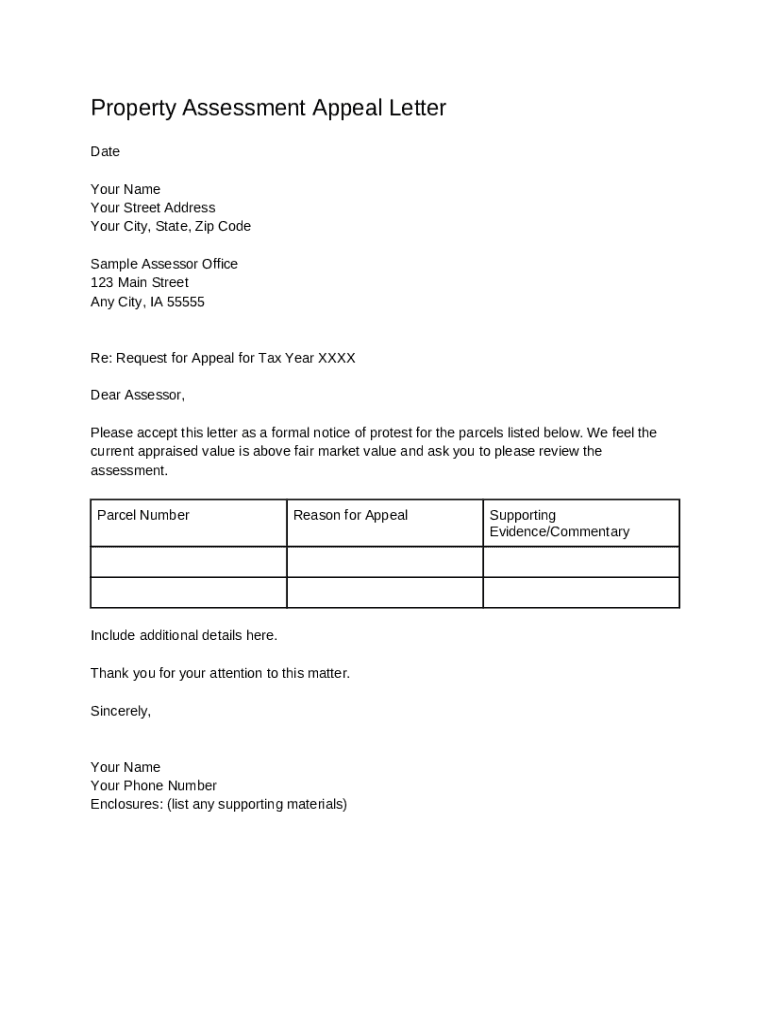
A Property Assessment Appeal Letter is a formal document used to contest the assessed value of a property as determined by a local tax assessor. This letter is vital for property owners who believe their property has been inaccurately or unfairly assessed, resulting in higher property taxes. The process allows taxpayers to potentially lower their tax burden by providing evidence and reasoning for an adjusted valuation. Understanding this letter's purpose and proper use can greatly influence the financial responsibilities associated with property ownership.
How to Use the Property Assessment Appeal Letter
To effectively use the Property Assessment Appeal Letter, begin by gathering relevant data to support your claim. This might include recent sale prices of comparable properties, a professional appraisal, or documentation of discrepancies such as size or condition inaccuracies. The letter should clearly outline your reasons for contestation, backed by this evidence, and must be submitted by the deadline specified by your local assessment office. Structuring the letter with a calm and professional tone can enhance the credibility of your appeal.
Steps to Complete the Property Assessment Appeal Letter
- Research: Obtain your property's current assessed value and understand how it was calculated.
- Collect Evidence: Gather supporting documents like recent appraisals, sale data of similar properties, or error corrections.
- Draft the Letter: Clearly state your argument for reassessment, including all gathered evidence.
- Include Contact Details: Provide your name, address, and property identification number.
- Review and Submit: Proofread the letter for clarity and errors, and submit it to your local tax assessor's office.
Key Elements of the Property Assessment Appeal Letter
- Introduction: State your intent to appeal and provide basic details about your property.
- Reason for Appeal: Clearly articulate why you're contesting the assessment, supported by evidence.
- Supporting Evidence: Attach copies of documents such as recent property sales or professional appraisals.
- Conclusion: Restate your request for a reassessment and express your anticipation for a fair review.
Who Typically Uses the Property Assessment Appeal Letter
This letter is primarily used by property owners who pay property taxes, including homeowners and commercial property investors. It is also relevant for entities like real estate investment trusts (REITs) and property management firms that manage large portfolios. These parties often have the resources to assess and appeal tax burdens to ensure they align with market realities.


State-Specific Rules for the Property Assessment Appeal Letter
Property assessment appeals vary by state due to differing tax laws and deadlines. For instance, some states may require appeals to be submitted within 30 days of the assessment notice, while others offer more extended periods. It's crucial for property owners to consult their local tax authority for specific guidelines. States like California might have particular forms or additional evidence requirements compared to states like Texas.
Required Documents
To strengthen your appeal, the following documents are often necessary:
- A recent property appraisal that contradicts the assessed value.
- Sales records of comparable properties in your area.
- Repair or maintenance records that could impact property value.
- Property tax assessment notice detailing the current valuation.
Filing Deadlines / Important Dates
Filing deadlines for a Property Assessment Appeal Letter are critical and typically stated in the assessment notice sent by your local tax assessor. Missing this deadline can result in the denial of your appeal for that tax year. It's essential to mark these dates and plan submissions accordingly. Deadlines can vary widely from early in the calendar year to mid-summer, depending on the jurisdiction.
Important Terms Related to the Property Assessment Appeal Letter
- Assessed Value: The dollar value assigned to a property for tax purposes.
- Market Value: The price at which a property would sell in the open market.
- Tax Assessment Notice: A document notifying property owners of their assessed value and tax obligations.
- Appraisal: A professional assessment of a property's value based on factors like size, condition, and location.
Examples of Using the Property Assessment Appeal Letter
One scenario might involve a homeowner who receives an assessment indicating their property value has increased by 15%, yet comparable properties in their area have only increased by 5%. By using a Property Assessment Appeal Letter, the homeowner could outline these discrepancies and request an adjustment. In another example, a commercial property owner may notice calculation errors in their assessment notice and appeal for correction after consulting with a professional appraiser for verification.