






Definition & Meaning
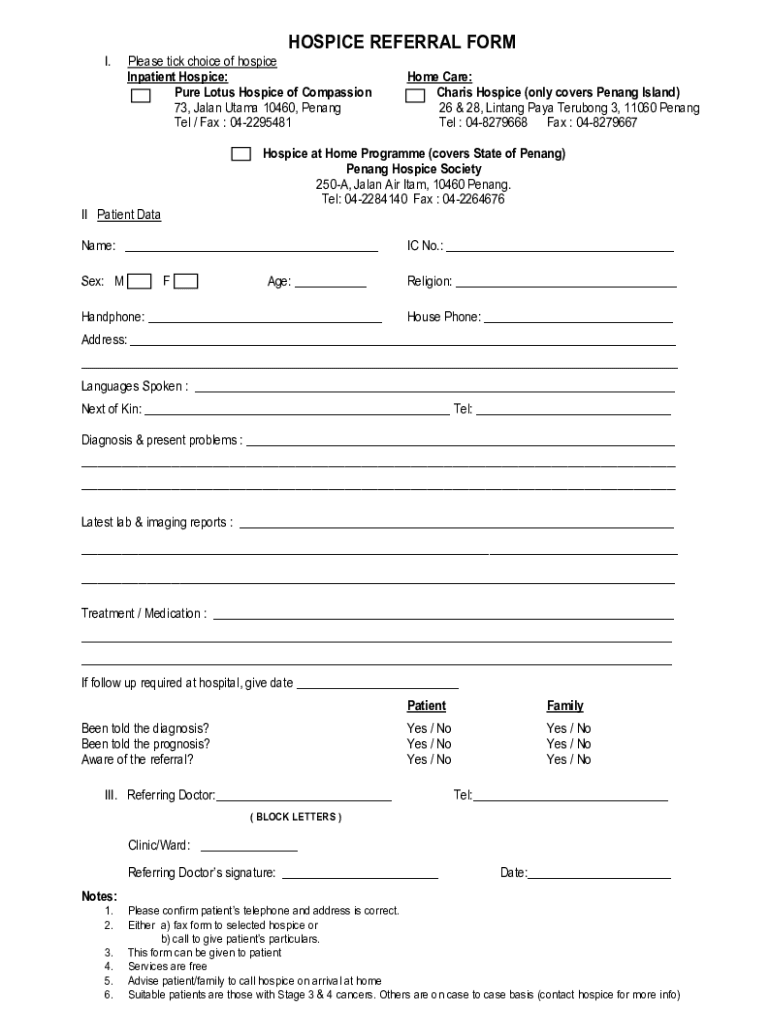
The "Hospice Referral Form" is a specialized document used to facilitate the process of referring patients to hospice care services. It serves as a vital communication tool between healthcare providers, hospice facilities, and families, helping to ensure that terminally ill patients receive appropriate and compassionate end-of-life care. This form typically includes key patient information, medical history, and specific hospice care needs, enabling healthcare providers to make informed decisions about the patient's care plan.
Hospice care focuses on addressing the physical, emotional, and spiritual needs of patients with terminal illnesses, aiming to improve their quality of life in their final days. The referral form is crucial as it initiates the process of transitioning the patient from curative treatment to palliative care, focusing on comfort rather than cure. Understanding the function and components of the hospice referral form is essential for ensuring timely and effective hospice care provision.
How to Use the Hospice Referral Form
Using the hospice referral form involves several critical steps, ensuring that the patient’s transition to hospice care is seamless and efficient.
-
Gather Patient Information: Collect comprehensive details about the patient, including personal identification, contact details, and relevant medical history. This information forms the basis of the referral and guides the hospice team in providing tailored care.
-
Medical Assessment: Include a detailed medical assessment conducted by the referring physician, outlining the patient’s diagnosis, prognosis, and current treatment plan. This section provides insight into the medical necessity for hospice care and the specific services required.
-
Determine Care Needs: Identify the specific hospice services the patient requires. These can range from pain management and symptom control to emotional and spiritual support. Clearly specifying these needs in the form facilitates a more personalized care approach.
-
Select Hospice Provider: Choose a suitable hospice care facility or service, considering factors such as location, reputation, and alignment with the patient’s preferences and values. The selected hospice provider will need to be notified and involved in the further planning of care.
-
Submit the Form: Once completed, the form should be submitted to the designated hospice service provider. This can typically be done via fax, email, or through a dedicated online portal, depending on the hospice's submission guidelines.
Throughout the process, it is essential to maintain open communication with the patient and their family, ensuring they are informed and comfortable with the transition to hospice care.
Steps to Complete the Hospice Referral Form
Completing the hospice referral form requires careful attention to detail and a systematic approach. The following steps provide a guideline for accurately filling out the form:
-
Patient Identification: Start by entering the patient’s name, date of birth, and contact information. This section ensures that the form pertains to the correct individual and facilitates further communication.
-
Healthcare Provider Details: Include information about the referring healthcare provider, such as name, title, and contact information. This ensures that both the referring and receiving parties can maintain open lines of communication.
-
Medical Diagnosis: Clearly state the patient’s diagnosis and relevant medical history. This information is crucial for assessing the patient’s eligibility for hospice care and informing the hospice team of any specific care requirements.
-
Referral Purpose: Indicate the primary reason for hospice referral, whether it is for pain management, symptom control, or additional support services. This helps prioritize the services that need to be administered first.
-
Insurance Information: Provide details about the patient’s insurance coverage, including policy number and provider name. This ensures that the financial aspects of hospice care are addressed promptly and accurately.
-
Consent and Authorization: Ensure that the patient’s consent is obtained and documented. The form should include a section where the patient or legal representative signs to authorize the referral and sharing of medical information with the hospice provider.
These steps must be followed meticulously to ensure that the hospice referral process is smooth and efficient, minimizing delays in care provision.
Important Terms Related to Hospice Referral Form
A comprehensive understanding of the terminology used in the hospice referral form is essential for accurately completing and interpreting the document.
-
Palliative Care: A holistic approach to care focused on improving the quality of life for patients with serious illnesses, emphasizing symptom relief and stress reduction.
-
Advance Directive: Legal documents that express a patient’s wishes regarding medical care in scenarios where they might be unable to communicate their preferences directly.
-
Interdisciplinary Team: A group of professionals from various healthcare disciplines, including doctors, nurses, social workers, and chaplains, who collaborate to provide comprehensive hospice care.
-
Do Not Resuscitate (DNR): A legal order indicating that the patient should not undergo CPR or other life-saving measures in the event of cardiac or respiratory arrest.
Understanding these terms facilitates more effective communication between all parties involved in the hospice care process, ensuring that the patient’s wishes and needs are respected.
Key Elements of the Hospice Referral Form
The hospice referral form consists of several key elements that collectively provide a comprehensive overview of the patient’s condition and care needs:
-
Patient Information: Details regarding the patient’s identity, contact information, and Social Security number are captured to ensure accurate identification and record-keeping.
-
Medical Evaluation: This includes the patient’s diagnoses, prognoses, and any existing medications or treatments. Thorough medical evaluation is integral to assessing the appropriateness of hospice care.
-
Care Plan Specification: A description of the proposed hospice care plan, outlining required services such as pain management, spiritual support, and family counseling. This section ensures that all parties involved understand the patient’s care trajectory.
-
Referral Source: Identification of the referring healthcare provider, along with their contact information, to facilitate ongoing communication.
-
Legal and Financial Information: Details such as insurance coverage, advance directives, and consent forms ensure that legal and financial considerations are addressed.
These elements work together to create a comprehensive document that serves as a foundation for delivering compassionate and patient-centered hospice care.
Legal Use of the Hospice Referral Form
The legal aspects of hospice referral forms are critical, as they ensure that the process complies with relevant healthcare regulations and that the patient’s rights are protected.
-
Consent and Authorization: Explicit patient consent is required to share medical information with hospice providers, ensuring compliance with HIPAA regulations regarding patient privacy and data protection.
-
Documentation of Need: Legal justification for hospice care must be documented, including the patient’s diagnosis and prognosis. This documentation is necessary for securing insurance coverage and ensuring the appropriateness of the care transition.
-
Compliance with Federal and State Laws: Hospice referral forms must adhere to both federal laws, such as the Medicare Hospice Benefit requirements, and any applicable state-specific regulations regarding end-of-life care.
Understanding the legal requirements associated with hospice referral forms safeguards the interests of both the patient and the healthcare providers, ensuring that care decisions are made transparently and ethically.
Examples of Using the Hospice Referral Form
Analyzing real-world scenarios where hospice referral forms are used can provide valuable insight into their practical application:
-
Case Study One: A 75-year-old patient with advanced-stage cancer is experiencing significant pain and distress due to the aggressive nature of her condition. Her primary care physician, after consultations with oncologists, decides to complete a hospice referral form to transition her to a hospice facility that can provide palliative care and improve her comfort during her remaining days.
-
Case Study Two: A 68-year-old man with congestive heart failure is repeatedly hospitalized due to complications. After discussing with his family and care team, it is determined that hospice care would benefit him more in terms of comfort and quality of life. His cardiologist fills out a hospice referral form, outlining his specific needs for symptom management and including his prior hospital admission details.
These examples highlight the versatility of hospice referral forms in addressing various medical conditions and improving patient care outcomes through timely hospice intervention.
Required Documents
To complete the hospice referral process successfully, specific documents are often required in conjunction with the hospice referral form:
-
Patient Identification: Valid identification documents, such as a driver’s license or state-issued ID, are necessary to verify the patient’s identity.
-
Medical Record Copies: Recent medical reports, including diagnosis summaries, medication lists, and previous treatment plans, support the information provided in the referral form.
-
Insurance Documentation: Copies of insurance cards and relevant policy documents ensure that financial considerations are appropriately managed.
-
Advance Directives: If the patient has advance care directives or living wills, these documents provide guidance on the desired scope and type of care.
Ensuring that all necessary documents accompany the hospice referral form simplifies the transition to hospice care and prevents unnecessary delays in service provision.