






Definition & Meaning
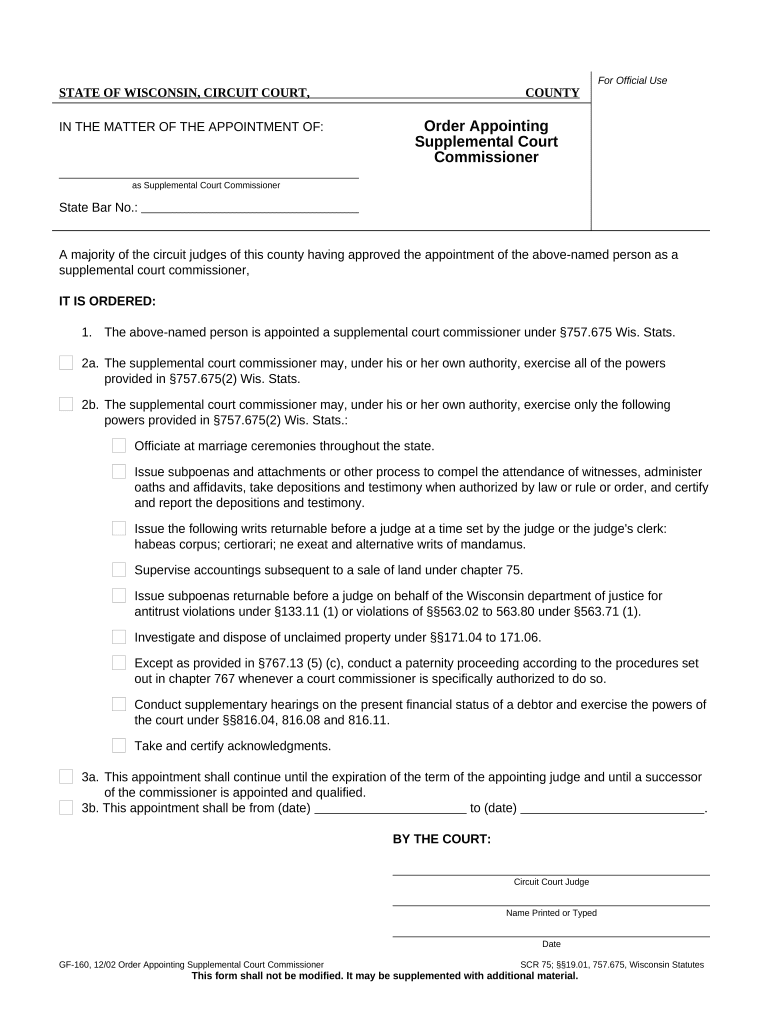
The "Order Appointing Supplemental Court Commissioner" is a legal document used in the judicial system to formally appoint an individual as a supplemental court commissioner. This role involves performing duties and exercising powers as permitted under state laws. Typically, these duties might include conducting hearings, making findings, and assisting judges in managing caseloads efficiently. The order outlines the specific responsibilities granted to the appointed commissioner, underscoring their authority within the legal jurisdiction.
How to Use the Order Appointing Supplemental Court Commissioner
Those utilizing the order need to follow precise protocols to ensure its efficacy in the legal process. Once an individual is nominated for the position and the order is issued, they must understand the scope of their new duties, which may vary by jurisdiction. Supplemental court commissioners must adhere to procedural guidelines to maintain the integrity of the court’s functions. The order serves as their official credential and must be referenced whenever their authority is exercised within legal proceedings.
Steps to Complete the Order Appointing Supplemental Court Commissioner
-
Nomination Process: Begin by identifying candidates who are eligible to serve as supplemental court commissioners. This might involve a nomination by a judge or an administrative body within the court system.
-
Filling Out the Order: The appointing authority, typically a judge, must complete the order form with the candidate's information and specific duties assigned.
-
Review and Approval: The draft order should be reviewed for compliance with state-specific regulations. It may require approval from higher judicial authorities.
-
Official Signing: Once approved, the order is signed by the appointing judge, bestowing the legal power to the supplemental court commissioner.
-
Filing and Distribution: The signed order must be filed with the court clerk’s office and copies distributed to relevant departments, ensuring all parties are informed of the new appointment.
Who Typically Uses the Order Appointing Supplemental Court Commissioner
This order is primarily utilized by judicial authorities, including judges and court administrators, involved in the appointment process. Supplemental court commissioners, who are often attorneys or retired judges, use the order as a record of their appointment. It is also relevant for court personnel who need to understand the hierarchy and authority within the court system to facilitate the case management process effectively.


Key Elements of the Order Appointing Supplemental Court Commissioner
- Appointee Information: Name and credentials of the new supplemental court commissioner.
- Duties and Scope of Authority: Detailed description of the responsibilities and legal powers granted.
- Effective Dates: The start and end date or term of the appointment.
- Signature and Seal: Authorized judicial signature and court seal to validate the appointment.
- Statutory Compliance: Reference to legal provisions supporting the appointment.
Legal Use of the Order Appointing Supplemental Court Commissioner
The legal use of this order is to ensure that court proceedings run smoothly by assigning specific tasks to the supplemental court commissioner. The order provides the legal foundation for these individuals to execute duties akin to those of a judge, such as conducting hearings or rendering decisions in certain matters. Its purpose is to support the judicial system by leveraging experienced individuals to reduce the workload on judges and expedite legal proceedings.
Important Terms Related to Order Appointing Supplemental Court Commissioner
- Supplemental Court Commissioner: An appointed official with judicial authority to assist in court proceedings.
- Jurisdiction: The legal authority under which the order is applicable.
- Duties: Specific responsibilities assigned to the commissioner, which may include case evaluations or administrative tasks.
- Appointing Authority: The judge or court official responsible for issuing the order.
State-Specific Rules for the Order Appointing Supplemental Court Commissioner
The rules governing the issuance of this order may vary significantly by state. Factors such as eligibility criteria for appointees, specific duties authorized, and procedural requirements differ based on local statutes. For instance, some states may have stricter qualifications for who can serve as a supplemental court commissioner, while others might focus more on the breadth of duties that can be delegated under the order.
Examples of Using the Order Appointing Supplemental Court Commissioner
In practice, a supplemental court commissioner might be appointed in a family court setting to handle preliminary hearings or mediate custody disputes, facilitating a smoother court process. Another example could involve a commissioner in a civil court handling discovery issues to ensure timely resolution without overburdening the presiding judge. Such uses demonstrate the order's role in enhancing court efficiency and the versatility of commissioners in various legal contexts.