Definition & Meaning
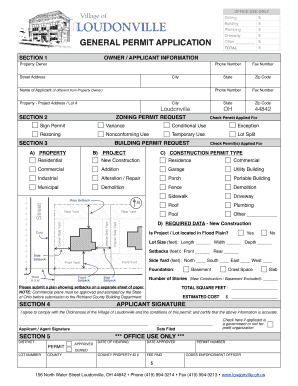
The Building Permit Application Form for Single and Two Family Dwellings is a standardized document required by local government authorities in the United States to regulate construction. It ensures that building projects adhere to safety codes and zoning laws. The form is utilized primarily in residential construction projects involving single-family and two-family dwellings.
Key Elements of the Building Permit Application Form
Understanding the critical components of the form ensures a smoother application process:
- Property Information: Includes the address, lot number, and zoning district.
- Applicant Details: Information about the property owner and contractor, including names, addresses, and contact details.
- Project Description: A detailed outline of the work to be performed, types of structures involved, and proposed use.
- Valuation of Work: Estimated cost of construction, which can affect the permit fee.
- Required Signatures: Must be signed by the owner, contractor, and sometimes the architect or engineer involved.
Steps to Complete the Building Permit Application Form
Completing the form correctly is crucial for timely approval:
- Gather Required Documents: Before filling out the form, collect necessary documents like site plans, construction drawings, and land surveys.
- Fill in Personal and Property Information: Accurately complete sections related to the applicant(s) and property location.
- Describe the Project: Clearly articulate what the project entails, providing specifics about materials and methods.
- Estimate Project Cost: Provide a realistic valuation of the project to avoid potential complications with fees.
- Sign and Date the Form: Ensure all necessary parties have reviewed and signed the form.
How to Obtain the Building Permit Application Form
Accessing and obtaining this form can be done through several channels:
- Local Government Offices: Forms are typically available at city or county building departments.
- Online Portals: Many jurisdictions offer downloadable forms on their official websites.
- Mail or In-Person: Request a copy by visiting the building department or sending a request via mail.
Important Terms Related to the Form
Several key terms and phrases are frequently associated with this form:
- Zoning: The legislative method dividing land into zones for different purposes such as residential, commercial, and industrial.
- Setback: The minimum distance which a building or other structure must be set back from a street or road, a river or other stream, a shore or floodplain, or any other place which is deemed to need protection.
- Easement: A legal right to use another's land for a specific limited purpose.
Legal Use of the Building Permit Application Form
Ensuring legal compliance with the use of the form is crucial:
- Safety Regulations: Adheres to building safety standards to prevent accidents or structural failures.
- Zone Compliance: Ensures that the proposed construction complies with local zoning laws.
- Rights and Responsibilities: Provides legal assurance and liability coverage for builders and property owners.
State-Specific Rules
The form may vary slightly between states due to differing regulations:
- Variance in Codes: Building codes and zoning laws can differ significantly, affecting form requirements.
- Regional Modifications: Some jurisdictions might have additional requirements or specific alterations to the standard form.
Form Submission Methods
Submission methods vary and can impact processing times:
- Online Submission: Many local governments offer portals for electronic form submission.
- In-Person Delivery: Direct submission at building department offices, enabling immediate questions and clarifications.
- Mail Submission: Sending the form by mail is an option, but could prolong the approval process.
State-by-State Differences
Each state has distinct requirements for building permits:
- California: Known for stringent environmental and seismic safety guidelines.
- Texas: Typically involves simplified zoning laws with varying regional requirements.
- New York: May require additional paperwork for historical preservation in applicable areas.
Examples of Using the Form
Real-life scenarios illustrate diverse uses of the form:
- Home Renovations: Needed for significant modifications like adding rooms or altering roofs.
- New Constructions: Essential when constructing a new home or duplex.
- Demolitions: Required when tearing down an existing structure to build anew.
Penalties for Non-Compliance
Failure to comply with regulations associated with the form can lead to:
- Fines: Financial penalties for unauthorized construction.
- Stop-work Orders: Legally enforced halts on construction until issues are resolved.
- Legal Action: Potential lawsuits or liabilities if construction violates safety regulations.
Required Documents
Various documents must accompany the form to assure compliance:
- Plot Plans: Showcases boundaries, structures, and proposed construction on the property.
- Architectural Drawings: Details of the design and construction methodologies.
- Contracts: Agreements between the property owner and contractor may be required for validation.
Software Compatibility
Digital versions of the form are often compatible with many productivity software programs:
- Adobe Acrobat: Commonly used for filling and signing PDF versions.
- Google Drive: Facilitates storage and sharing amongst stakeholders during the review process.
- Microsoft Office Suite: Can be used to draft required documents and spreadsheets related to the project.
These sections provide a detailed overview of the Building Permit Application Form for Single and Two Family Dwellings, ensuring clear understanding and efficient processing for applicants.