Definition and Meaning
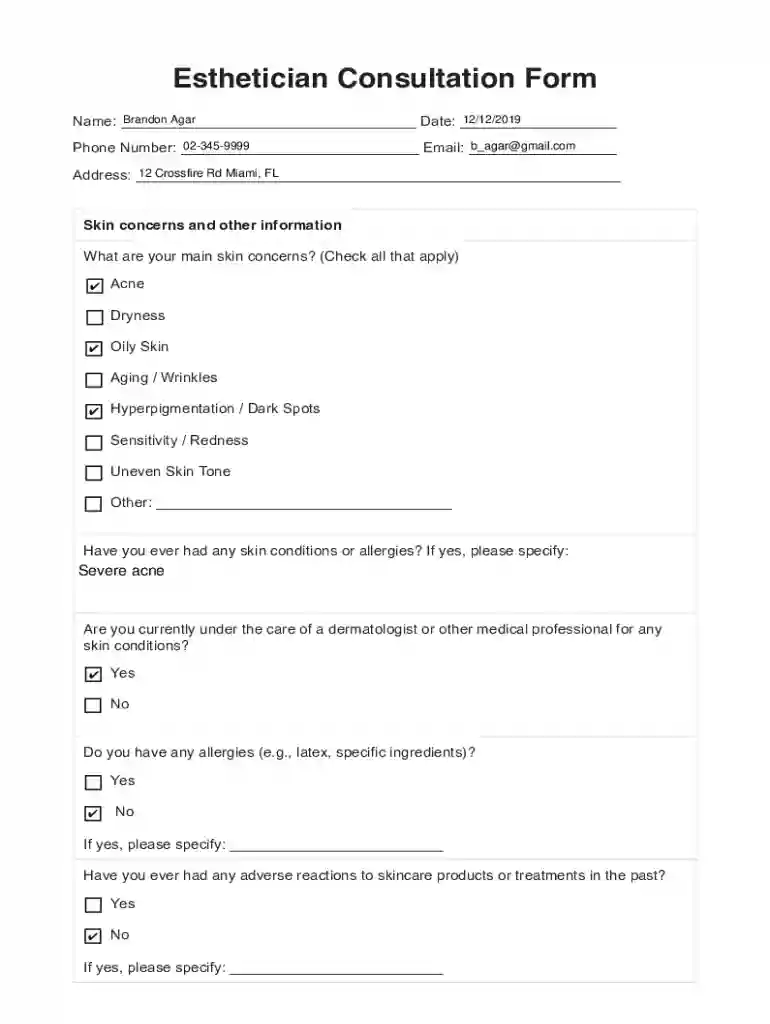
An "Esthetician Consultation Form" is a detailed document used by skincare professionals to gather essential information about their clients before providing any skin treatment or advisory services. This document is crucial as it captures data that can impact the treatment process and outcomes, ensuring personalized and effective skincare.
Key Components
- Personal Information: Includes the client's name, contact details, and possibly a referral source, which help in maintaining clear communication and follow-up.
- Medical History: Gathers data about any skin conditions, allergies, medication, or prior treatments which could influence treatment decisions.
- Lifestyle Information: Inquires about stress levels, diet, and water intake, as these factors can significantly affect skin health.
- Current Skincare Regime: Asks clients to list current skincare products and routines, which helps estheticians tailor advice.
Importance
Understanding the comprehensive background of a client's skin information aids in formulating a more effective treatment plan while minimizing risks associated with unknown allergies or incompatible products.
How to Use the Esthetician Consultation Form
To utilize the consultation form effectively, it should be integrated seamlessly at the beginning of the client engagement process.
Steps for Use
- Initial Client Meeting: Present the form during the client's first visit. Explain its purpose to ensure they understand the importance of providing accurate information.
- Guided Completion: Assist clients with filling out the form by answering any questions they may have, ensuring clarity and completeness.
- Review and Discuss: Once completed, review the form in detail with the client to confirm understanding and address any concerns raised.
Practical Tips
- Digital vs. Paper: Consider using digital forms for easier data storage and retrieval, reducing paper use and physical storage needs.
- Regular Updates: Encourage clients to update the form during each visit to ensure that all information remains current and relevant.
Steps to Complete the Esthetician Consultation Form
Completing the form thoroughly requires attention to detail, both from the client and the esthetician.
Detailed Instructions
- Personal Information Section: Ensure all fields are filled accurately, including alternative contact methods.
- Medical and Lifestyle Sections: Ask comprehensive questions about medical and skincare history, current health conditions, and lifestyle habits that might affect skin health.
- Consultation Review: After filling the form, conduct a detailed review session to discuss the information and any potential implications on treatment plans.
Common Challenges
- Data Accuracy: Clients might forget or misreport information. Ensuring a supportive environment can increase the accuracy of the data provided.
- Information Overlap: Overlapping information between sections can be streamlined by clarifying how each section's details uniquely contribute to the treatment planning.
Key Elements of the Esthetician Consultation Form
The consultation form must include specific sections to be effective in practice.
Comprehensive Sections
- Allergy/Reaction History: Dedicated space for noting any prior adverse reactions to skincare products or treatments.
- Goals and Expectations: Allows clients to articulate their treatment goals and expectations, aligning practitioner efforts with client desires.
- Consent and Disclaimer: Ensures clients consent to treatments and acknowledge understanding of potential risks.
Enhancements for Clarity
Including visual aids, such as diagrams of a skincare routine or medical history charts, can improve a client's understanding and accuracy in reporting.
Benefits of Using an Esthetician Consultation Form
The consultation form is beneficial for both the client and the esthetician, facilitating a professional and personalized service experience.
Client Benefits
- Tailored Treatments: By understanding the client's skin concerns and history, treatments can be better customized for effective results.
- Informed Decision-Making: With full disclosure of all relevant information, clients can make informed decisions regarding their skincare.
Esthetician Advantages
- Enhanced Professionalism: A standardized form reflects professionalism and preparedness, building client trust.
- Risk Mitigation: Accurate information reduces the likelihood of unforeseen complications, safeguarding both the esthetician and client.
Legal Use of the Esthetician Consultation Form
In the U.S., an esthetician consultation form serves not only a functional purpose but also holds legal significance in professional practice.
Legal Considerations
- Client Consent: Signed consent provides a layer of legal protection for professionals, substantiating that clients were informed about their treatments.
- Data Protection: Ensure compliance with data protection and privacy laws, maintaining confidentiality of client information.
Best Practices
Implement data encryption and secure storage solutions for electronic records, adhering to industry standards and regulations.
Usual Users
- Licensed Estheticians: Primary users who require detailed client skin profiles to guide treatment plans.
- Spa Owners and Managers: Utilize forms to uphold consistent service standards across their staff.
Scenarios Beyond Standard Use
- Training Programs: Esthetician training courses may use the form to teach best practices in client consultation.
- Product Testing Panels: Companies conducting skincare product testing can use these forms to gather extensive user feedback as part of their research process.
Examples of Using the Esthetician Consultation Form
Real-world examples of how the consultation form can influence skincare outcomes can illustrate its impact.
Case Study 1: Acne-Prone Client
An esthetician using a consultation form identified that a client’s acne was potentially exacerbated by stress and diet. By addressing these areas in the treatment plan, alongside topical applications, the client saw significant improvement.
Case Study 2: Allergic Reaction Prevention
A client previously experienced a severe reaction to a specific ingredient. The consultation form flagged this issue, allowing the esthetician to choose products that avoided the allergen, enhancing treatment safety.
By implementing comprehensive and structured use of esthetician consultation forms, professionals can enhance service delivery, client satisfaction, and treatment effectiveness.