NSW Statement of Claim Form 3B 2026

Get Form
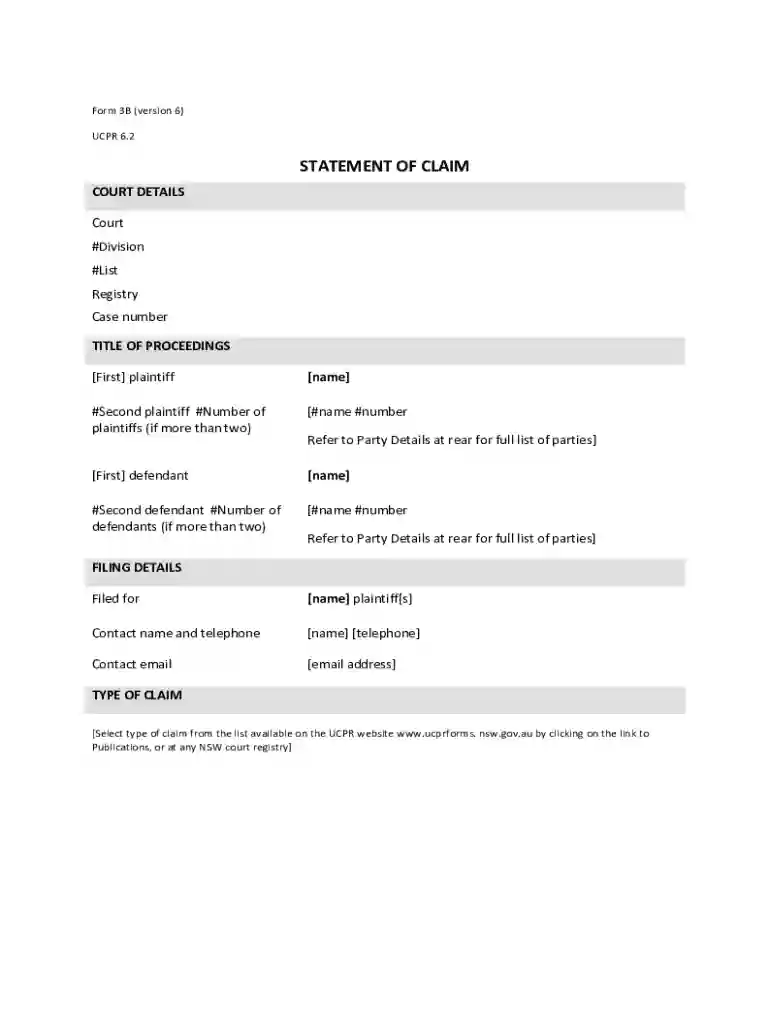
NSW Statement of Claim Form 3B Preview on Page 1

Here's how it works

01. Edit your form online
Type text, add images, blackout confidential details, add comments, highlights and more.

02. Sign it in a few clicks
Draw your signature, type it, upload its image, or use your mobile device as a signature pad.

03. Share your form with others
Send it via email, link, or fax. You can also download it, export it or print it out.

Definition and Purpose of the NSW Statement of Claim Form 3B

The NSW Statement of Claim Form 3B is a legal document used in New South Wales to formally set out the plaintiff's case in civil litigation procedures. It outlines the facts of the claim, the legal reasons for the action, and the specific remedies or damages sought by the plaintiff. The document serves as the foundation of a civil court case, starting the litigation process and notifying the defendant of the claims against them, enabling them to prepare an appropriate defense.

How to Use the NSW Statement of Claim Form 3B

To effectively use the NSW Statement of Claim Form 3B, follow these general steps:

  1. Drafting the Claim: Begin with a clear and concise statement of the facts that support your claim. Detail the circumstances, including dates, locations, and any relevant interactions, ensuring accuracy and completeness.
  2. Legal Context: Specify the legal grounds upon which your claim is based. Reference applicable laws or statutes that support your case, and be prepared to explain how these laws relate to your situation.
  3. Relief Sought: Clearly articulate the remedies or damages you are seeking. This could include monetary compensation, specific performance, or injunctive relief, depending on the nature of your claim.
  4. Attachments and Exhibits: Include any supporting documents, contracts, emails, or correspondence that will corroborate the details of your claim. These may be attached as exhibits to the form.
  5. Verification: Ensure that the form is signed and verified, confirming that the details provided are true and correct to the best of your knowledge.

How to Obtain the NSW Statement of Claim Form 3B

To obtain the NSW Statement of Claim Form 3B, you can access it through the New South Wales Courts website or visit the local court registry. Some legal service providers or law firms might offer downloadable templates for convenience. It is crucial to ensure you have the most up-to-date version to avoid any procedural discrepancies.

Steps to Complete the NSW Statement of Claim Form 3B

Completing the NSW Statement of Claim Form 3B requires attention to detail and a comprehensive understanding of the case facts:

  1. Personal Information: Enter the plaintiff's and defendant's personal information, including full names and addresses.
  2. Court Details: Specify the court registry where the case will be filed, the case number (if applicable), and other relevant court details.
  3. Statement of Claim: Clearly outline the nature of the dispute, focusing on factual information and establishing the basis of the claim.
  4. Legal Representation: Indicate whether you have legal representation or if you are representing yourself. Provide your lawyer's details if applicable.
  5. Signatures: Ensure the form is signed by the plaintiff or their representative. Some forms may require a witness or verification from a legal professional.

Who Typically Uses the NSW Statement of Claim Form 3B

Generally, individuals or entities involved in civil disputes use the NSW Statement of Claim Form 3B. These may include:


  • Plaintiffs in Contract Disputes: Parties alleging a breach of contract who are seeking legal remedies.
  • Involved in Tort Cases: Individuals claiming personal injury or property damage due to negligence or other torts.
  • Entities in Commercial Disputes: Businesses or corporations involved in litigation over commercial agreements, partnerships, or transactions.
  • Self-Represented Litigants: Individuals who choose to pursue their legal claims without formal legal representation.
decoration image ratings of Dochub

Key Elements of the NSW Statement of Claim Form 3B

The form contains several vital components that must be meticulously completed to ensure acceptance by the court:

  • Detailed Facts: An itemized account of events leading up to the dispute, presented in a factual manner without opinions or assumptions.
  • Legal Framework: A clear explanation of the legal principles that apply to the case.
  • Statement of Relief: A concise enumeration of the remedies sought, whether they be damages, equitable relief, or any other form of legal redress.
  • Signature and Verification: The form must be duly signed, and the plaintiff must verify the accuracy of the information provided.

Legal Use and Implications of the NSW Statement of Claim Form 3B

The NSW Statement of Claim Form 3B is a critical document in the litigation process, setting the legal grounds for the court proceedings. Failure to complete it accurately or comply with court procedures can result in delays or dismissals. It is important to understand the binding nature of the document once filed, as it initiates legal obligations on both parties—plaintiff and defendant.

Examples and Scenarios of Using the NSW Statement of Claim Form 3B

Consider the following scenarios where the NSW Statement of Claim Form 3B may be used:

  • Property Disputes: A homeowner files a claim against a contractor for incomplete renovations, detailing breach of contract.
  • Personal Injury Claims: An individual sues for personal injuries resulting from a car accident, supported by police reports and medical documents.
  • Commercial Litigation: A business owner files against a partner for breach of fiduciary duty, including financial records as evidence.

These examples illustrate the versatility of the form in addressing various civil dispute contexts in New South Wales.

be ready to get more

Complete this form in 5 minutes or less

Get form

Security and compliance

At DocHub, your data security is our priority. We follow HIPAA, SOC2, GDPR, and other standards, so you can work on your documents with confidence.

Learn more
ccpa2
pci-dss
gdpr-compliance
hipaa
soc-compliance
be ready to get more

Complete this form in 5 minutes or less

Get form