




01. Edit your form online
Type text, add images, blackout confidential details, add comments, highlights and more.

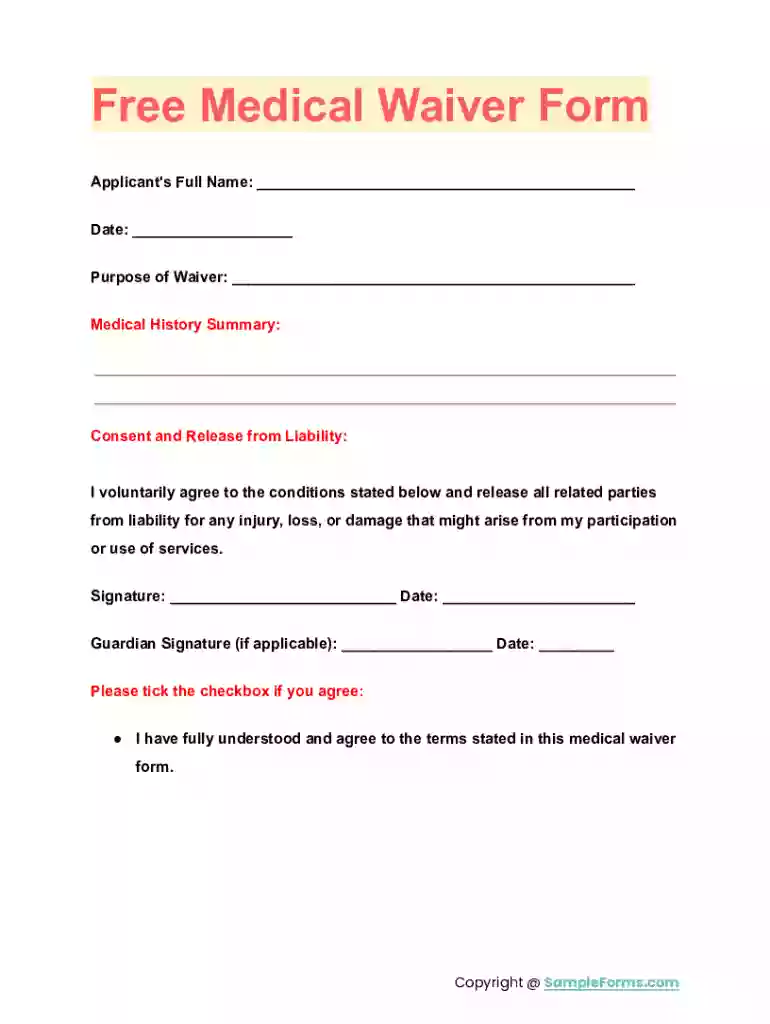
Type text, add images, blackout confidential details, add comments, highlights and more.

Draw your signature, type it, upload its image, or use your mobile device as a signature pad.

Send it via email, link, or fax. You can also download it, export it or print it out.
A "Medical Waiver Form" is a legally recognized document that absolves one party from liability regarding a participant's medical condition. It acknowledges that the participant understands the risks associated with an activity and consents to engage despite these risks. Such forms are crucial for safeguarding organizations from legal claims while informing participants of potential medical ramifications.
For instance, a sports camp may require participants to complete a medical waiver form, ensuring they understand the potential physical risks involved in participating.
Acquiring a medical waiver form is typically a straightforward process. Various organizations offer templates online, or they may be provided by the event or activity organizer.
Completing a medical waiver form requires precision to ensure it's legally binding.
Medical waiver forms serve multiple critical purposes.
The form is commonly used by any organization conducting activities involving physical exertion or potential health risks.


A university intramural sports team may require participants to sign a waiver before engaging in contact sports, recognizing potential injury risks.
Understanding key terminology related to medical waivers is essential.
The liability waiver section stipulates that by signing, participants release the organization from future claims.
The enforceability of medical waiver forms hinges on legal compliance.
Courts have upheld waiver forms that are clear in language and fully disclose risks associated with participation.
Several elements are critical to the efficacy of a medical waiver.
An outdoor adventure company includes a detailed section on altitude sickness risks on its waiver for mountain hiking excursions.
Failing to properly utilize medical waiver forms can result in severe legal and financial repercussions.
To mitigate risk, organizations should ensure all participants complete and understand the waiver prior to activity engagement.
At DocHub, your data security is our priority. We follow HIPAA, SOC2, GDPR, and other standards, so you can work on your documents with confidence.
I hereby consent to receive medical treatment which may be deemed advisable in the event of injury, accident or illness during this activity or event. ThisRead more
Jan 27, 2025 Use this form if you are applying for US citizenship and need to request an exception to the English and civics testing requirements for naturalization.Read more


