
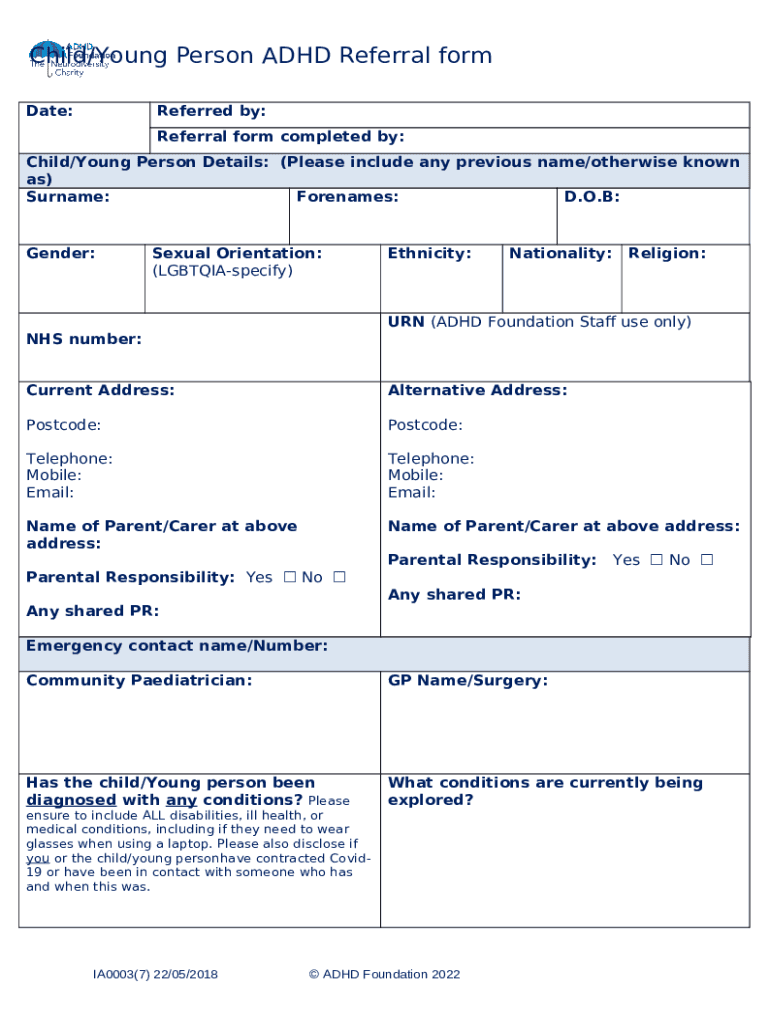







Definition and Purpose of the Child ADHD Referral Form
The Child ADHD Referral Form is a specialized document utilized to facilitate the referral process for children suspected of having Attention Deficit Hyperactivity Disorder (ADHD). Its primary purpose is to gather relevant information from parents, guardians, educators, or healthcare providers regarding the child's behavioral patterns, medical history, and any observed symptoms. By consolidating this data, the form assists in streamlining the initial assessment phase conducted by educational or medical professionals. This ensures that the referral for further evaluation, diagnosis, and treatment is grounded in comprehensive and organized information.
Steps to Obtain the Child ADHD Referral Form
Obtaining a Child ADHD Referral Form typically involves contacting the relevant institution or professional responsible for initiating the referral process. This might include:
-
Consulting with a School Counselor or Teacher: Many educational institutions have standardized forms available and can guide parents or guardians through the process.
-
Visiting a Pediatrician or Family Doctor: Healthcare providers often have copies of these forms or can refer parents to the appropriate resources.
-
Accessing Online Resources: Some health departments or educational bodies provide downloadable versions of the form on their official websites, allowing easier access.
How to Use the Child ADHD Referral Form
Using the Child ADHD Referral Form requires detailed input to ensure all relevant aspects of the child’s behavior and history are captured:
-
Personal Information: Begin by filling out the child's demographic details, including their full name, date of birth, and contact information.
-
Observational Data: Provide specific examples of behaviors that might point to ADHD, such as inattention, hyperactivity, and impulsiveness, including context and frequency.
-
Medical and Educational History: Include any prior diagnoses, treatments, or interventions the child has undergone, as well as a brief educational performance overview.
-
Supporting Documentation: Attach any relevant documents, such as previous psychological reports, teacher comments, or medical records that can aid in the assessment.
Key Elements of the Child ADHD Referral Form
The Child ADHD Referral Form contains several crucial sections designed to extract pertinent information:
-
Child and Family Information: Captures basic demographic data and family medical history.
-
Developmental and Medical History: Requests details on the child's early development milestones, prior health issues, and current medications.
-
Behavioral Observations: This section is pivotal, as it asks for specific examples of ADHD-related behaviors observed in various settings, such as home or school.
-
Educational Impact: Explores how the child's behaviors affect their academic performance and social interactions within the school environment.
-
Previous Interventions: Details any strategies or interventions previously employed and their outcomes.
Important Terms Related to the Child ADHD Referral Form
Several terms are central to understanding and completing the Child ADHD Referral Form:
-
Inattention: Difficulty maintaining focus on tasks or play activities.
-
Hyperactivity: Excessive movement or talking that is not appropriate for the context.
-
Impulsiveness: Acting without thinking about the consequences or interrupting frequently.
Understanding these terms is crucial, as they guide the accurate description of behaviors necessary for an effective referral.
Legal Use of the Child ADHD Referral Form
The Child ADHD Referral Form serves as an official record in the assessment process and must be used following legal and ethical guidelines:
-
Confidentiality: All information provided in the form should be kept confidential, shared only with professionals directly involved in the child's assessment and care.
-
Informed Consent: Parents or guardians must be informed about the referral process, and their consent should be obtained before the form is completed and submitted.
-
Compliance with Regulations: Ensure compliance with relevant laws and guidelines, such as the Health Insurance Portability and Accountability Act (HIPAA) for healthcare privacy.
Common Scenarios for Child ADHD Referral Form Use
This referral form is commonly utilized in various scenarios:
-
Educational Settings: Teachers or school counselors may initiate a referral after observing consistent behavioral concerns that impact academic performance.
-
Healthcare Evaluations: Pediatricians may request a referral form to gather school and home behavior data as part of a comprehensive ADHD evaluation.
-
Parental Concerns: Parents may complete the form to seek professional advice or services after noticing symptoms consistent with ADHD.
Software and System Compatibility for Form Completion
Completing and managing the Child ADHD Referral Form online requires software compatibility considerations:
-
File Formats: The form may be available in formats like PDF or DOC, which can be edited using software such as Adobe Reader or Microsoft Word.
-
Integration with Systems: Some forms can be integrated with document management platforms like DocHub, allowing seamless editing, signing, and sharing.
-
Mobile Accessibility: Ensure the form can be filled out on mobile devices, which is crucial for parents or educators preferring to complete it on tablets or smartphones.
These compatibility factors ensure the form can be completed efficiently and effectively within various digital environments.




