







Definition & Meaning
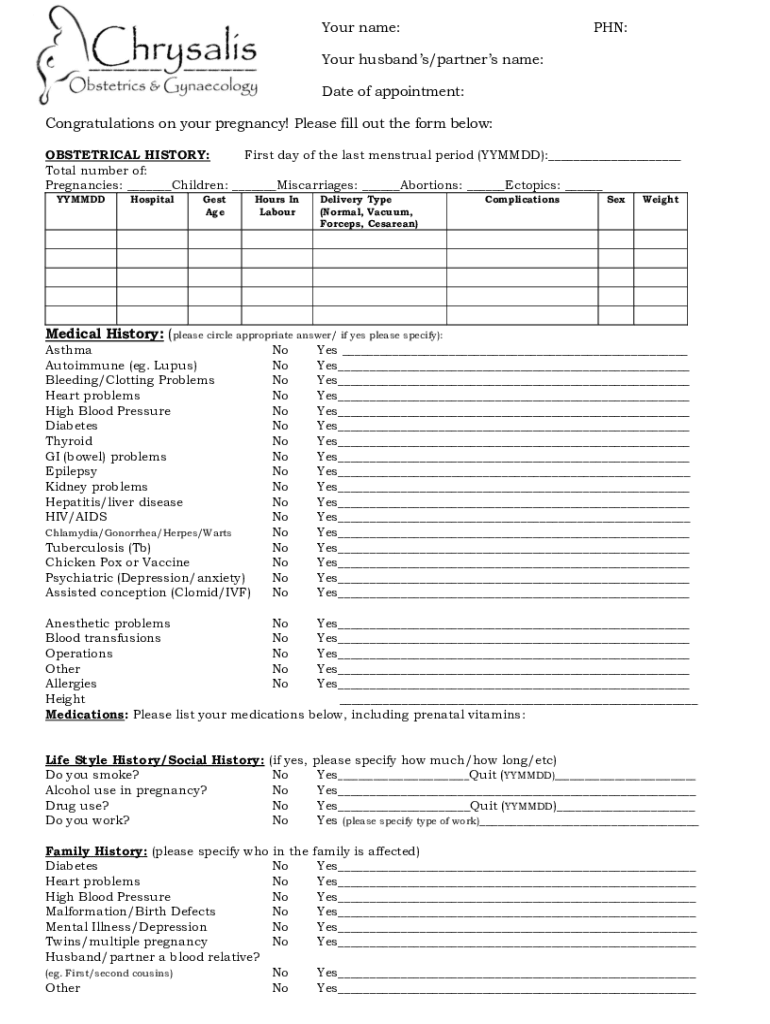
The Pregnancy Medical History Form is an essential document used to collect detailed medical history from an expectant individual to inform healthcare providers about previous medical events, obstetrical history, and any potential health risks during pregnancy. This form ensures that healthcare practitioners have the necessary information to offer personalized care and manage any medical conditions that could affect the pregnancy's progression. Understanding and completing this form can help anticipate and mitigate complications, resulting in a more focused prenatal care plan.
How to Use the Pregnancy Medical History Form
The use of the Pregnancy Medical History Form typically begins when a healthcare provider or clinic requests it during an initial prenatal visit. Pregnant individuals are expected to fill out the form with precise and honest information regarding their past medical conditions, family medical history, and obstetrical history. Upon completion, the form is reviewed by a healthcare professional who may discuss individual health concerns, previous healthcare experiences, and formulate a care plan accordingly.
Common Sections on the Form
- Personal Information: Includes details such as name, date, and contact information.
- Obstetrical History: Records previous pregnancies, including miscarriages, abortions, and full-term births.
- Medical History: Covers past illnesses, major surgeries, and chronic conditions.
- Family Medical History: Provides information regarding genetic conditions or common hereditary diseases.
- Lifestyle Information: Considers lifestyle factors such as diet, exercise, smoking, or alcohol consumption.
Steps to Complete the Pregnancy Medical History Form
-
Gather Personal Information: Start by filling out factual personal details including your full name, contact number, and the date of the appointment.
-
Provide Detailed Obstetrical History: List previous pregnancies, outcomes, complications, and any relevant healthcare interventions.
-
Medical and Surgical History: Note any chronic illnesses, surgeries, or ongoing treatments you are receiving.
-
Detail Family Medical History: Include any known genetic conditions, and chronic diseases prevalent within your family.
-
Lifestyle and Personal Health Habits: Share valuable insights into your regular diet, exercise routines, and exposure to harmful substances.
-
Review and Finalize: Check the form thoroughly for completeness and accuracy before submission to your healthcare provider.
Why You Should Complete the Pregnancy Medical History Form
Completing the Pregnancy Medical History Form is crucial for identifying and managing potential health risks. The form serves as a comprehensive tool for healthcare providers to tailor care plans and interventions based on individual history. By understanding specific medical and family backgrounds, providers can anticipate complications, thus enhancing prenatal and postnatal care quality. This form also supports open communication between patients and healthcare providers, aligning expectations and ensuring a supportive pregnancy journey.
Key Elements of the Pregnancy Medical History Form
Personal Information
- Full Name and Date of Birth: To uniquely identify and correlate medical records.
- Contact Information: For efficient communication and scheduling appointments.
Health and Medical Background
- Allergies and Medications: Knowledge of past and present medication usage or allergic reactions prevents adverse interactions.
- Chronic Conditions: Recording ongoing health challenges ensures continued management during pregnancy.
Pregnancies and Outcomes
- Detailed Pregnancy Records: Document each pregnancy's duration, outcome, and any complications faced.
- Delivery Types and Dates: Clarifies experience with types of childbirth for planning future pregnancies.
Examples of Using the Pregnancy Medical History Form
This form proves invaluable in various scenarios within maternal healthcare, such as:
- Routine Prenatal Visits: Guides physicians in monitoring health status, planning tests, and prescribing medications.
- Emergency Situations: Provides quick access to vital health information that can inform emergency medical decisions.
- Specialist Referrals: Share accurate data with specialists for advanced care or high-risk pregnancy management.
Important Terms Related to Pregnancy Medical History Form
- Obstetrical History: Refers to a comprehensive overview of a woman’s past pregnancies, childbirth experiences, and outcomes.
- Genetic Conditions: These involve hereditary diseases that could pass through family members, impacting pregnancy and child health.
- Chronic Conditions: Long-standing diseases or health issues remain critical to managing during pregnancy and childbirth planning.
By understanding these terms, both patients and healthcare professionals can better navigate the details required in the Pregnancy Medical History Form.
Legal Use of the Pregnancy Medical History Form
The legal aspect of the Pregnancy Medical History Form is grounded in healthcare privacy laws, such as HIPAA in the United States, which ensure that all the recorded information is used solely for medical purposes. Healthcare providers are obligated to maintain patient confidentiality and use personal data appropriately to offer the best prenatal care possible. Properly documented medical history can also be essential in legal contexts, should healthcare disputes arise.




