







Definition & Meaning
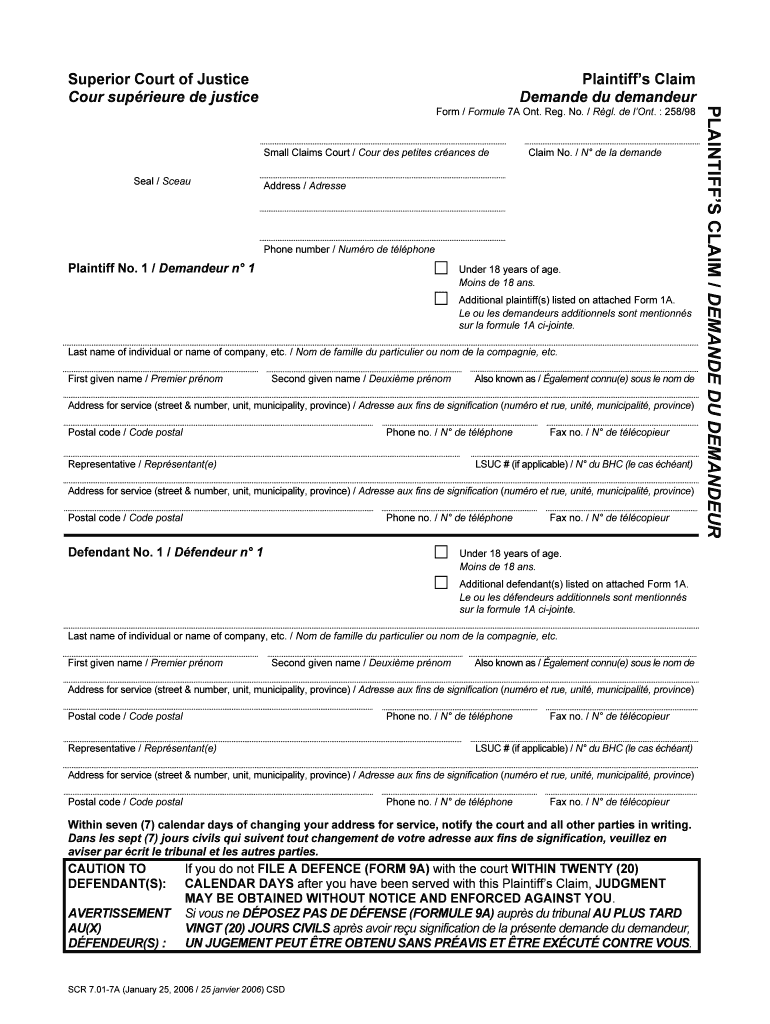
The "Plaintiff's Claim Form 7A" is a legal document utilized in small claims court proceedings in several jurisdictions within the United States. It serves as the formal initiation of a lawsuit by the plaintiff against one or more defendants. The form outlines the specifics of the claim, including the nature of the complaint, the amount being claimed, and the legal basis for the plaintiff's case. This form is essential for accessing the streamlined court processes that small claims courts offer, providing individuals and small businesses with a more efficient way to resolve disputes involving smaller monetary amounts.
Components of the Form
- Plaintiff Information: Includes name, contact details, and address of the party initiating the claim.
- Defendant Information: Requires detailed information about the party being sued, such as name and address.
- Claim Details: The reason for the claim, grounds for legal action, and any specific laws or contractual terms involved.
- Monetary Demand: Specifies the amount of money the plaintiff seeks, including any interest or additional damages.
How to Use the Plaintiff's Claim Form 7A
The Plaintiff's Claim Form 7A can be a critical tool for anyone seeking resolution in small claims court. To ensure its effective use, it is important to follow the prescribed steps carefully. This form serves as both a formal complaint and a means to set the legal proceedings in motion, necessitating precision and completeness in its completion.
Step-by-Step Instructions
- Gather Information: Collect all relevant details about the dispute, including evidence such as contracts, emails, and receipts.
- Complete the Form: Fill in each section with accurate and complete information. Ensure all allegations and claims are clearly detailed.
- File the Form: Submit the completed form to the small claims court, either in person, by mail, or through a designated online system.
- Serve the Defendant: Legally deliver a copy of the form to the defendant, following the court's guidelines for service.
Key Elements of the Plaintiff's Claim Form 7A
A successful claim hinges on the accurate inclusion of certain key components. These elements not only communicate the essence of the lawsuit but also ensure that the claim is actionable within the legal framework of small claims court.
Essential Sections
- Parties Involved: Describes who is suing whom and identifies all parties by name and address.
- Nature of the Claim: Details the complaint, including the facts of the case, legal grounds, and any applicable statutory laws.
- Amount in Controversy: The sum of money being claimed, inclusive of costs or any statutory caps applicable in small claims.
- Verification: A signature section affirming that the information provided is true and correct to the best of the plaintiff's knowledge.
Steps to Complete the Plaintiff's Claim Form 7A
Completing the Plaintiff's Claim Form 7A requires meticulous attention to detail, as any errors or omissions can delay proceedings or adversely affect the outcome of the case.
Detailed Completion Guide
- Read the Instructions: Begin by reviewing the court's guidelines for completing the form, which may be included in the form itself or available on the court's website.
- Section Details: Carefully fill out each section:
- Plaintiff and Defendant Information.
- Description of Claim: Clearly articulate the issue and grounds for the lawsuit.
- Financial Summary: State the exact monetary amount sought, with a breakdown if necessary.
- Supplemental Documents: Attach supporting evidence, such as contracts, photos, and correspondence, as annexes to strengthen your claim.
- Proofreading: Check all entries for accuracy and completeness before submitting.
Legal Use of the Plaintiff's Claim Form 7A
The legal purpose of the Plaintiff's Claim Form 7A is to allow claimants to seek redress in matters suitable for small claims court, typically involving limited financial disputes. This form is crafted to align with simplified court procedures designed to be accessible without necessitating extensive legal intervention.
Considerations for Legal Compliance
- Understanding Jurisdiction: The geographic or subject-matter limits within which the small claims court can make a ruling.
- Adherence to Rules: Compliance with deadlines, service procedures, and format requirements as dictated by the jurisdiction's small claims division.
- Statute of Limitations: Awareness of time limits for filing claims post-occurrence of the dispute.
State-Specific Rules for the Plaintiff's Claim Form 7A
While the form itself remains relatively consistent, the rules governing its use can vary significantly from state to state. Understanding these distinctions is key for ensuring both compliance and the successful advancement of a claim.
Variability by Location
- Monetary Limits: Different states impose varying caps on the amounts that can be claimed in small claims court.
- Filing Fees: Costs associated with filing the form can vary and may affect the choice of proceeding in small claims.
- Timeframes: Each state sets its own timetable for how quickly cases should progress.
Examples of Using the Plaintiff's Claim Form 7A
Practical examples can illuminate how this form is applied in real-world scenarios, offering insights into its flexibility and utility in diverse legal contexts.
Case Studies
- Breach of Contract: A business sues to recover losses after a contractual breach by a supplier.
- Property Damage: A tenant uses the form to claim damages from a landlord for uninhabitable living conditions.
- Unpaid Invoices: A freelancer files a claim against a client for non-payment of services rendered.
Filing Deadlines & Important Dates
Adherence to procedural timelines is imperative in the small claims process. Understanding and meeting these deadlines ensures that the claim remains valid and that the court can process it without undue delay.
Timeline Management
- Initial Filing: Ensure the form is submitted within the statute of limitations pertinent to the claim type.
- Service Deadlines: Complete the service of the form to the defendant within court-specified timeframes.
- Hearing Dates: Monitor and prepare for all docketed court dates to avoid inadvertent forfeiture of rights.
Efficient handling of each stage ensures a smooth progression through the small claims procedure, supporting a favorable outcome for the plaintiff.




