






Definition and Meaning of the Emergency Trauma Hot Debrief Form
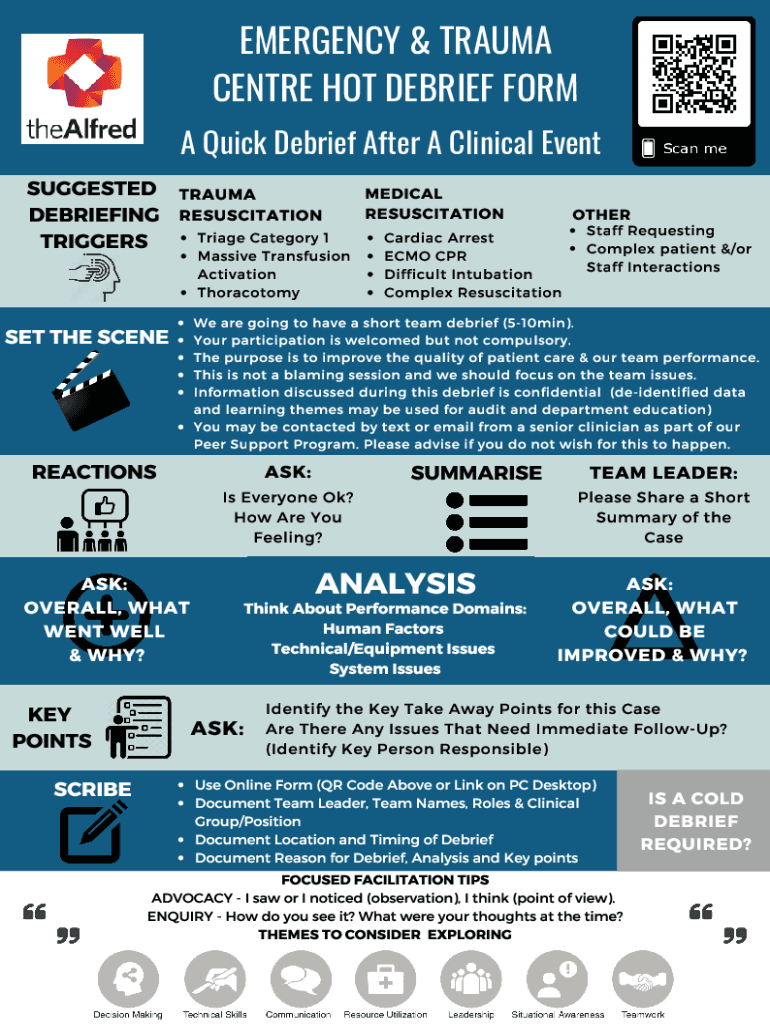
The Emergency Trauma Hot Debrief Form is utilized immediately following a clinical event in an emergency or trauma setting. Its purpose is to facilitate a structured reflection and discussion among the medical team to assess the clinical actions taken during the event. This debrief helps identify both strengths and areas for improvement, enhancing future patient care and team performance.
Key Components
- Reflection on Clinical Practices: Helps the team evaluate decisions and procedures implemented during the event.
- Identification of Improvements: Provides a platform for recognizing process enhancements or alternative approaches.
- Emotional Support: Offers a safe space for team members to share their experiences and emotional responses.
How to Use the Emergency Trauma Hot Debrief Form
To effectively utilize the form, it is essential to gather all relevant team members as soon as possible after the clinical event. Here's how you can proceed:
- Initiate the Debriefing: Start the session by setting a supportive and open atmosphere for discussion.
- Review and Reflect: Go through each section of the form, prompting team members to share insights, observations, and emotions.
- Document Findings: Ensure all reflections and suggestions are recorded on the form for future reference and potential action.
How to Obtain the Emergency Trauma Hot Debrief Form
Acquiring this form is straightforward, and there are various ways to do so:
- Hospital Administration: Typically, forms can be requested from your facility's administrative department.
- Digital Platforms: Some institutions provide digital access via their internal software systems or document management platforms.
Steps to Complete the Emergency Trauma Hot Debrief Form
Completing the form efficiently requires attention to detail and input from all team members involved in the clinical event:
- Participant Identification: List all individuals present during the debrief.
- Event Description: Provide a brief overview of the clinical event.
- Critical Analysis: Discuss and document each participant’s views on what went well and what could be improved.
- Actionable Items: Note down any agreed action points for improving future response efforts.
Why Use the Emergency Trauma Hot Debrief Form
Using this form brings multiple advantages to emergency and trauma care:
- Improved Patient Outcomes: Helps refine clinical practices, leading to better patient management.
- Enhanced Team Dynamics: Fosters communication and collaboration among team members.
- Continuous Improvement: Encourages ongoing education and skills enhancement through reflective practice.
Who Typically Uses the Emergency Trauma Hot Debrief Form
This form is predominantly used by:
- Emergency Physicians: To evaluate and discuss treatment protocols and outcomes.
- Nursing Staff: To share observations about patient response and potential nursing care improvements.
- Support Teams: Includes paramedics and other staff involved in acute patient care.


Key Elements of the Emergency Trauma Hot Debrief Form
Each section of the form is designed to cover essential aspects of the debrief process:
- Immediate Reactions: Captures initial thoughts and feelings post-event.
- Clinical Procedures: Reviews step-by-step actions taken during the emergency.
- Lessons Learned: Identifies emerging lessons and strategies to implement.
Important Terms Related to the Emergency Trauma Hot Debrief Form
Understanding the terminologies used can enhance the effectiveness of the debrief process:
- Debriefing Trigger: Specific events or outcomes that necessitate a hot debrief.
- Resuscitation Sequence: The order of interventions during critical patient management.
- Massive Transfusion Activation: Protocols involved in emergency blood transfusion scenarios.
Examples of Using the Emergency Trauma Hot Debrief Form
Real-world scenarios where the form proves invaluable:
- Post-Resuscitation Analysis: After a challenging resuscitation, the form helps analyze the sequence of events and team dynamics.
- Complex Trauma Cases: Facilitates a comprehensive review following multi-trauma incidents, enhancing multi-disciplinary team coordination.
These sections offer a detailed overview of the Emergency Trauma Hot Debrief Form, providing a practical guide for effective use in emergency settings.