
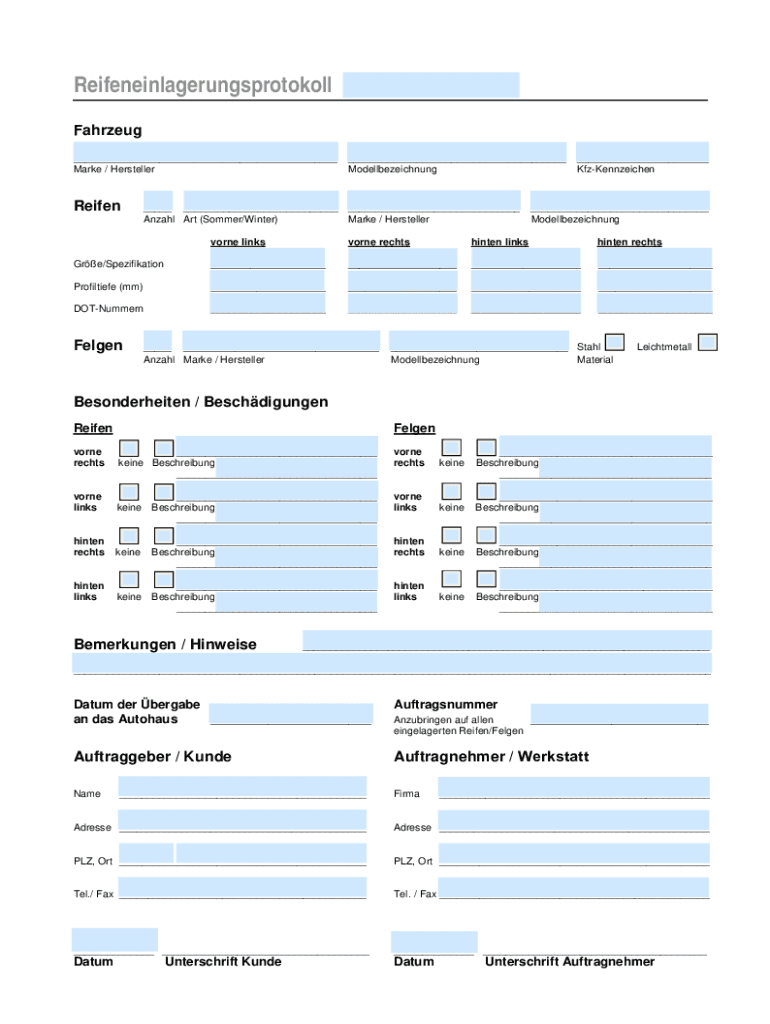







Definition and Meaning of Reifeneinlagerungsprotokoll
"Reifeneinlagerungsprotokoll" is a document used primarily in the automotive sector for managing and documenting the storage of tires. This protocol is pivotal for both individual car owners and businesses, as it provides a structured way to track tire inventory, usage, and maintenance. Proper tire storage is crucial for safety and performance, and the protocol ensures that all essential information is recorded meticulously.
Key Components
- Tire Specifications: This section includes details such as tire type (summer or winter), brand, and size.
- Vehicle Information: Model and manufacturer details of the vehicle associated with the tires.
- Storage Conditions: Documentation of the environment where the tires are stored, ensuring optimal conditions.
- Maintenance Records: History of any maintenance performed on the tires, such as rotations or pressure checks.
Steps to Complete the Reifeneinlagerungsprotokoll
Properly completing the Reifeneinlagerungsprotokoll involves a series of methodical steps to ensure accuracy and completeness.
Step-by-Step Guide
- Identify the Vehicle: Start by entering the vehicle's make, model, and license plate number. This information links the tires to the correct vehicle.
- Record Tire Details: Detail each tire's specifications, including number, type, and brand.
- Document Storage Environment: Note the storage conditions, ensuring that the tires are maintained in a suitable environment.
- Maintenance Records: Log any maintenance tasks performed on the tires, such as balancing or pressure adjustments.
- Finalize and Review: Ensure all sections are complete and accurate before storing the protocol for future reference.
Common Mistakes
- Omitting details such as tire type or brand
- Incorrect vehicle information leading to misplaced records
- Neglecting to update maintenance history, which can affect tire safety.
Importance of Using the Reifeneinlagerungsprotokoll
The utility of a Reifeneinlagerungsprotokoll extends beyond simple record-keeping. It serves both practical and regulatory functions, offering numerous benefits.
Benefits
- Safety: Ensures tires are maintained under conditions that preserve their integrity and performance.
- Efficiency: Streamlines the management of tire inventories for businesses.
- Compliance: Meets industry regulations and standards for automobile maintenance and storage.
Use Cases
- Individual Car Owners: To keep track of seasonal tire changes and maintain optimal tire conditions throughout the year.
- Automotive Businesses: Helps manage large inventories effectively, reducing errors and improving service quality.
How to Obtain the Reifeneinlagerungsprotokoll
Obtaining this form involves a simple procedure, usually facilitated by automotive service providers or downloadable templates.
Sources to Acquire
- Automotive Service Centers: Many provide the protocol directly to customers during tire change services.
- Online Platforms: Templates are available for download, allowing users to customize them as needed.
Considerations
- Ensure the form aligns with your specific requirements, particularly if using an online template.
- Verify that all sections of the form are applicable to your situation before use.
Key Elements of the Reifeneinlagerungsprotokoll
Recognizing the critical elements of the Reifeneinlagerungsprotokoll helps users maintain consistent and thorough documentation.
Critical Sections
- Tire Details: Information on the number and type of tires, essential for inventory accuracy.
- Vehicle Information: Connects tires to the correct vehicle, crucial for service records.
- Storage Information: Ensures that each storage entry documents the conditions for safety and compliance.
Documentation Practices
- Ensure all entries are accurate and updated promptly following each tire service.
- Regular audits of the records can prevent errors and ensure compliance with industry standards.
Who Typically Uses the Reifeneinlagerungsprotokoll
The typical users of the Reifeneinlagerungsprotokoll span from individual vehicle owners to businesses in the automotive sector.


User Groups
- Private Vehicle Owners: To manage seasonal tires efficiently.
- Automotive Workshops and Dealers: For managing large volumes of tire inventories.
- Fleet Managers: Use the protocol to ensure all fleet vehicles are equipped with well-maintained tires.
Industry Applications
- In specialized automotive service businesses, where maintaining precise tire records is integral to operations.
- Among professional fleet services for ensuring timely tire maintenance and replacements.
Legal Use of the Reifeneinlagerungsprotokoll
Using the Reifeneinlagerungsprotokoll correctly not only aids in record-keeping but also aligns with legal standards and requirements.
Compliance Factors
- Ensures adherence to safety regulations that require documentation of tire conditions and maintenance.
- Provides a legal record that can be referenced in the event of a dispute or investigation.
Documentation Standards
- Must be completed correctly and stored securely for a stipulated period as required by local regulations.
Examples of Using the Reifeneinlagerungsprotokoll
Practical examples illustrate how the Reifeneinlagerungsprotokoll is utilized in various scenarios.
Real-World Applications
- Small Business Owner: Uses the protocol to streamline seasonal tire storage for customer vehicles, enhancing service delivery.
- Fleet Management Company: Tracks tire usage across a large fleet, ensuring timely replacements and preventing tire-related issues.
Variations and Adaptations
- Tailored adaptations might be necessary to suit different business models or customer requirements, ensuring that all critical tire data is captured effectively.
Each of these sections expands and elaborates on the critical role of the Reifeneinlagerungsprotokoll in managing tire storage and maintenance, ensuring comprehensive and valuable content for users.




