
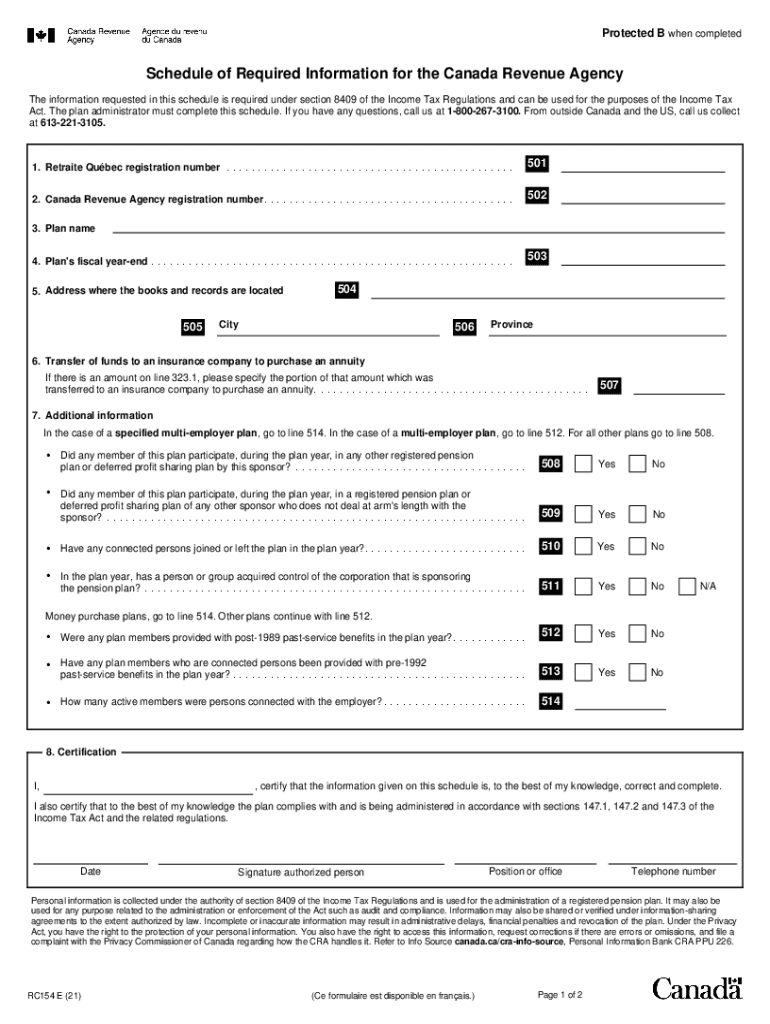







Definition and Meaning of the Canada Revenue Agency Schedule of Required Information
The "Canada Revenue Agency Schedule of Required Information" is a formal document mandated by the Canada Revenue Agency (CRA) under section 8409 of the Income Tax Regulations. This schedule includes critical information that taxpayers must provide when filing their taxes in Canada. It serves as a checklist to ensure comprehensive compliance with the CRA's requirements. Understanding this document is essential for accurate and legal tax reporting, and it captures various financial details that form the basis of calculating tax obligations.
Key Elements of the Canada Revenue Agency Schedule of Required Information
Several key elements are standard in the "Canada Revenue Agency Schedule of Required Information." Each element ensures that the taxpayer's financial data is reported correctly:
- Income Sources: Includes employment income, dividends, rental income, and other financial inflows.
- Deductions and Credits: Lists eligible deductions and credits that reduce taxable income, such as RRSP contributions and childcare expenses.
- Business Income: Details business-related revenues and expenses if applicable.
- Investment Income: Includes capital gains and interests from various investments.
- Spousal Information: Relevant for joint filings or when claiming spousal credits.
These elements guide the taxpayer through the necessary data to be submitted to meet tax obligations appropriately.
Steps to Complete the Canada Revenue Agency Schedule of Required Information
Completing the "Canada Revenue Agency Schedule of Required Information" involves several steps. Following this process ensures accuracy and compliance:
- Gather Financial Documents: Collect all necessary paperwork, including pay slips, investment statements, and receipts for deductions.
- Review Instructions: Refer to the CRA’s guidelines to ensure understanding of the requirements.
- Fill Out Personal Information: Include personal details such as Name, SIN, and address.
- Complete Income Section: Accurately report all sources of income.
- Enter Deductions and Credits: Document all eligible deductions and credits.
- Verify Data: Ensure all entries are accurate and complete.
- Submit the Schedule: Depending on the mode of filing, submit the document either electronically or via mail.
Each step is crucial for avoiding potential penalties or requests for additional information from the CRA.
Who Typically Uses the Canada Revenue Agency Schedule of Required Information
This schedule is typically used by individual taxpayers and businesses operating within Canada. It is pivotal for:
- Self-Employed Individuals: Those who must declare comprehensive business income and expenses.
- Corporate Entities: Firms that need to report financial activities, deductions, and credits accurately.
- Retirees: Individuals who declare pensions and various retirement-related incomes.
- Investors: Those who need to report investment income and capital gains.
Understanding who uses this schedule is vital for recognizing the document's importance across different taxpayer categories.


Legal Use of the Canada Revenue Agency Schedule of Required Information
The legal use of this document is confined to compliance with Canadian tax laws. It plays a significant role in:
- Ensuring Tax Compliance: Meeting legal obligations under Canadian tax law.
- Preventing Fraud: Accurate reporting prevents legal breaches or fraudulent filings.
- Supporting Audit Processes: Provides substantiated evidence if audited by the CRA.
Legal use requirements emphasize the importance of this schedule in maintaining financial accountability.
Filing Deadlines and Important Dates
Timely submission of the "Canada Revenue Agency Schedule of Required Information" is crucial, with key deadlines including:
- Individual Tax Filing: Generally due by April 30 each year.
- Self-Employed Individuals: Payments are due by April 30, but the documentation is due by June 15.
- Corporate Deadlines: Vary depending on the fiscal year, typically six months after the fiscal year-end.
Adhering to these deadlines prevents penalties and ensures smooth processing of tax returns.
Required Documents for the Canada Revenue Agency Schedule of Required Information
A comprehensive list of documents is needed to complete this schedule correctly:
- Income Slips (T4, T5): For employment and investment income.
- Receipts for Deductions: Necessary for claiming expenses and credits.
- Investment Statements: For reporting gains or dividends.
- Business Records: Includes income statements, balance sheets, and expense receipts for business owners.
These documents ensure complete and accurate reporting to satisfy CRA requirements.
Form Submission Methods: Online, Mail, or In-Person
The "Canada Revenue Agency Schedule of Required Information" offers multiple submission methods for flexibility:
- Online: Through CRA’s portal for a quick and efficient process.
- Mail: Traditional postal service for those preferring paper filing.
- In-Person: Available at certain Service Canada locations, offering direct submission and support.
Each method provides different advantages, accommodating the varied needs of taxpayers.
Each section above represents an integral part of understanding and utilizing the "Canada Revenue Agency Schedule of Required Information." By covering the form's definition, usage, and submission processes, users can navigate the Canadian tax landscape with confidence.




