






Definition & Meaning
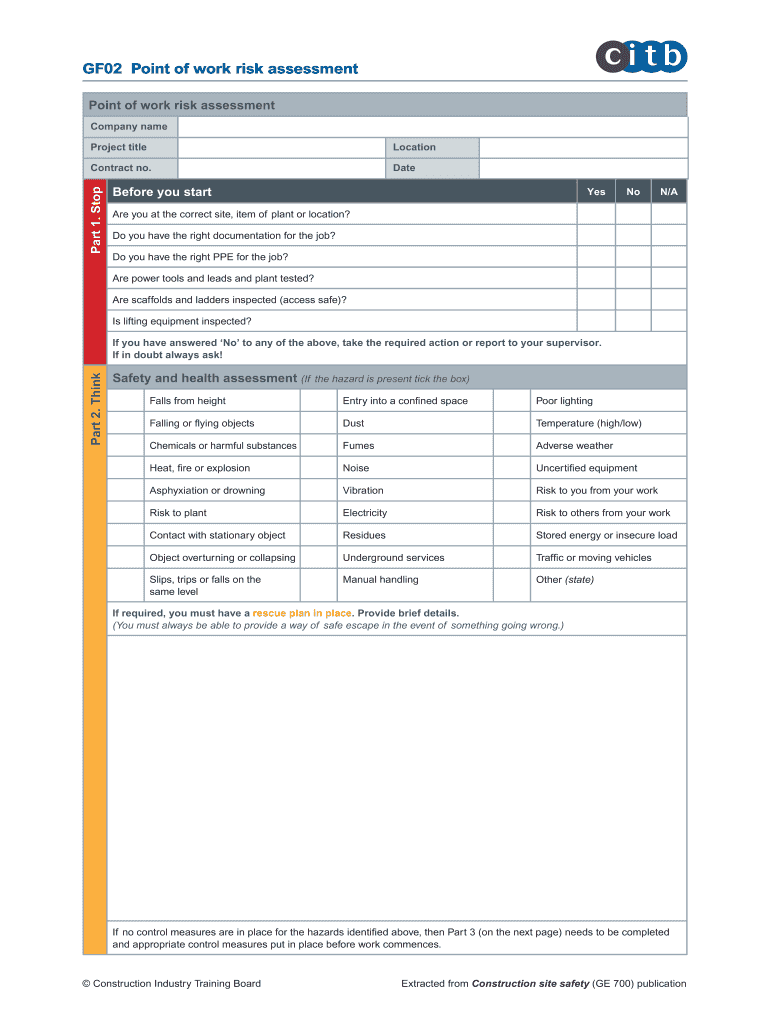
The GF02 Point of Work Risk Assessment is a critical tool used to ensure safety and compliance in various work environments. Designed to be conducted at the site of work, this assessment identifies potential hazards and implements controls to mitigate risks before commencement of tasks. The primary aim is to prevent accidents and ensure a safe working environment by evaluating site-specific risks. This form is typically used in industries such as construction, manufacturing, and engineering, where the nature of work can pose significant safety risks if not properly managed.
How to Use the GF02 Point of Work Risk Assessment
To effectively utilize the GF02 Point of Work Risk Assessment, you should start by thoroughly examining the work environment. Identify any potential hazards, including physical, chemical, and biological risks. Next, assess the likelihood and severity of these risks occurring. Once risks are identified, propose control measures to minimize or eliminate them. It’s essential to document all findings and maintain a record for future reference and audits. Ensure that all personnel involved are aware of the risks and control measures by holding a briefing before work begins.
Key Steps in Utilization
- Site Inspection: Conduct a comprehensive check of the work area.
- Risk Identification: List all potential risks associated with the task at hand.
- Assessment: Evaluate the likelihood and impact of each risk.
- Control Measures: Implement strategies to mitigate identified risks.
- Documentation: Record assessment results and control measures.
Steps to Complete the GF02 Point of Work Risk Assessment
Completing the GF02 form involves a systematic approach to ensure thorough risk evaluation. Follow these steps for a complete assessment:
- Verify Location and Details: Confirm that you are at the correct site and that all project details match the assessment form.
- Identify Hazards: Break down tasks and identify specific hazards related to each activity.
- Risk Evaluation: Use a risk matrix to determine the level of risk (low, medium, high) for each identified hazard.
- Implement Controls: Outline the controls needed to reduce each risk to an acceptable level.
- Communicate Findings: Share the assessment results and control measures with the entire team.
- Review and Sign Off: Have the team or supervisor review the completed assessment and sign off to confirm understanding and agreement.
Why Should You Use the GF02 Point of Work Risk Assessment
Using the GF02 Point of Work Risk Assessment is vital for several reasons. It supports compliance with occupational safety regulations, protecting both the workforce and the organization from potential liabilities. By proactively addressing risks, the assessment helps prevent accidents and enhances workplace safety culture. Furthermore, it raises awareness among workers about the specific risks of their tasks, contributing to overall risk management efficacy.
- Compliance: Meets legal obligations under health and safety legislation.
- Accident Prevention: Reduces the risk of work-related injuries and accidents.
- Awareness: Increases worker awareness of potential hazards.
- Documentation: Provides a documented audit trail of risk management processes.
Important Terms Related to GF02 Point of Work Risk Assessment
Understanding key terms is crucial when working with the GF02 assessment:
- Hazard: Any source of potential damage, harm, or adverse effects.
- Risk: The likelihood of a hazard resulting in actual harm.
- Control Measures: Actions taken to eliminate or reduce risks.
- Risk Matrix: A tool used to quantify and prioritize risks based on their impact and likelihood.
- Sign Off: Confirmation by all parties that risk assessment findings and controls are understood and accepted.
Key Elements of the GF02 Point of Work Risk Assessment
The effectiveness of the GF02 form lies in its comprehensive approach to risk management:
- Site Details: Precise location and project information.
- Task Breakdown: Detailed description of all tasks to be performed.
- Hazard Identification: Thorough evaluation of potential hazards.
- Control Actions: Specific actions outlined to control identified risks.
- Verification: Signatures from responsible personnel to confirm understanding and implementation of controls.
Examples of Using the GF02 Point of Work Risk Assessment
Consider a construction site planning to install scaffolding:
- Hazard: Falls from height during setup.
- Risk Evaluation: High, due to the nature of the task.
- Control Measures: Use of harnesses and safety nets, and ensuring only trained personnel are engaged in setup.
- Documentation: Completion of GF02 form detailing the controls and acknowledged by all team members.
In another scenario, a manufacturing plant may use the GF02 assessment to address risks associated with operating heavy machinery, where the assessment helps in enforcing safety protocols like lockout/tagout procedures.
Legal Use of the GF02 Point of Work Risk Assessment
The GF02 Point of Work Risk Assessment complies with safety regulations and standards in the United States. It's an essential document for demonstrating due diligence in occupational safety law and provides a framework for legally defensible risk management practices. Failing to use this assessment when required can result in significant legal penalties, including fines or suspension of operations.
- OSHA Compliance: Aligns with occupational safety standards.
- Legal Defense: Provides documented proof of risk management efforts in case of incidents.
- Standard Practice: Recognized as a best practice in risk management within various industries.
Following these guidelines and understanding the significance of each element within the GF02 form ensures a comprehensive approach to managing workplace risks effectively.