
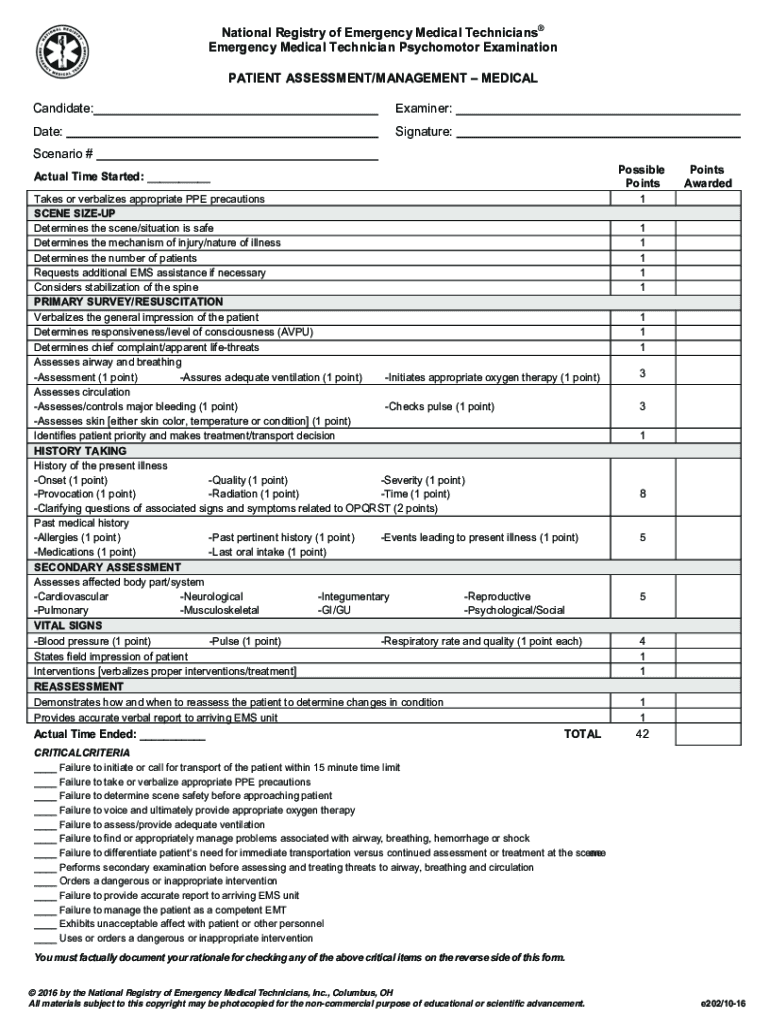







Definition & Meaning
The Emergency Medical Technician (EMT) Psychomotor Examination is a practical assessment that evaluates the hands-on skills and abilities of individuals seeking certification as an EMT. This examination ensures that candidates can competently perform various emergency medical procedures in real-world scenarios. It tests critical skills such as patient assessment, equipment handling, and life-saving techniques, reflecting the practical demands of the EMT role.
Core Competencies Assessed
- Patient Assessment: Evaluating a patient's condition accurately and promptly.
- Airway Management: Ensuring patients have a clear airway and can breathe effectively.
- Trauma Care: Providing appropriate responses to injury-related emergencies.
- Life Support: Administering CPR and other life-saving interventions.
How to Use the Emergency Medical Technician Psychomotor Examination
To effectively utilize the EMT Psychomotor Examination, candidates must familiarize themselves with the specific skills and scenarios they will be tested on. This includes practicing each skill in a simulated environment to gain confidence and proficiency.
Preparation Strategies
- Simulation Practice: Engage in realistic training exercises that mimic actual emergency situations.
- Skill Refinement: Focus on perfecting techniques such as splinting, bandaging, and administering medications.
- Feedback Utilization: Seek feedback from instructors to improve performance continuously.
Examination Day Tips
- Stay Calm: Keep a clear mind to follow protocols efficiently.
- Time Management: Allocate appropriate time for each task within the examination.
- Attention to Detail: Ensure precision in every step, from patient interaction to procedure execution.
How to Obtain the Emergency Medical Technician Psychomotor Examination
Registering for the EMT Psychomotor Examination involves several steps, typically coordinated through accredited training institutions or licensing bodies.
Steps to Registration
- Eligibility Verification: Confirm that you have completed the requisite coursework and training.
- Application Submission: Fill out and submit the examination application through the designated authority.
- Scheduling: Choose an examination date and location that suits your timeline and availability.
Important Considerations
- Examination slots may fill up quickly; it’s advisable to register as early as possible.
- Ensure all pre-examination prerequisites are satisfied to avoid issues on the day of testing.
Steps to Complete the Emergency Medical Technician Psychomotor Examination
Completing the EMT Psychomotor Examination involves demonstrating competency across a range of skill stations, each designed to replicate emergency medical scenarios.
General Completion Process
- Station Familiarization: Review the specific skills each station will assess.
- Execution: Perform the required procedures in front of examiners, adhering to the established protocols.
- Assessment Feedback: Receive immediate verbal or written feedback from examiners, providing insight into performance and areas for improvement.
Skill Stations Typically Include
- Patient Assessment/Management: Execute a comprehensive assessment under timed conditions.
- Cardiac Arrest Management: Demonstrate effective CPR and AED use.
- Medical and Trauma Scenarios: Manage both medical emergencies and trauma situations appropriately.
Who Typically Uses the Emergency Medical Technician Psychomotor Examination
The EMT Psychomotor Examination is primarily used by individuals seeking EMT certification, as well as professionals who need to maintain their credentials.


Common Candidates
- Aspiring EMTs: Individuals completing an EMT training program.
- Current EMTs: Professionals required to re-certify or renew their existing credentials.
- Paramedic Students: Those progressing to advanced levels in emergency medical services.
Use in Professional Development
- Continuously practicing and preparing for the psychomotor examination is crucial for EMTs to maintain high standards of patient care and improve job performance.
Key Elements of the Emergency Medical Technician Psychomotor Examination
Identifying the key elements of the EMT Psychomotor Examination can help candidates concentrate their preparation efforts.
Essential Skills Assessed
- Airway, Breathing, and Circulation (ABC): The foundational assessment and intervention sequence.
- Vital Signs Measurement: Accurate recording and interpretation of key patient vitals.
- Triage and Prioritization: Ability to triage patients based on severity of conditions.
Performance Evaluation Criteria
- Accuracy: Precision in carrying out procedures and interpreting results.
- Protocol Adherence: Strict following of established medical protocols and guidelines.
- Communication: Clear and effective communication with patients and team members.
Legal Use of the Emergency Medical Technician Psychomotor Examination
The EMT Psychomotor Examination must be conducted in compliance with legal and professional standards set by national and state regulatory bodies.
Certification Requirements
- The examination is a legally required component of the certification process for all aspiring EMTs in the United States.
- Successful completion is mandatory to practice as a licensed EMT in most states.
Compliance and Ethical Standards
- Examination must be proctored by certified instructors.
- Candidates and examiners must adhere to confidentiality and integrity standards.
Examples of Using the Emergency Medical Technician Psychomotor Examination
Practical application scenarios help illustrate how the EMT Psychomotor Examination is used to prepare candidates for real-world situations.
Real-World Scenarios
- Trauma Incident: Rapid assessment and intervention using trauma assessment skills in a car accident scene.
- Medical Emergency: Managing an asthma attack or diabetic emergency during a call.
- Cardiac Event: Performing CPR on a cardiac arrest victim as part of a team.
Case Studies
- Case of a Multi-Vehicle Collision: Efficient triage and coordination at a highway accident scene demonstrate the importance of EMT skills in saving multiple lives.
- Choking Incident at a Public Event: Quick identification and resolution of airway obstruction during a concert highlight the practical implications of the examination training.
By structuring content around these blocks, you can deliver comprehensive, detailed insights into the Emergency Medical Technician Psychomotor Examination. Each section provides valuable, actionable information relevant to candidates preparing for this critical certification examination.




