







Definition & Meaning
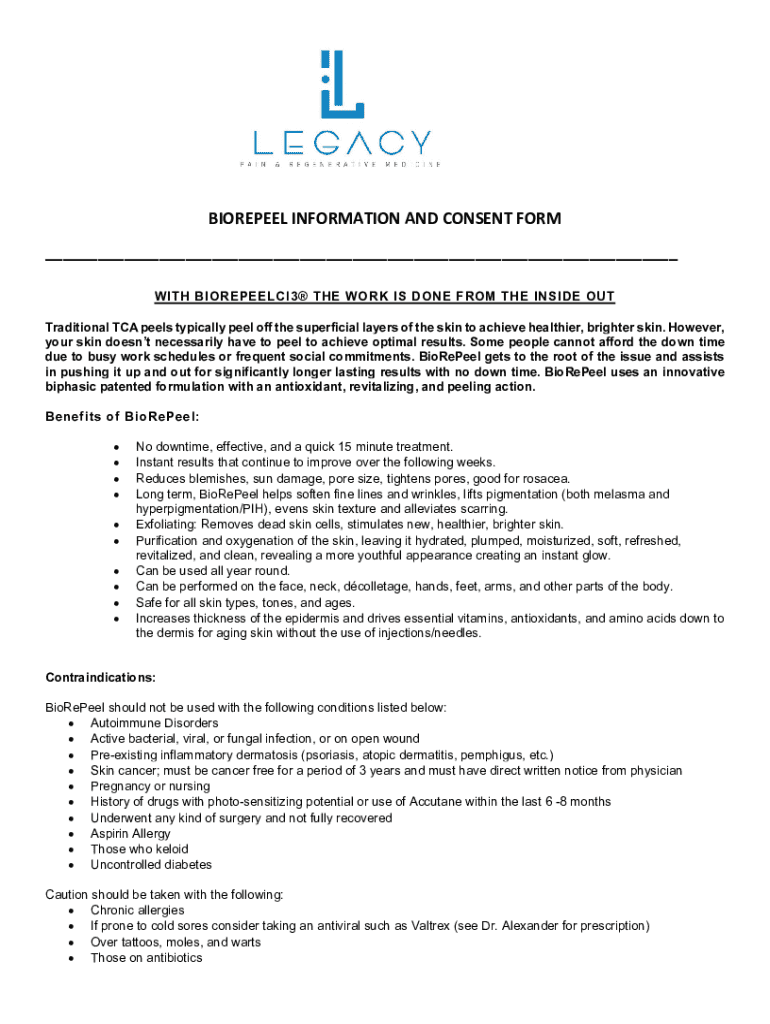
The BioRePeel Information and Consent Form is a document designed to inform patients about the BioRePeel treatment, a medical-grade skin peel, and to obtain their consent before the procedure. BioRePeelCl3 works by peeling the skin from the inside out, unlike traditional TCA peels that target the superficial layers. The form outlines the procedure's objectives, potential risks, and benefits, ensuring patients understand what the treatment entails. Informed consent is crucial in medical procedures, ensuring transparency and patient autonomy.
How to Use the BioRePeel Information and Consent Form
- Educate patients: First, provide detailed explanations of the treatment. This includes how BioRePeel works and its expected outcomes.
- Ensure comprehension: Encourage patients to ask questions to ensure they fully understand the procedure.
- Collect signatures: Use the document to formally obtain consent, recording the patient's agreement and understanding.
It's essential to use digitally fillable fields for efficiency, guiding patients to fill in their information accurately.
Steps to Complete the BioRePeel Information and Consent Form
- Patient Information: Collect basic details such as name, contact information, and medical history.
- Treatment Explanation: Clearly describe the BioRePeel procedure, including expected results, frequency, and any aftercare instructions.
- Risks and Precautions: Detail possible side effects and precautions. This transparency helps manage expectations.
- Consent Confirmation: Include sections where patients can affirm their understanding and consent to the procedure.
- Patient and Practitioner Signatures: Both parties should sign to validate the consent process.
Using a digital platform like DocHub can streamline this process with electronic signatures and real-time synchronization.
Key Elements of the BioRePeel Information and Consent Form
- Treatment Overview: Ensures patients understand the peeling process.
- Potential Risks: Lists any adverse effects or interactions with medications.
- Patient Rights: Outlines patients' rights to refuse treatment or ask for more information.
- Contact Information for Questions: Provides a way for patients to reach out with any concerns.
These components are crucial for both legal protection and patient reassurance.
Legal Use of the BioRePeel Information and Consent Form
In the United States, informed consent is a legal and ethical requirement before any non-emergency medical procedure. The form serves as evidence that the patient has been informed about the treatment and has agreed to proceed. It helps protect healthcare providers from liability, provided they ensure the consent is informed and voluntary. It's important that practitioners adhere to state-specific regulations regarding medical consent.
Who Typically Uses the BioRePeel Information and Consent Form
- Dermatologists and Estheticians: Use the form to guide patients through the consenting process for skin treatments.
- Plastic Surgeons: Benefit from including BioRePeel as part of broader skin rejuvenation plans.
- Medical Spas: Often incorporate such forms for clients seeking advanced skincare treatments.
In these settings, the form functions both as an educational tool and a legal safeguard.


Important Terms Related to BioRePeel Information and Consent Form
- TCA Peels: Traditional method of peeling that removes superficial skin layers.
- BioRePeelCl3: A variant of skin peel that works from the inside, promoting collagen production and cell turnover.
- Informed Consent: Legal process ensuring participants understand the potential risks and benefits.
- Electronic Signatures: Digitally recorded signatures that are legally binding, a feature supported by platforms like DocHub.
Understanding these terms is essential for both practitioners administering the treatment and patients receiving it.
Software Compatibility for the BioRePeel Information and Consent Form
DocHub facilitates the management of the BioRePeel Information and Consent Form by offering compatibility with:
- Google Drive and Gmail: Import and export documents directly from these platforms, streamlining the workflow.
- Electronic Form Management: Use advanced form fields to capture data digitally.
- Signature Collection: Request and manage electronic signatures effectively.
Such compatibility improves the efficiency of documentation processes, allowing practitioners to focus more on patient care.
Digital vs. Paper Version
- Digital Forms: Offer advantages such as easier editing, storage efficiency, and environmentally friendly options. They integrate seamlessly with platforms like DocHub for collection and authentication of signatures.
- Paper Forms: May still be preferred by practices with limited access to technology or patients who prefer physical documentation. These forms require manual handling and filing.
Considering these variations allows practices to choose the most suitable method for their documentation needs.




