
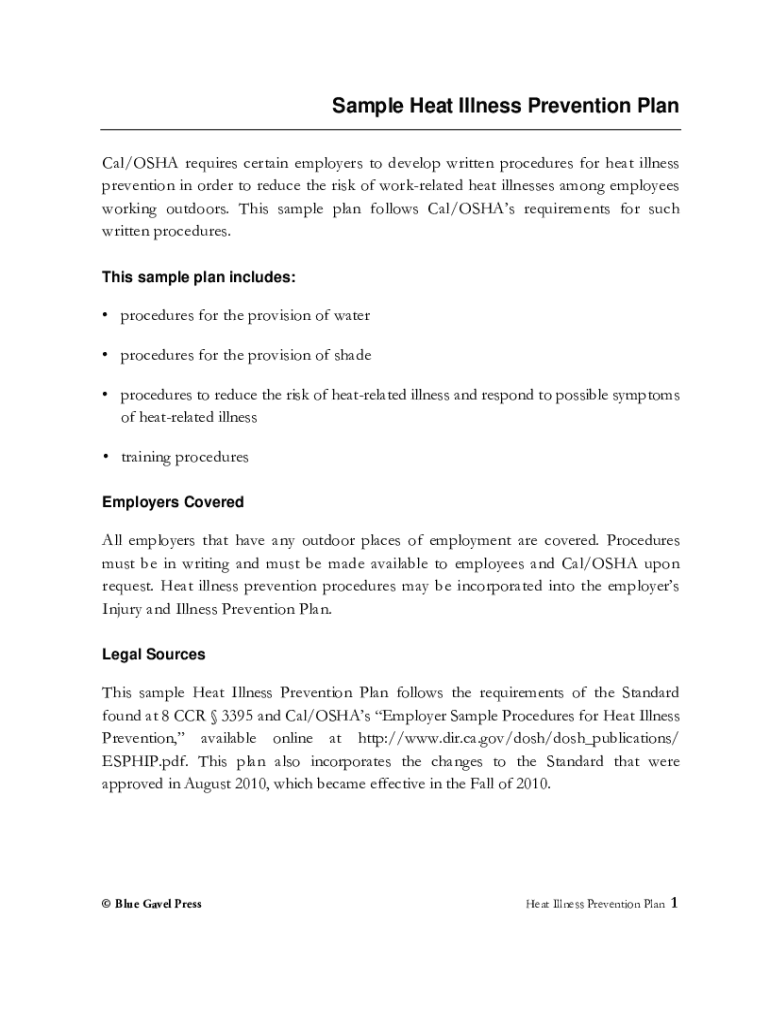







Definition & Meaning
The California Heat Illness Prevention Plan is a comprehensive procedure mandated by Cal/OSHA, targeting employers in high-heat industries to protect workers from heat-related illnesses. This plan ensures that employers implement strategies to prevent heat illnesses among employees exposed to outdoor or high-temperature environments.
Key Features
- Risk Assessment: Employers must evaluate the workplace for heat illness risk levels and address potential hazards.
- Monitoring: Regular environmental and physiological monitoring of workplace temperatures and employee conditions.
Importance
The plan aims to prevent tragic incidents related to heat exhaustion and heat stroke, safeguarding employee health and productivity.
How to Use the California Heat Illness Prevention Plan
Employers must integrate the plan into their daily operations, following specific guidelines set by Cal/OSHA.
Implementation Steps
- Develop: Design a customized plan considering the specific heat exposure risks in your workplace.
- Train: Employees must receive training on recognizing heat illness symptoms and initiating preventive measures.
- Enforce: Consistent enforcement of the preventative techniques and emergency response protocols.
Real-Life Application
An agricultural company may use this plan by ensuring shaded resting areas, appropriate hydration supplies, and a supervisor trained to identify heat stress in workers.
Steps to Complete the California Heat Illness Prevention Plan
Detailed Process
- Identify Risk Factors: Analyze jobs with potential heat exposure.
- Develop Procedures: Draft response strategies for high-heat conditions.
- Employee Training: Organize regular heat illness prevention training sessions.
- Review and Update: Continually evaluate the plan’s effectiveness and make necessary adjustments.
Example Scenario
In construction, adjusting work schedules to cooler hours can be one effective step within the plan.
Key Elements of the California Heat Illness Prevention Plan
Core Components
- Heat Acclimatization: Periodical adjustment periods for new employees or those returning after a prolonged absence.
- Emergency Response Procedures: Protocols for treatment and escalation in case of a heat illness occurrence.
- Shade and Hydration: Ensured availability of shaded rest areas and readily available drinking water.
Additional Considerations
Regular updates in line with Cal/OSHA guidance and workplace-specific challenges ensure ongoing compliance.
State-Specific Rules for the California Heat Illness Prevention Plan
Compliance with California State Law
- Tailored Requirements: Adaptation to various climates within California.
- Regulation Updates: Frequent legislative updates to the existing rules, ensuring employers are aware of the latest compliance needs.
- Local Ordinances: Cities like Los Angeles or San Francisco might have additional guidelines on top of state requirements.
Legal Use of the California Heat Illness Prevention Plan
The legal framework is outlined under Cal/OSHA, which mandates the plan’s necessity across relevant industries.
Legal Obligations
- Employers are legally obligated to implement and adhere to an effective heat illness prevention plan.
- Failure to comply can lead to significant fines and legal action under state workplace safety laws.
Examples of Using the California Heat Illness Prevention Plan
Industry-Specific Implementations
- Agriculture: Rotational shifts to limit noon-time exposure.
- Construction: Usage of cooling towels and scheduled water breaks.
- Landscaping: Checking weather forecasts and adjusting work plans accordingly.
Illustration
A vineyard adopting the plan could schedule harvesting during early hours, provide coolers with electrolyte drinks, and have medical staff on standby during high-risk periods.
Important Terms Related to the California Heat Illness Prevention Plan
Vocabulary
- Acclimatization: The process of the body gradually adapting to working in heat conditions.
- Heat Index: An indicator reflecting the human-perceived equivalent temperature accounting for humidity.
- Heat Exhaustion vs. Heat Stroke: Understanding these conditions helps in identifying and responding appropriately.
Explanation of Terms
Each term plays a vital role in understanding the plan’s holistic implementation and ensuring the workforce is educated on potential heat illness risks.
These sections collectively aim to guide firms in implementing an effective California Heat Illness Prevention Plan, ensuring employees remain safe and productive in high-heat environments.




