







Definition & Meaning
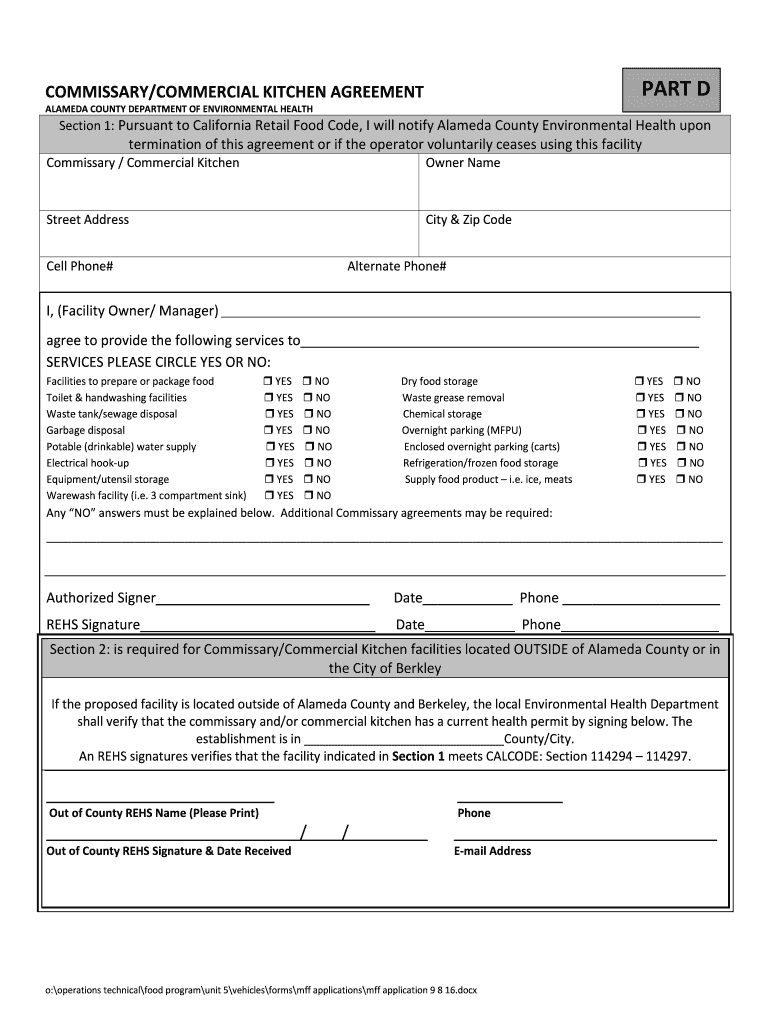
The Commissary Commercial Kitchen Agreement is a formal contract typically between a food business and a certified commercial kitchen. This agreement allows the business to legally use the kitchen’s facilities to prepare and store food products. It ensures compliance with health regulations and provides a clear framework for both parties’ rights and responsibilities. These agreements are crucial for food entrepreneurs who need access to a licensed kitchen without investing in their facilities.
How to Use the Commissary Commercial Kitchen Agreement
The agreement is used as a foundational document to define the terms of use for a commercial kitchen. Users must adhere to stipulated guidelines and operational procedures outlined in the document. This includes adherence to hygiene standards, permitted hours of use, and maintenance responsibilities. Businesses should review the agreement thoroughly to understand the scope of permitted activities and any restrictions, such as storage limitations or specific equipment usage.
How to Obtain the Commissary Commercial Kitchen Agreement
To obtain this agreement, businesses typically contact the commercial kitchen facility directly. The kitchen manager or owner usually provides a template or customized agreement to suit the specific needs of both parties. It is essential to conduct preliminary discussions to ensure that all expectations are understood and correctly captured in the agreement. Sometimes, these agreements are also available through local health departments or industry associations.
Steps to Complete the Commissary Commercial Kitchen Agreement
- Initial Consultation with Kitchen Provider: Start by setting up a meeting with the commercial kitchen provider to discuss your needs and their offerings.
- Review of Agreement Draft: Examine the initial draft of the agreement carefully to identify any sections that may require negotiation or clarification.
- Negotiation of Terms: Discuss any necessary modifications to the terms, such as usage times, fees, and penalties.
- Legal Review: Have an attorney review the agreement to ensure that all legal obligations are clear and the business interests are adequately protected.
- Sign and Date Document: Once all terms are agreed upon, each party should sign and date the agreement.
- Documentation and Record-keeping: Keep a signed copy of the agreement accessible for reference, ensuring it is also available for inspections by relevant authorities.
Who Typically Uses the Commissary Commercial Kitchen Agreement
This agreement is primarily used by food entrepreneurs, caterers, food trucks, and small food business startups. These businesses typically cannot afford the cost of setting up their kitchens due to financial, space, or regulatory constraints. Renting a commissary kitchen allows them to access fully equipped facilities to prepare food in compliance with health and safety regulations. The kitchen providers, often small business themselves, gain additional revenue through these rental agreements.


Key Elements of the Commissary Commercial Kitchen Agreement
- Duration and Timing: Specifies the authorized times the kitchen facilities can be accessed.
- Usage Fees and Payment Schedule: Outlines the cost for using the facilities and the payment intervals.
- Maintenance and Cleaning Responsibilities: Details the expectations for maintaining cleanliness and operational integrity.
- Liability and Insurance Requirements: Includes clauses on liability coverage necessary to protect both parties from potential claims.
- Termination Clause: Defines the conditions under which either party can terminate the agreement and any requirements for notice.
Legal Use of the Commissary Commercial Kitchen Agreement
The agreement ensures that both the kitchen owner and user adhere to local laws and health department regulations. Legal usage includes abiding by food safety standards, carrying requisite insurance, and maintaining specific sanitary practices. Non-compliance can result in penalties or revocation of the right to use the facility. It's crucial for each party to understand their legal obligations, which could also include obtaining permits or licenses required by their local jurisdiction.
Important Terms Related to Commissary Commercial Kitchen Agreement
- Commissary: A licensed kitchen facility that businesses use for commercial food preparation.
- Licensee/Vendor: The party that leases the kitchen space.
- Licensor/Provider: The party that owns and operates the commissary kitchen.
- Indemnity: A provision ensuring that one party compensates the other for certain damages or losses.
- Force Majeure: Events outside the control of both parties, which may exempt them from fulfilling responsibilities.
Examples of Using the Commissary Commercial Kitchen Agreement
A startup vegan bakery might use a commissary kitchen to test and prepare its products while finalizing its retail strategy. Another example is a food truck operator who rents a commissary kitchen for evening shifts, utilizing the space to prepare fresh ingredients and meals, while storing perishables in the facility’s cold storage. These scenarios highlight how diverse food businesses rely on the agreement to operate legally and efficiently within shared kitchen spaces.




