






Definition and Purpose of the Proefplaatsing
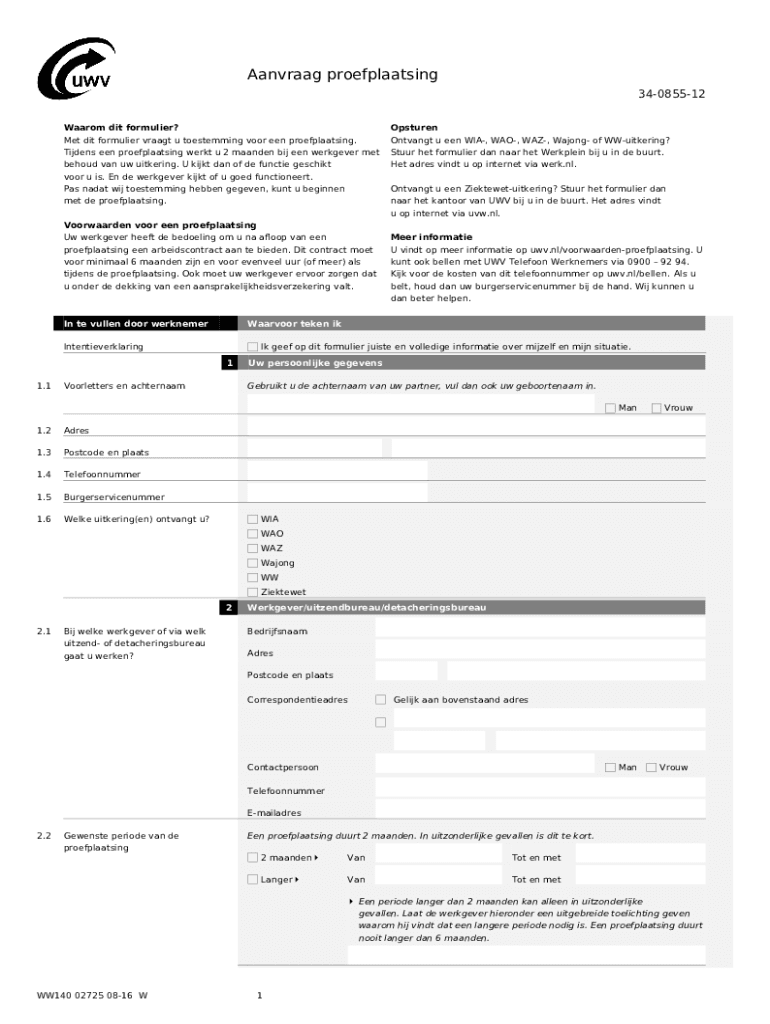
The "Proefplaatsing: alles wat je moet weten als werkgever" refers to a trial placement form used predominantly within employment contexts. It serves as a formal document that facilitates trial employment arrangements between employers and prospective employees, particularly focusing on scenarios where the prospective employee continues to receive benefits while working temporarily with an employer. This arrangement typically spans a period of two months and allows both parties to evaluate fit and performance without a long-term commitment.
Employer Usage of the Proefplaatsing
Employers leverage this form to initiate a trial placement for potential hires. It provides a structured framework to assess the skills and compatibility of candidates within the actual work environment. The trial placement allows employers to determine if the candidate meets the job requirements and can integrate well within the company culture. Additionally, it aids employers in understanding the practical implications of the employee’s skillset and contribution to the company.
Steps for Employers Using the Proefplaatsing
- Identify a potential candidate who can benefit from a trial placement.
- Discuss and outline the trial goals and objectives with the candidate.
- Complete the "Proefplaatsing: alles wat je moet weten als werkgever" form with required details.
- Submit the form for approval to the relevant administrative body.
- Monitor the trial period and provide feedback to the candidate.
How to Obtain the Proefplaatsing Form
The form can typically be accessed through designated employment or labor department websites. Employers need to provide necessary company details, candidate information, and specific trial placement conditions. In some cases, additional documentation may be required to substantiate the employer’s need for a trial placement and the candidate’s eligibility for continued benefits.
Required Documents for Submission
- Detailed employment proposal
- Candidate's identification and benefits documentation
- Company registration information
- Statement of trial objectives and expectations
Key Elements of the Proefplaatsing Form
The form includes several critical components that require careful consideration and completion:
- Employer Information: Includes company name, address, and contact details.
- Candidate Information: Full name, current benefit status, and relevant background details.
- Trial Placement Details: Start and end dates, job role description, goals, and objectives.
- Authorization and Agreements: Signatures from both parties agreeing to the terms of the placement.
Legal and Compliance Aspects
The Proefplaatsing form adheres to specific legal requirements ensuring fair trial employment practices. It must comply with employment laws that protect the rights of the candidate, ensuring no exploitation during the trial period. Employers need to familiarize themselves with these laws to avoid legal repercussions or sanctions.
Penalties for Non-Compliance
Failure to properly complete or adhere to the trial placement terms may result in:
- Financial penalties
- Loss of future permissions to conduct trial placements
- Legal action from the employee or relevant oversight bodies
State-Specific Rules Affecting the Proefplaatsing
Though generally governed by federal employment guidelines, certain nuances in how trial placements are administered can vary by state. Employers should consult local regulations to ensure the trial placements align with regional laws, particularly concerning labor rights and benefit continuations.
Examples and Case Studies
Consider the case of a small retail company experiencing growth. By utilizing the Proefplaatsing form, it successfully trialed a candidate for a sales position. The employer was able to assess the candidate’s customer service skills and adaptability in a live environment before deciding on permanent employment.
A technology startup used the form to bring in a potential software developer. During the trial, the employer evaluated technical capabilities and how well the candidate collaborated with existing team members on projects, ultimately leading to a full-time offer.
Eligibility Criteria and Approval Timeframes
Candidates eligible for trial placement usually include those on unemployment benefits or related support programs. The approval timeframe may vary but generally requires early submission to ensure timely processing before the desired start of the trial period.


Software Compatibility and Submission Options
Form submissions can be conducted online through government portals, ensuring streamlined processing and tracking. Employers may also utilize software like DocHub to fill, sign, and securely manage the form submissions, integrating seamlessly with cloud storage and other document management platforms to maintain an organized workflow.
This comprehensive understanding and effective utilization of the Proefplaatsing form can significantly enhance an employer's hiring strategy by providing practical insights into candidate performance before a long-term hiring commitment is made.