






Definition & Meaning
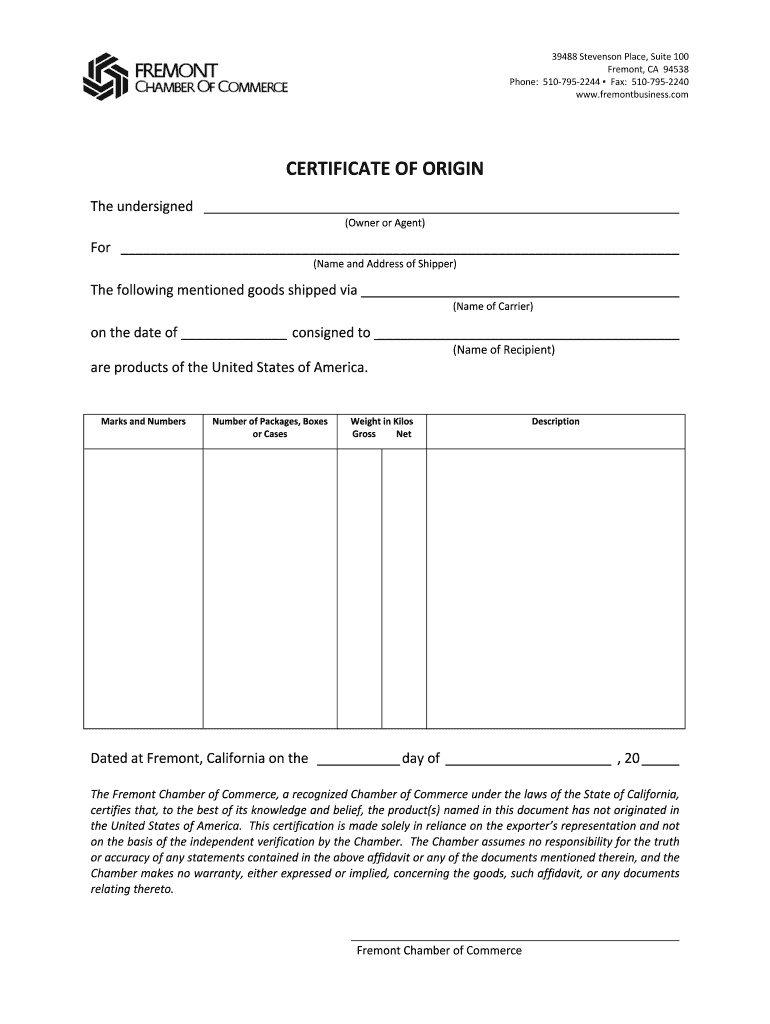
A Certificate of Origin is an official document that certifies the country in which a product was manufactured. The Fremont Chamber of Commerce issues these certificates to verify that goods exported from Fremont, California, originate from that locality. This document is crucial in international trade, as it can affect tariffs, trade agreements, and import regulations. For businesses in Fremont, obtaining a Certificate of Origin can be essential for ensuring smooth cross-border transactions.
How to Use the Certificate of Origin - Fremont Chamber of Commerce
Businesses utilize the Certificate of Origin to confirm the origin of their exported goods. Once obtained, the document should accompany the shipment and be presented to customs authorities in the importing country. This ensures compliance with international trade laws and can facilitate a faster customs clearance process. The Certificate of Origin is also utilized in claiming preferential tariff treatment under free trade agreements, reducing the cost of imported goods.
How to Obtain the Certificate of Origin - Fremont Chamber of Commerce
To secure a Certificate of Origin from the Fremont Chamber of Commerce, businesses must complete an application form detailing their shipment information. Required details typically include the exporter's name, the consignee, a detailed description of the goods, and the shipment method. The application can be submitted online, in person, or via mail, depending on the Chamber's services. Documents proving the origin of goods, such as manufacturing invoices, may be required to affirm authenticity before the Chamber issues the certificate.
Steps to Complete the Certificate of Origin - Fremont Chamber of Commerce
- Gather Required Documentation: Collect necessary documents that prove the product's origin, such as purchase orders and invoices.
- Fill Out the Application Form: Provide detailed information about the goods, including their HS code, weight, and value.
- Submit to the Fremont Chamber of Commerce: Deliver the completed form and supporting documents through your chosen submission method, either online, by mail, or in person.
- Await Verification: The Chamber will review your application and verify the authenticity of the provided information.
- Receive the Certificate: Upon approval, you will be issued the Certificate of Origin, which you should attach to your export paperwork.
Key Elements of the Certificate of Origin - Fremont Chamber of Commerce
The Certificate of Origin includes several critical elements, such as:
- Exporter Information: Name, address, and contact details of the entity shipping the goods.
- Consignee Details: Information of the receiving party in the importing country.
- Description of Goods: Comprehensive details about the product, including weight, value, and specific characteristics.
- Origin Statement: A declaration that certifies the goods as originating from Fremont, California.
- Authorized Signature: A signature from Fremont Chamber of Commerce personnel to authenticate the document.
Legal Use of the Certificate of Origin - Fremont Chamber of Commerce
Certificates of Origin are legally required in numerous countries for customs clearance. They serve as proof of the products' origin, which is necessary for determining applicable tariffs under the destination country's import regulations. Misrepresentation or errors in the certificate can lead to penalties or shipment delays. Hence, accuracy in completing this document is paramount to avoid legal complications.
Who Typically Uses the Certificate of Origin - Fremont Chamber of Commerce
The primary users of this form include exporters and manufacturers located in Fremont, California, who engage in international trade. Businesses often require this certificate to comply with destination country regulations and to benefit from preferential trade agreements. Logistic companies also use this document to facilitate smooth shipping processes through international borders. Additionally, importers might request it to validate the origin of their merchandise.


Examples of Using the Certificate of Origin - Fremont Chamber of Commerce
Consider a Fremont-based electronics manufacturer exporting products to the European market. The company requires a Certificate of Origin to ensure compliance with EU customs regulations, allowing their goods to enter with minimal customs duty. Similarly, a local agribusiness may need this certificate for exporting produce to countries with stringent import laws, leveraging the document to prove compliance with origin requirements, thereby securing favorable trade terms.