






Definition and Purpose of Employee Evaluation Forms
Employee evaluation forms are structured documents used by organizations to assess the performance, progress, and competencies of their employees. These forms play a critical role in performance management systems, as they help identify strengths, areas for improvement, and potential career advancement opportunities for employees. By systematically assessing various performance metrics, businesses can ensure objective and constructive feedback, which is essential for employee development and organizational growth.
Key Elements of an Employee Evaluation Form
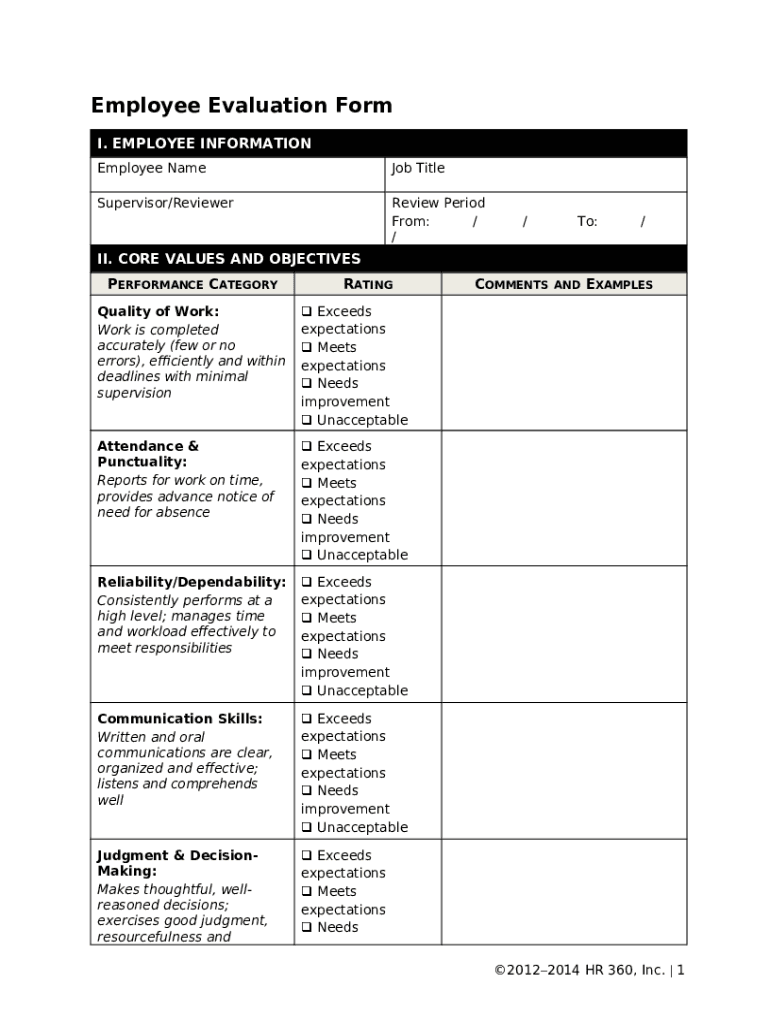
- Employee Information: Includes basic details like employee name, job title, department, and evaluation period. This helps in identifying and cataloging the data accurately.
- Performance Categories: Sections dedicated to assessing specific areas such as quality of work, productivity, communication skills, teamwork, and adaptability. Each category should have a clear description and criteria for evaluation.
- Rating System: A standardized scale, often numerical or descriptive, that allows supervisors to consistently rate performance across various categories. This ensures that evaluations are quantifiable and comparable.
- Comments and Feedback: Open-ended sections for qualitative feedback. These areas allow supervisors to provide specific examples, commendations, and suggestions for improvement, adding depth to the numerical ratings.
- Goals and Objectives: A segment for documenting the objectives set during the previous evaluation period and the progress made towards achieving them. It also sets new goals for the upcoming period, aligning with the employee's career growth and organizational needs.
Steps to Complete an Employee Evaluation Form
- Prepare in Advance: Collect relevant performance data and documentation from various sources such as reports, peer reviews, and previous evaluations.
- Review Performance Categories: Go through each category and compare the employee’s achievements against their objectives and responsibilities.
- Assign Ratings: Use the rating scale to assess each performance category, providing consistent and objective scores.
- Provide Detailed Feedback: Utilize the comments section to give specific examples that support the ratings, highlighting both successes and areas requiring improvement.
- Set Future Goals: Collaboratively establish achievable and measurable objectives for the coming evaluation period, ensuring they align with both individual and organizational goals.
- Conclude with a Summary: Recap the main points discussed during the evaluation, affirming the employee’s value to the organization and encouraging their continued development.
Importance of Using Employee Evaluation Forms
Employee evaluation forms are integral to the performance management process. They foster communication between employees and supervisors, offering a structured approach to discuss achievements and outline areas for growth. Systematic use of these forms results in fairer assessments, improves employee morale, and aligns individual performance with organizational objectives. Additionally, they serve as a formal record, supporting decisions related to promotions, compensations, and terminations.
Examples of Employee Evaluation Form Usage
- Annual Performance Reviews: Regularly scheduled evaluations where employees are assessed on their yearly performance, guiding salary adjustments and promotions.
- Probationary Period Assessments: Evaluations conducted at the end of a new employee’s probationary period to determine their suitability for permanent employment.
- Project-Based Reviews: Assessments carried out after the completion of specific projects to evaluate the contributions made by an employee and their impact on project outcomes.
Who Typically Uses Employee Evaluation Forms
Employee evaluation forms are predominantly utilized by supervisors, team leaders, and human resources personnel within organizations. They are essential in ensuring that assessments are conducted fairly and that the feedback provided is coherent and constructive. Employees also engage with these forms during self-assessments or in preparation for appraisal meetings.
Digital vs. Paper Evaluation Forms
Using digital forms can significantly streamline the evaluation process. Digital forms allow for easier distribution, completion, and storage. They can be integrated into performance management software, facilitating real-time updates and analysis. In contrast, paper forms require manual dissemination and storage, which can be cumbersome and less efficient.
Software Compatibility for Evaluation Forms
DocHub provides a dynamic platform for creating and managing employee evaluation forms, compatible with various file formats like DOC and PDF. This compatibility allows organizations to design forms that meet their specific evaluation criteria. DocHub's integration with cloud services like Google Drive and Dropbox enhances accessibility and collaboration, supporting businesses in maintaining seamless and secure evaluation processes.