






Definition & Meaning
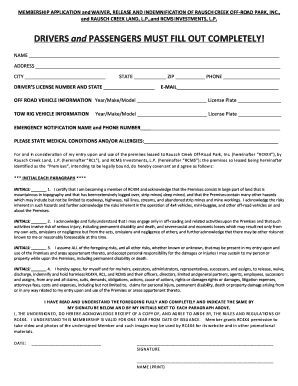
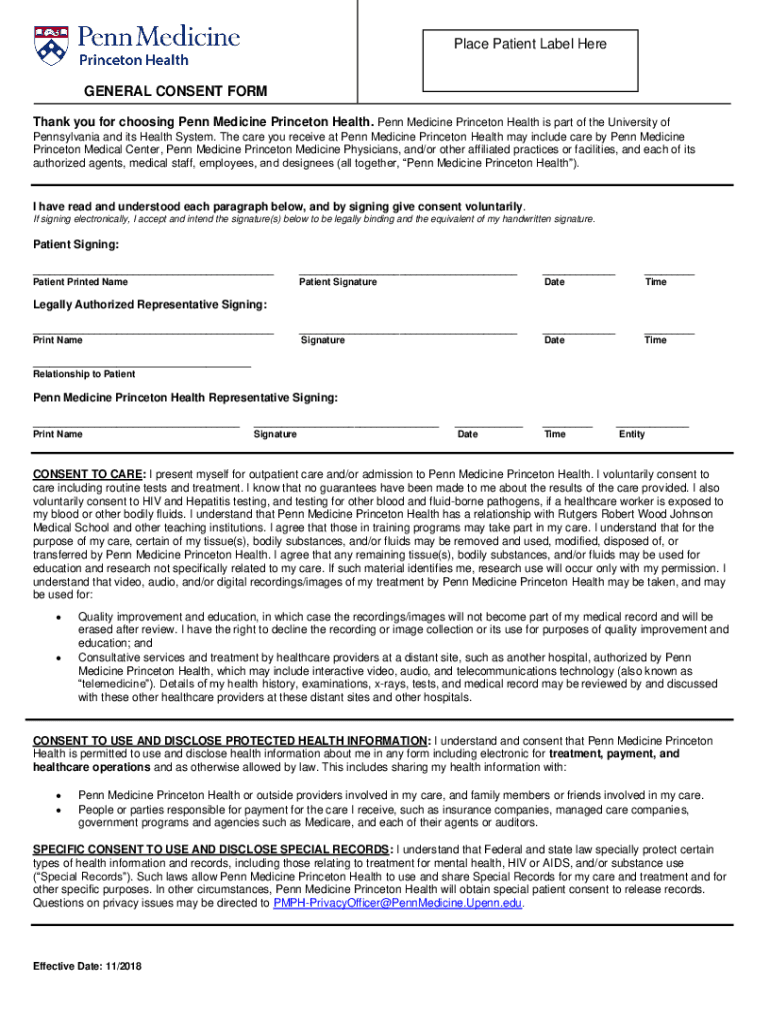
The GENERAL CONSENT FORM is a legal document that allows an individual or entity to provide formal approval for a procedure, service, or action. Its primary function is to verify and document consent, ensuring all parties involved are aware of the terms and conditions being agreed upon. This form is particularly relevant in healthcare settings, where it is used to obtain patient consent for treatments and procedures.
Examples of Use Cases
- Healthcare: Patients acknowledge understanding of medical procedures and inherent risks.
- Legal: Clients approve attorney actions or representation terms.
- Educational: Students or parents consent to participation in activities or programs.
How to Use the GENERAL CONSENT FORM
Using the GENERAL CONSENT FORM involves several critical steps to ensure it is completed accurately and reflects the consenting party's informed decision. This process typically includes:
- Information Collection: Gather all relevant details about the procedure or service requiring consent.
- Review Terms: Present the terms clearly and concisely to the consenting party.
- Discuss Implications: Explain potential risks, consequences, and alternatives.
- Signing: The consenting party reads and signs the form, often in the presence of a witness.
Practical Scenario
A hospital requires a patient to sign a GENERAL CONSENT FORM before administering surgery. The medical staff explains the procedure, potential risks, and recovery expectations, ensuring the patient understands and agrees to the terms before proceeding.
Steps to Complete the GENERAL CONSENT FORM
Completing the GENERAL CONSENT FORM involves a systematic approach to ensure accuracy and compliance:
- Step 1: Identify all parties involved—this includes the entity providing the service and the individual giving consent.
- Step 2: Clearly state the action, procedure, or service requiring consent.
- Step 3: Define terms, conditions, and any associated risks or side effects.
- Step 4: Ensure the form is thoroughly read by the consenting party.
- Step 5: Obtain signatures and date from the consenting individual and any relevant witnesses.
- Step 6: Store the document securely for future reference.
Legal Use of the GENERAL CONSENT FORM
The legal weight of the GENERAL CONSENT FORM stems from its role in documenting informed consent. It is vital for:
- Protecting against liability: As it shows that the consenting party was informed and agreed knowingly.
- Ensuring transparency: It fosters clarity about what the service or procedure entails.
- Compliance with regulations: Especially in fields like healthcare or legal services where consent is a stringent requirement.
Key Elements of the GENERAL CONSENT FORM
The GENERAL CONSENT FORM typically includes several critical sections:
- Personal Identification: Clearly outlines the details of the consenting individual.
- Description of Service/Procedure: Detailed explanation of what is being consented to.
- Terms and Conditions: Specifics about what the consent entails, including possible risks or outcomes.
- Signature Section: For the consenting party and any witnesses to validate the consent.
Specific Terminologies
- Informed Consent: Implies that the party is fully educated on all aspects of the procedure/service.
- Voluntary Agreement: Indicates that the person has willingly chosen to proceed without coercion.
State-Specific Rules
The requirements and enforceability of the GENERAL CONSENT FORM can vary by state due to differing legal frameworks:
- State Regulations: Certain states might have unique provisions about the contents or uses of consent forms.
- Witness Requirements: Some jurisdictions necessitate the presence of multiple witnesses for added authenticity.
Digital vs. Paper Version
The choice between a digital or paper GENERAL CONSENT FORM depends on various factors:
- Digital Forms: Allow for ease of access, storage, and sharing but must ensure e-signature compliance.
- Paper Forms: Offer a more traditional and sometimes legally favored method but require physical storage and handling.
Software Compatibility
If utilizing digital forms, compatibility with software like DocHub is essential:
- Document Editing: Use platforms like DocHub for seamless modification and collaboration.
- E-signature Integration: Ensure that electronic signatures are legally binding through compliant software features.
- Cloud Storage: Options for storing consent forms in services like Google Drive or Dropbox enhance security and access.