






Definition and Meaning of Patient Medical History Update Template
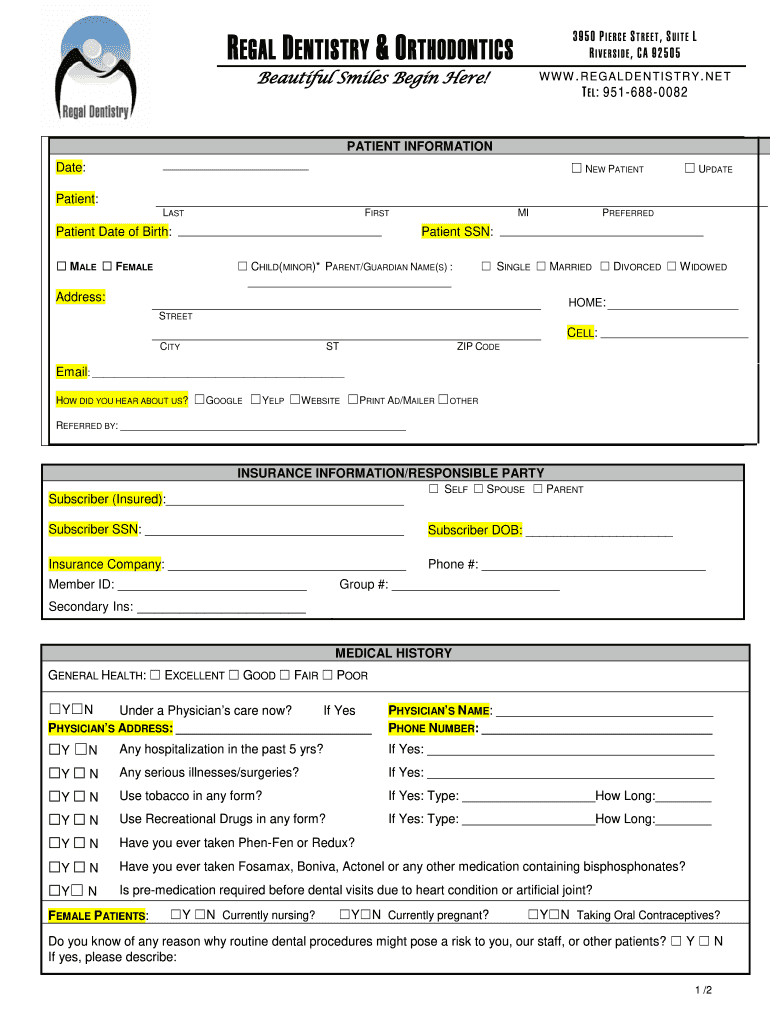
The "Patient Medical History Update Template" is a structured document utilized primarily within medical and dental offices in the United States. This template serves as a formal tool to record and update a patient's medical health history over time. It is commonly used to capture changes in a patient's health status, medication intake, allergies, surgeries, and overall medical history. By maintaining an accurate and up-to-date history, healthcare providers can offer safe and effective treatments, thereby minimizing risks associated with medical procedures.
Key Components
- Patient Demographics: Information such as name, date of birth, contact information, and insurance details.
- Medical History: Records of past illnesses, surgeries, and ongoing medical conditions.
- Medication List: Current and past medications, including dosages and frequencies.
- Allergy Information: Details of any known allergies and reactions.
- Family Medical History: General health history of immediate family members.
- Lifestyle Details: Details such as smoking habits, alcohol use, and exercise routines.
Understanding these components fosters a comprehensive grasp of the patient’s medical history, contributing to informed clinical decisions.
How to Use the Template
Proper utilization of the Patient Medical History Update Template involves systematic steps to ensure accuracy and comprehensiveness. Healthcare providers and administrative staff should be familiar with these steps to maintain an effective workflow and provide optimal patient care.
Step-by-Step Guide
-
Patient Identification: Verify the patient's identity through identification cards or previous records.
-
Completion of Personal Information: Fill in personal and contact details, ensuring all fields are accurately completed.
-
Medical History Updates: Enter any new medical conditions, recent surgeries, or changes in ongoing treatments.
-
Medication Review: Update any new medications or changes in dosage, and confirm with the patient.
-
Confirm Allergy Details: Discuss and update any new allergies or previous reactions.
-
Family History Update: Ask about any significant changes in the family's medical history.
-
Verify Lifestyle Information: Update information regarding lifestyle choices, such as smoking or dietary habits.
-
Final Review: Conduct a thorough review of all entered information with the patient for correctness and completeness before finalizing the form.
This streamlined method ensures that the collected data is both complete and precise.
Steps to Complete the Template
Completing the Patient Medical History Update Template accurately and efficiently involves several steps that ensure the document is filled with precision.
Key Instructions
-
Pre-Filling Stage: Gather all necessary medical documents and previous medical history forms for reference.
-
Interactive Completion: Use a digital or paper form to fill in each section as per the information provided by the patient. This approach helps in capturing all vital data seamlessly.
-
Use Tools: Utilize fillable fields on digital forms to facilitate the efficient compilation of data.
-
Patient Interviews: Conduct verbal interviews with patients to obtain updates on their medical conditions and verify existing data.
-
Secure and Store: After filling out the form, securely store it in the patient's electronic health records for future reference.
These steps are crucial for maintaining consistent updates in a patient's medical records.
Key Elements of the Template
The Patient Medical History Update Template encompasses various crucial elements that contribute to its effectiveness as a comprehensive document.
Detailed Elements
-
Personal Details Section: Captures essential identifiers like the patient’s full name, date of birth, and medical record number.
-
Medical Condition Log: Consists of detailed records of historical and current medical conditions, including chronic diseases.
-
Medication and Treatment Sections: Collects information about current medication regimens and any recent treatments or procedures.
-
Allergy and Reaction Summary: Enumerates known allergies and prior adverse reactions to drugs or other substances.
-
Emergency Contacts: Lists persons to contact in case of any medical emergencies, ensuring swift communication.
These elements are integral to compiling a holistic view of the patient’s medical background.
Who Typically Uses the Template
This template is a fundamental tool for various healthcare professionals and administrative workers involved in patient care across multiple settings.


User Groups
-
Healthcare Providers: Physicians, dentists, and nurses use this form to monitor patient health over time accurately.
-
Medical Office Administrators: Office staff responsible for maintaining patient records and ensuring compliance with health standards.
-
Care Coordinators: Professionals ensuring seamless communication between patients and healthcare services.
-
Insurance Coordinators: Assist in confirming accurate information for billing and insurance processing.
Understanding the template's typical users ensures a well-organized process and precise documentation, benefiting both patients and healthcare providers.
Legal Use of the Template
Using the Patient Medical History Update Template adheres to various legal requirements within the healthcare industry to protect patient privacy and ensure accurate record keeping.
Legal Considerations
-
Health Insurance Portability and Accountability Act (HIPAA): Ensures that all patient information recorded on this template is handled with strict confidentiality and used only for authorized purposes.
-
Informed Consent: The information filled in the form should be provided voluntarily by the patient after being informed of its use.
-
Record Retention Laws: Mandates the appropriate duration for which these records should be retained by the healthcare facility.
Comprehending legal aspects guarantees compliance and mitigates risks of misuse or data breaches.
Important Terms Related to the Template
Understanding terminology associated with the Patient Medical History Update Template is vital for accurately completing and reinforcing its purpose.
Glossary of Terms
-
Demographics: Basic personal information that helps identify a patient.
-
Chronic Conditions: Long-term medical conditions that require ongoing management.
-
Allergies: Adverse immune responses to substances that are generally non-threatening.
-
Informed Consent: The process of obtaining permission before conducting a healthcare intervention.
Familiarity with these terms improves the user's ability to utilize the template effectively.
Software Compatibility and Integration
The transition from paper to electronic health records is streamlined with the Patient Medical History Update Template’s compatibility with various software systems.
Supported Software
-
Electronic Health Record Systems (EHRs): Platforms like Epic and Cerner facilitate digital storage and real-time updates.
-
Document Management Tools: Solutions such as DocHub offer features to edit, fill, and store these forms securely.
-
Practice Management Software: Applications that integrate patient history templates into broader healthcare administrative tasks.
By choosing compatible systems, healthcare facilities ensure efficient documentation processes and improved patient care outcomes.