






Definition and Purpose of the Restorative Nursing Form
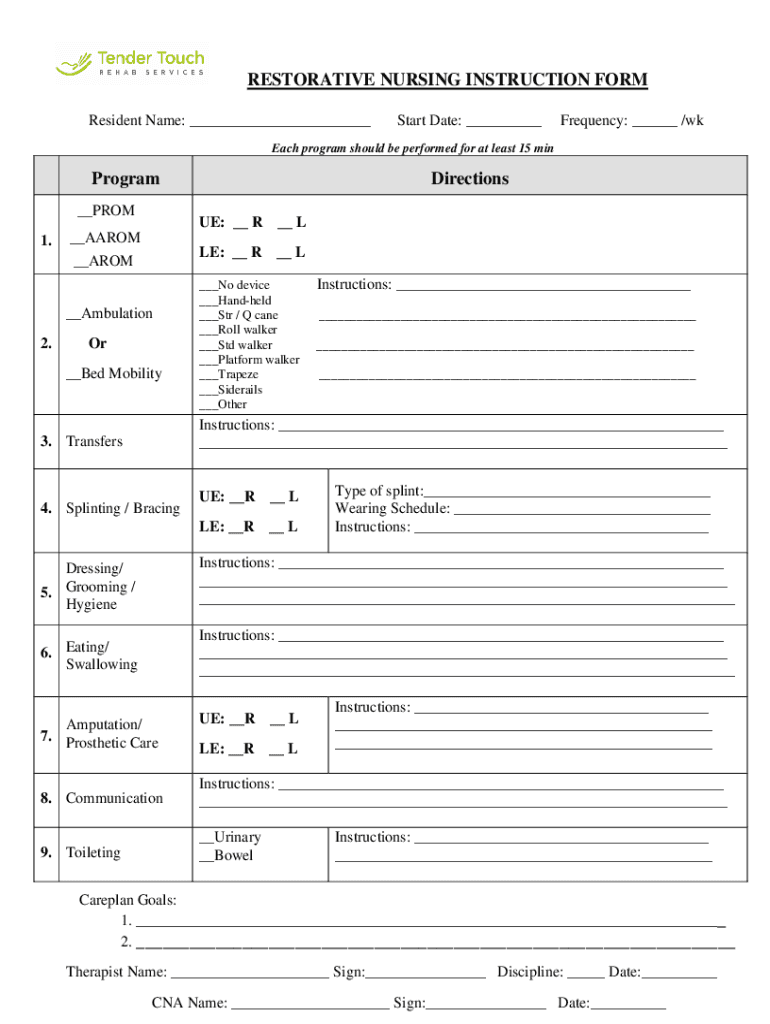
The Restorative Nursing Form is a specialized document used in healthcare settings to establish, document, and monitor care programs for residents requiring restorative nursing interventions. This form is integral for outlining programs such as passive range of motion (PROM), ambulation, transfers, and personal care tasks. It serves both as a guide for care delivery and as a record of therapeutic activities intended to maintain or improve a resident's physical functioning and quality of life.
Importance of Using the Restorative Nursing Form
Utilizing a Restorative Nursing Form ensures that care programs are systematically documented, which is essential for continuity of care. By recording specific instructions, frequency of sessions, and care plan goals, the form provides a structured approach that supports personalized resident care. This documentation also aids in communication among multidisciplinary teams, ensuring that all care staff are informed and aligned with the resident's care plan. Additionally, having a comprehensive record is crucial for legal and compliance purposes.
Steps to Complete the Restorative Nursing Form
-
Gather Resident Information: Start by entering the resident's personal details, including their full name, identification number, and room number.
-
Outline Care Programs: Document specific care programs tailored to the resident's needs, specifying the type of therapeutic activities, such as PROM, transfers, or ambulation.
-
Define Frequency and Duration: Clearly state how often each activity should be performed and the anticipated duration for each session.
-
Set Care Plan Goals: Establish clear, measurable goals for each care program to provide direction and focus for the interventions.
-
Professional Signatures: Ensure that the form is signed by the therapist and certified nursing assistant (CNA) to validate the care plan's authenticity and accountability.
Key Elements of the Restorative Nursing Form
- Resident Information Section: Includes critical identification details needed for tailoring the care program to individual needs.
- Program Specification: Details the types of therapy, frequency, and specific instructions.
- Goal Setting: Specifies clear objectives for the resident’s progress.
- Signature Lines: Provides spaces for responsible parties to sign, ensuring accountability.
Who Typically Uses the Restorative Nursing Form
Primarily used by healthcare professionals within nursing homes, rehabilitation centers, and assisted living facilities, the Restorative Nursing Form is utilized by therapists, certified nursing assistants, and other healthcare providers. Its primary users are those involved directly in the daily care and rehabilitation of residents.


Legal Use and Compliance
In the U.S., healthcare providers must adhere to specific laws and regulations when administering care, making proper documentation critical. The Restorative Nursing Form serves as part of the legal record that demonstrates compliance with care standards and regulatory requirements. This documentation is crucial during audits and reviews by healthcare oversight organizations.
Variations and Alternatives to the Restorative Nursing Form
While the Restorative Nursing Form is specific in its use, some facilities may use modified versions or electronic systems for similar documentation. Alternatives may include electronic health records (EHRs) or other digital platforms designed for healthcare documentation, providing a paperless solution to traditional form use.
Examples of Using the Restorative Nursing Form
- Case Study 1: A resident recovering after joint replacement surgery has a program outlined in a Restorative Nursing Form, detailing daily exercise routines aimed at regaining mobility.
- Case Study 2: A long-term resident with mobility issues receives a care plan focusing on assisted ambulation to maintain current levels of independence.
These examples underscore the form's role in facilitating specific and effective care plans that address a resident's unique needs.