Definition & Meaning
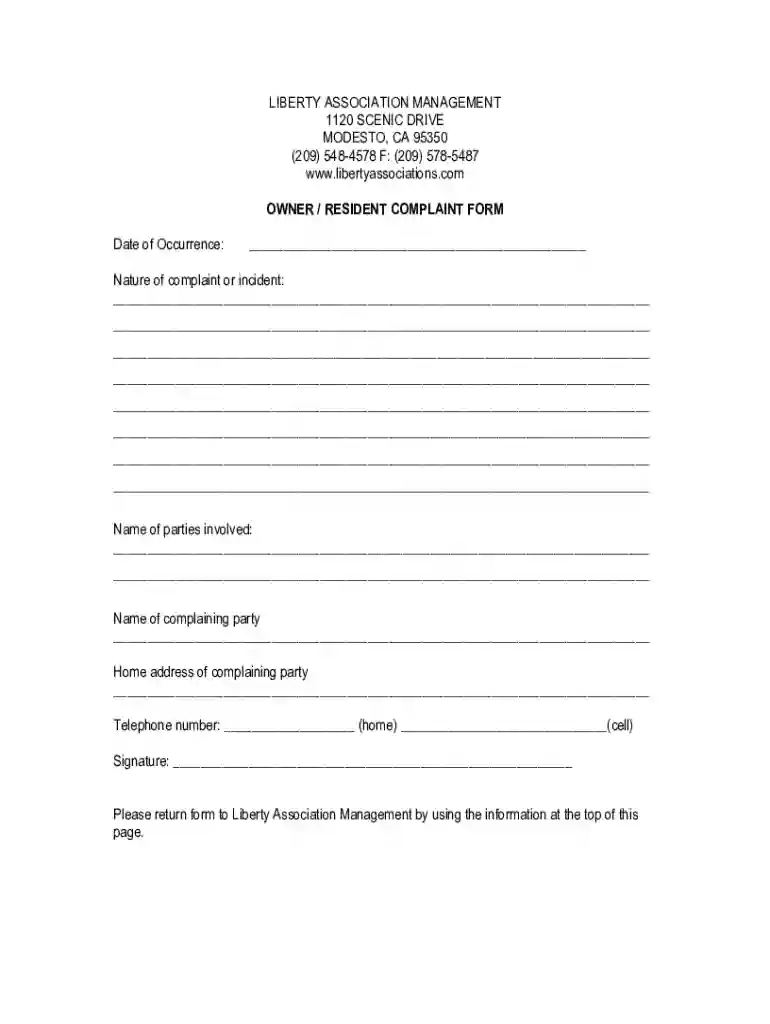
An Owner Resident Complaint Form is a structured document used to formally voice grievances within a residential community. Typically, this form facilitates communication between property owners or residents and management entities such as homeowner associations (HOAs) or property management companies. By detailing the nature of complaints, the form ensures issues are documented thoroughly, enabling timely and appropriate resolutions.
Key Features of the Form
- Complainant Details: Collects the name, address, and contact information of the individual submitting the complaint.
- Nature of Complaint: Provides space for a detailed description of the issue, including specifics about the problem and relevant background information.
- Date of Occurrence: Records when the issue happened, aiding in tracking recurring problems or documenting a timeline.
- Documentation & Evidence: Allows attached documents or evidence supporting the complaint, like photos or previous communications.
How to Use the Owner Resident Complaint Form
Understanding how to effectively use an Owner Resident Complaint Form ensures that your concerns are heard and addressed properly. This involves several specific steps to ensure clarity and completeness.
- Gather Information: Collect all relevant facts, including times, dates, and any individuals involved.
- Document the Issue: Clearly and concisely describe the problem, providing as much detail as necessary to convey the situation.
- Submit Evidence: If possible, attach supporting documentation like photos, emails, or written statements.
- Follow Submission Protocols: Adhere to the guidelines provided by your community or management entity for the submission process.
Tips for Effective Use
- Be Specific: Include exact dates and times to help illustrate the recurring nature of an issue.
- Use Clear Language: Avoid ambiguous terms to ensure your message is understood.
Steps to Complete the Owner Resident Complaint Form
Completing an Owner Resident Complaint Form is a straightforward process, but attention to detail is critical for accuracy and efficacy.
- Fill in Personal Details: Start by providing your full name, address, and contact information to ensure management can reach you for follow-up.
- Detail the Complaint: Describe the issue in the allocated section, referring to specific incidents and any prior communication about the problem.
- Attach Supporting Evidence: Use the attachment options to include additional documentation that substantiates your complaint.
- Sign the Form: Authenticate the form with your signature, confirming the information provided is accurate to the best of your knowledge.
- Submit the Form: Deliver the completed form through the designated method, whether it's online, via mail, or in person.
Common Mistakes
- Incomplete Forms: Ensure every section is filled out, even if details seem redundant.
- Lack of Evidence: Enhanced credibility with supporting documents boosts the likelihood of resolution.
Key Elements of the Owner Resident Complaint Form
Understanding the essential components of the Owner Resident Complaint Form is integral to its successful completion and submission.
Critical Sections to Complete
- Complainant Identification: Ensures that management can contact the individual making the complaint for further discussion or clarification.
- Incident Description: Provides a structured narrative space for documenting the specifics of the complaint.
- Incident Date: Records when the issue began or the most recent occurrence, which helps in problem-solving and prioritization.
Supplemental Documentation
- Photographs/Video: Provide visual evidence that may influence or expedite the investigation process.
- Email Correspondence: Offers a written record of prior communications regarding the complaint or similar issues.
Benefits for Different Users
- For Property Owners: Provides a documented method to address potential violations of property rights or community agreements.
- For Renters: Ensures renter issues are formally acknowledged and tracked for resolution.
Examples of Using the Owner Resident Complaint Form
Real-world applications of the Owner Resident Complaint Form illustrate its utility and provide guidance for proper use.
Case Study Scenarios
- Noise Complaints: A resident uses the form to report excessive noise from a neighboring unit, detailing times and dates and attaching noise recordings.
- Maintenance Issues: An owner documents recurring water leaks in the basement, including photos and past repair invoices.
- Community Rule Violations: A complaint filed against another resident parking unauthorized vehicles in a restricted area, supported by timestamps and photographs.
Legal Use of the Owner Resident Complaint Form
The legal implications of the Owner Resident Complaint Form can significantly impact its processing and resolution.
Compliance Considerations
- Privacy Laws: Ensures the privacy of individuals involved in the complaint, adhering to local and federal privacy regulations.
- Binding Agreements: The form can serve as a record in enforcing provisions of lease agreements or HOA bylaws.
Regulatory Impact
- Residential Standards: Complaints documented through the form can propagate new regulations or enhance community standards if frequently occurring issues are identified and addressed systematically.
State-Specific Rules for the Owner Resident Complaint Form
Documenting residential complaints may vary based on jurisdiction, highlighting the importance of understanding state-specific regulations.
Regional Variations
- California: Emphasizes tenant rights and includes strict guidelines for property management responses.
- New York: Includes rental disputes under broader tenant protection acts, necessitating formal dispute documentation.
Navigating Differences
- Cross-Referencing Local Laws: Always connect with local property or legal authorities to ensure compliance with existing statutes and stipulations.
By understanding and utilizing each of these comprehensive sections, individuals and organizations can ensure effective use and submission of the Owner Resident Complaint Form, promoting accountability, transparency, and resolution within residential communities.