






Definition & Meaning
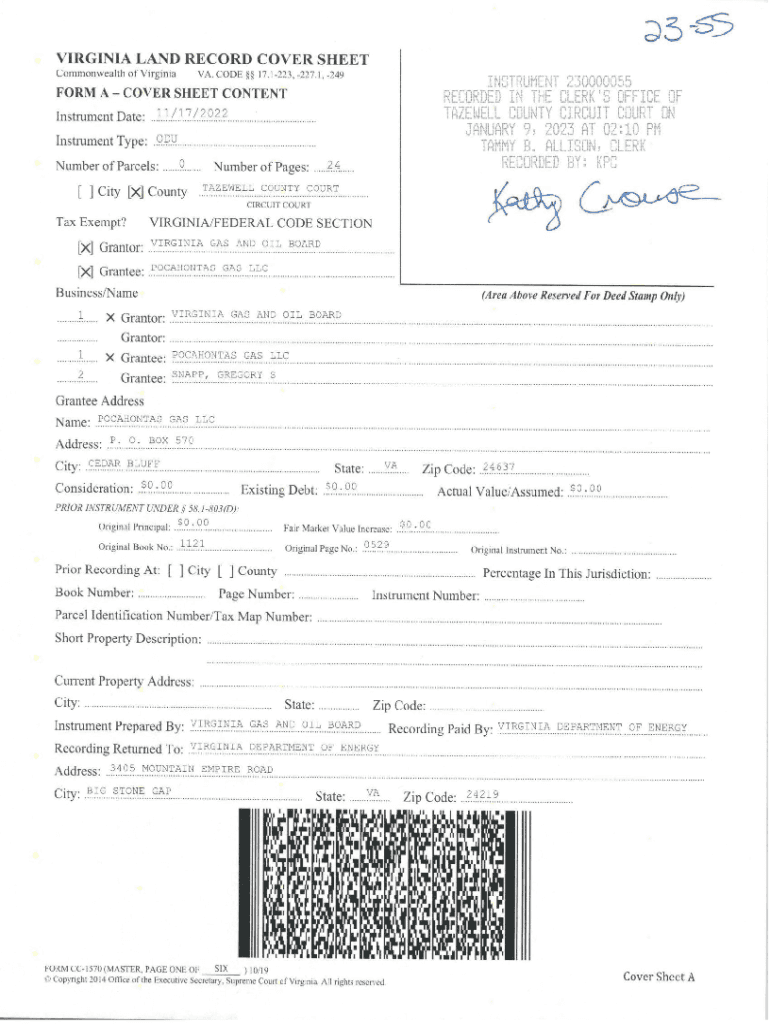
The Virginia Land Record Cover Sheet is an essential form used in the Commonwealth of Virginia to standardize the submission of official documents to circuit courts. It serves as the introductory page that outlines essential details about the documents being recorded, ensuring efficient processing within the legal system. The cover sheet is crucial for streamlining the filing and indexing process of land records, making it a mandatory requirement for transactions involving property deeds, mortgages, and liens. By providing a structured format, it aids clerks in properly categorizing and storing records.
- The cover sheet identifies the type of document being filed and provides a brief description.
- It includes details about the parties involved in the transaction, such as grantors and grantees (i.e., buyers and sellers).
- The sheet establishes foundational clarity by summarizing the document's main content, hence reducing processing time in court offices.
How to Use the Virginia Land Record Cover Sheet
The Virginia Land Record Cover Sheet is user-friendly, but understanding its components is necessary for accurate completion. Here are practical steps and tips for using it effectively:
-
Identify Document Type: Begin by determining the nature of your document – be it a deed, mortgage, or another record. This step influences subsequent entries on the cover sheet.
-
Fill in Document Details: Provide a summary of the document, including the file date, type of record, and any relevant legal descriptions.
-
List Involved Parties:
- Clearly name all parties involved. For deeds, include the grantor and grantee; for mortgages, the mortgagor and mortgagee.
- Ensure accuracy in spelling and contact information to prevent future legal discrepancies.
-
Attach to Main Document: The cover sheet must accompany the primary document. Position it as the first page of your land record submission.
-
Submit for Recording: Once the cover sheet is correctly filled, submit the entire package to the local circuit court’s clerk.
By following these steps, you ensure a smooth filing process and minimize the potential for errors that could delay recording.
Steps to Complete the Virginia Land Record Cover Sheet
Completing the Virginia Land Record Cover Sheet requires attention to detail to ensure records are processed correctly. Here is a detailed guide:
-
Header Information:
- Enter the name of the circuit court and specify the county or city where the document will be recorded. This information is essential for jurisdictional accuracy.
-
Document Identification:
- Provide a concise title of the document.
- If applicable, include any document instructions or identifiers that will assist in the clerk’s processing.
-
Party Details:
- List full names of all parties involved as they appear on the primary document. Ensure alignment with attached records for authenticity.
- Include addresses for each party for communication clarity.
-
Legal Description:
- Insert the legal property description, parcel number, or any designation that correlates directly with the property document.
- Verify with local standards to ensure the description suffices for identification.
-
Contact Information:
- Provide a point of contact, usually the submitter or a legal representative, to handle any queries or issues arising from the submission.
-
Review and Confirmation:
- Before submission, thoroughly review the sheet for any discrepancies or incomplete sections to avoid rejections.
- Confirm that all associated fees for filing are included.
Key Elements of the Virginia Land Record Cover Sheet
Understanding the critical components of the Virginia Land Record Cover Sheet is vital for its successful completion. Each section of the form fulfills a specific purpose, contributing to the document's legality and recording efficiency.
-
Header Information:
- Court and jurisdiction details provide the filing context.
-
Document Specifics:
- Type and title summarize the nature of the record.
-
Party Information:
- Accurate identification of all individuals or entities involved is crucial for legal clarity.
-
Property and Transaction Details:
- Legal descriptions ensure that the property in question is unmistakably identified.
-
Contact for Confirmation:
- Establishes a direct link for communication about the submission.
These elements together facilitate the seamless integration of land records into the official registry, following all Virginia state guidelines.
Why Should You Use the Virginia Land Record Cover Sheet?
Implementing the Virginia Land Record Cover Sheet is essential for several reasons, primarily focusing on enhancing record accuracy and efficiency.
-
Streamline the Filing Process: By condensing document information, the cover sheet enables faster processing times, reducing administrative burdens on clerks.
-
Legal Compliance: Ensures adherence to Virginia's legal requirements for document submission. Non-compliance could lead to delays or rejections of crucial property documents.
-
Record Accuracy: Improves overall accuracy in document filing through a structured approach to detailing critical information, minimizing errors and omissions.
-
Protect Legal Interests: Provides clear representation of facts and parties involved, safeguarding all stakeholders' legal rights.
Embracing the cover sheet is not only a matter of following protocols but also a means to protect one's legal interests by ensuring due diligence in the record-keeping processes.
Legal Use of the Virginia Land Record Cover Sheet
The legal utilization of the Virginia Land Record Cover Sheet is paramount for successful document filings. It governs the correct submission of legal documents affecting property titles.
-
Facilitates Court Processes: The cover sheet provides essential information that facilitates the court's processing efforts, ensuring records are appropriately indexed and retrievable.
-
Document Authentication: Ensures that the recorded document is valid, adhering to state legislation which enhances its legitimacy in legal proceedings.
-
Legal Certainty: By mandating essential information, it minimizes potential disputes or questions about transaction authenticity.
Ultimately, the cover sheet supports both functional and legal purposes by reinforcing the integrity of property transactions within Virginia’s judiciary system.
Important Terms Related to the Virginia Land Record Cover Sheet
Understanding relevant terminology associated with the Virginia Land Record Cover Sheet is useful for proper completion and submission. Here are key terms:
- Grantor/Grantee: Individuals or parties involved in the transaction. The grantor is typically the seller, and the grantee is the buyer.
- Deed: A legal document that represents property ownership.
- Lien: A legal right or interest that a lender has in the borrower’s property, granted until the debt is satisfied.
- Recording: The process of entering a document into public records.
- Parcel Number: A unique identifier assigned to a land piece, essential in locating property records.
Familiarity with these terms enhances the comprehension and execution of the cover sheet’s requirements.
State-specific Rules for the Virginia Land Record Cover Sheet
Virginia imposes specific legal guidelines governing the use of the Land Record Cover Sheet:
- Mandatory Use: Its usage is compulsory for certain documents to be recorded in the circuit courts within Virginia.
- Local Variations: Different counties might have slight adjustments or additional requirements beyond the standard form. Verify with local judicial offices for any variations.
Being aware of these rules ensures that submissions are compliant with state laws, reducing legal risks and potential challenges in recording processes.