



01. Edit your form online
Type text, add images, blackout confidential details, add comments, highlights and more.

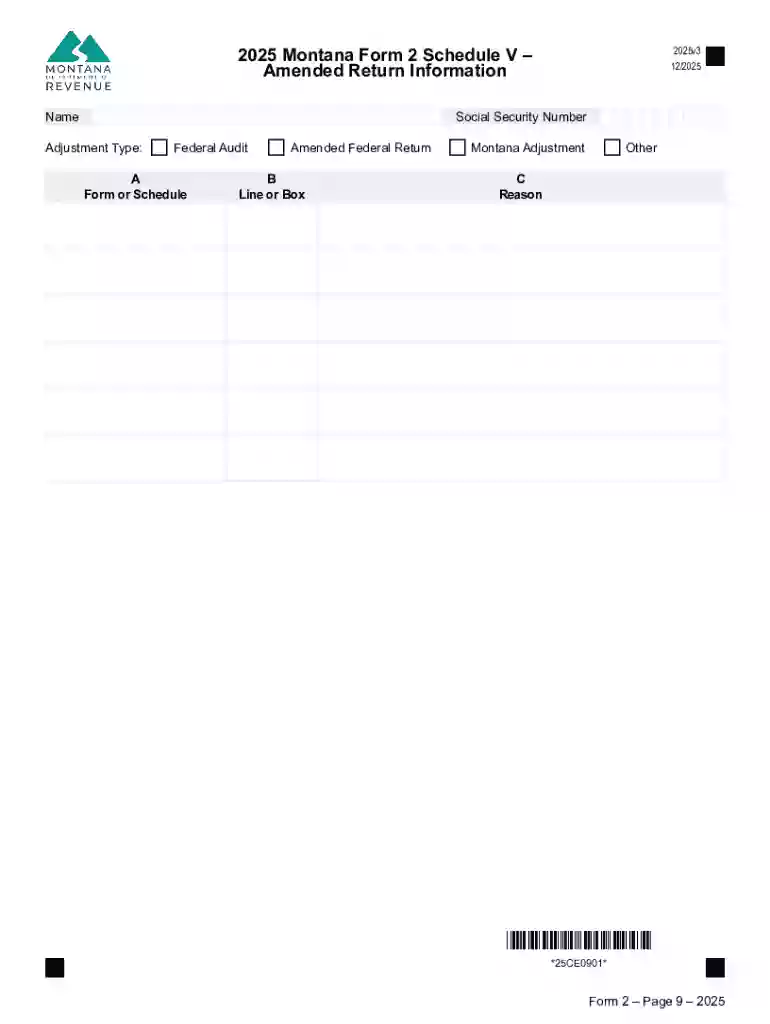
Type text, add images, blackout confidential details, add comments, highlights and more.

Draw your signature, type it, upload its image, or use your mobile device as a signature pad.

Send it via email, link, or fax. You can also download it, export it or print it out.
In Montana, taxpayers may need to file an amended tax return to correct mistakes or update information from previously filed returns. The amended return primarily allows updates for errors in income, deductions, or credits. Individuals who discover discrepancies on their original Montana tax filing should pursue this process promptly to avoid potential penalties.
Obtain the Correct Form: Use the 2025 Montana Form 2 Schedule V for amended returns. Ensure you have the latest version, as previous years' forms may not reflect current rules.
Gather Supporting Documents: You'll need your original return, any new documents, and records related to the changes, like W-2s, 1099s, or corrected financial statements.
Fill Out the Amended Return Form: Start by completing the identification section, then move to the lines where corrections are necessary. Clearly indicate previous amounts and corrected amounts for each line item.
Provide Comprehensive Explanations: On the form, it is crucial to offer clear, concise explanations for each change. This includes adjustments due to a federal audit or other significant alterations affecting your original filing.
File Your Amended Return: Submit your amended return by mail to the Montana Department of Revenue. Ensure you include all supporting documentation to expedite processing and avoid processing delays.
Federal Audit Adjustment: Changes to your tax return made necessary by a federal audit. You may need to amend your state tax return to match these adjustments.
Adjusted Gross Income (AGI): An important figure as it can affect the calculations for state obligations similarly to federal ones.
Correctly using the amended return ensures compliance with state tax regulations. Failure to file an amended return when required can result in penalties or legal action. It's meant to assist in resolving tax discrepancies proactively.
Montana's tax laws have unique implications on amended returns. It is essential to stay updated on any state-specific tax legislation changes that may affect your filing status or obligations.
Not filing an amended tax return when required can result in fines or increased scrutiny from the state. Interest may also accrue on any additional tax owed. It's advisable to act swiftly to minimize such risks.
Income Reporting Errors: If the income reported originally was understated, the taxpayer would need to correct this discrepancy with an amended return.
Claiming Missed Deductions: This could involve overlooked deductions such as medical expenses that exceed the exclusion threshold upon review.
Comprehending Montana's amended return process is crucial for maintaining compliance and addressing discrepancies effectively. This guide serves as your comprehensive resource for navigating the nuances of filing an amended Montana tax return.
At DocHub, your data security is our priority. We follow HIPAA, SOC2, GDPR, and other standards, so you can work on your documents with confidence.



The date prescribed for filing is the original returns due date, excluding extensions. (2) An original return is the Montana Form 2. (3) An amended returnRead more
Use the same form as your original return. Mark the box labeled Mark this box if this is an amended return at the top of the form. Complete the AmendedRead more
The amended returns are filed before the close of the period of limitations on assessments under section 6501(a) for the relevant tax year; and 3.


