






Definition and Meaning
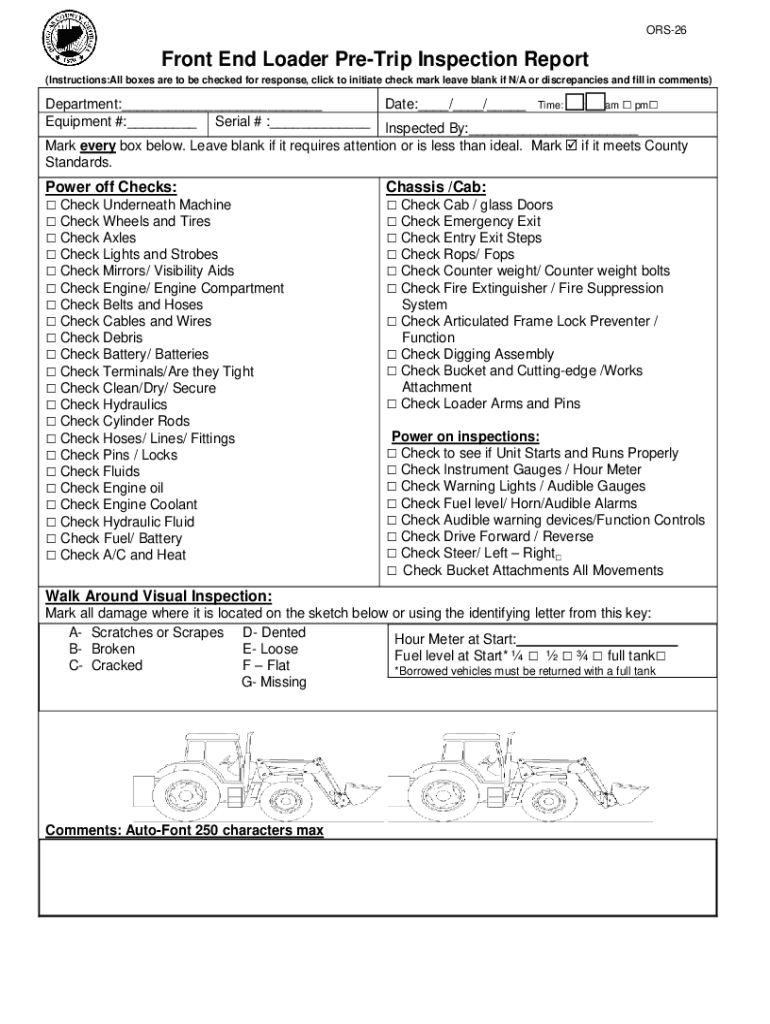
The ORS-26 Front End Loader Pre-Trip Inspection Report is an essential document used in the United States to ensure the safe and efficient operation of front end loaders. This report is filled out prior to operating the equipment, serving as a checklist of inspection items that pertain to the loader's readiness and functionality. The ORS-26 form aims to prevent any operational hazards by mandating a thorough examination of critical components, thereby minimizing the risk of accidents or equipment failure. By adhering to this protocol, operators contribute to a safer working environment and maintain compliance with industry standards.
How to Use the ORS-26 Front End Loader Pre-Trip Inspection Report
The ORS-26 report is designed to be user-friendly and systematic, guiding operators through a comprehensive inspection of their equipment. To use the form effectively:
- Begin with Identification: Record the loader's serial number, model, and department responsible for the inspection.
- Check Systems: Inspect key systems such as brakes, engine, hydraulics, and steering for any signs of wear or malfunction.
- Visual Inspection: Conduct a thorough visual check for any physical damages or fluid leaks.
- Operation Test: Start the loader and test its functions, including lights, horn, and alarms.
- Document Discrepancies: Note any issues in the appropriate section, providing detailed comments and recommendations.
- Sign Off: Once completed, the operator should sign the report and submit it as instructed, typically to a supervisor or safety officer.
Steps to Complete the ORS-26 Front End Loader Pre-Trip Inspection Report
Completing the ORS-26 Report requires attention to detail and an understanding of the loader's operational mechanisms. Here are detailed steps to guide the process:
- Preparation: Ensure you have access to the ORS-26 form and necessary tools for inspection. Familiarize yourself with each section of the form.
- Physical Inspection:
- Check the tires for proper inflation and any visible damage.
- Inspect the undercarriage for leaks or damage.
- Confirm that all safety guards are in place and undamaged.
- Functional Checks:
- Test hydraulic systems by raising and lowering the bucket.
- Verify brake function by conducting a slow-motion stop.
- Confirm steering responsiveness and fluid levels.
- Report Findings:
- Document any irregularities found during the inspection.
- Mark each section as "Pass," "Fail," or "Not Applicable" as appropriate.
- Operator Signature: Conclude the inspection with your signature, verifying the completion and accuracy of the report.
Key Elements of the ORS-26 Front End Loader Pre-Trip Inspection Report
The ORS-26 report is structured to cover several critical aspects of the loader's operation:
- Identification Section: Includes fields for the loader model, serial number, and department, ensuring traceability and accountability.
- Inspection Checklist:
- Engine and Hydraulics: Confirm that engine oil levels are adequate and hydraulic systems are leak-free.
- Safety Features: Ensure that seat belts, backup alarms, and lighting systems are operational.
- Operational Controls: Validate that pedals, levers, and buttons function correctly.
- Comments Section: Allows operators to provide detailed notes on any identified issues, facilitating maintenance work orders.
Who Typically Uses the ORS-26 Front End Loader Pre-Trip Inspection Report
This report is primarily used by equipment operators, safety officers, and maintenance personnel.
- Operators: Conduct daily inspections to fulfill legal and company obligations for safety.
- Safety Officers: Review these reports to identify patterns or trends that may indicate larger safety concerns.
- Maintenance Staff: Use the report to prioritize repairs and ensure that all deficiencies are addressed promptly.


Benefits of Using the ORS-26 Front End Loader Pre-Trip Inspection Report
Some of the key benefits include:
- Enhanced Safety: Early detection of potential faults mitigates the risk of accidents.
- Efficiency: Streamlines maintenance efforts by highlighting areas needing attention.
- Compliance: Meets legal and corporate requirements for equipment checks.
- Record Keeping: Provides a historical record of equipment condition and inspections.
Legal Use of the ORS-26 Front End Loader Pre-Trip Inspection Report
The ORS-26 report is part of regulatory compliance within occupational safety frameworks in the U.S. The legal implications include:
- Workplace Safety Compliance: Ensures adherence to OSHA regulations, which mandate regular equipment inspections.
- Liability Protection: Documented inspections can protect organizations from liability claims in event of an accident.
Examples of Using the ORS-26 Front End Loader Pre-Trip Inspection Report
In practice, the ORS-26 report can be utilized in various scenarios:
- Construction Sites: Used to certify loaders before they engage in daily operations.
- Mining Operations: Implements rigorous inspection procedures for safety-critical equipment.
- Municipal Services: Ensures that city-operated machinery is safe for public works.
These examples illustrate the broad application of the ORS-26 report across different industries, highlighting its critical role in promoting safe operations.