






Definition and Meaning of DBPR HR-7030 Division of Hotels and Restaurants
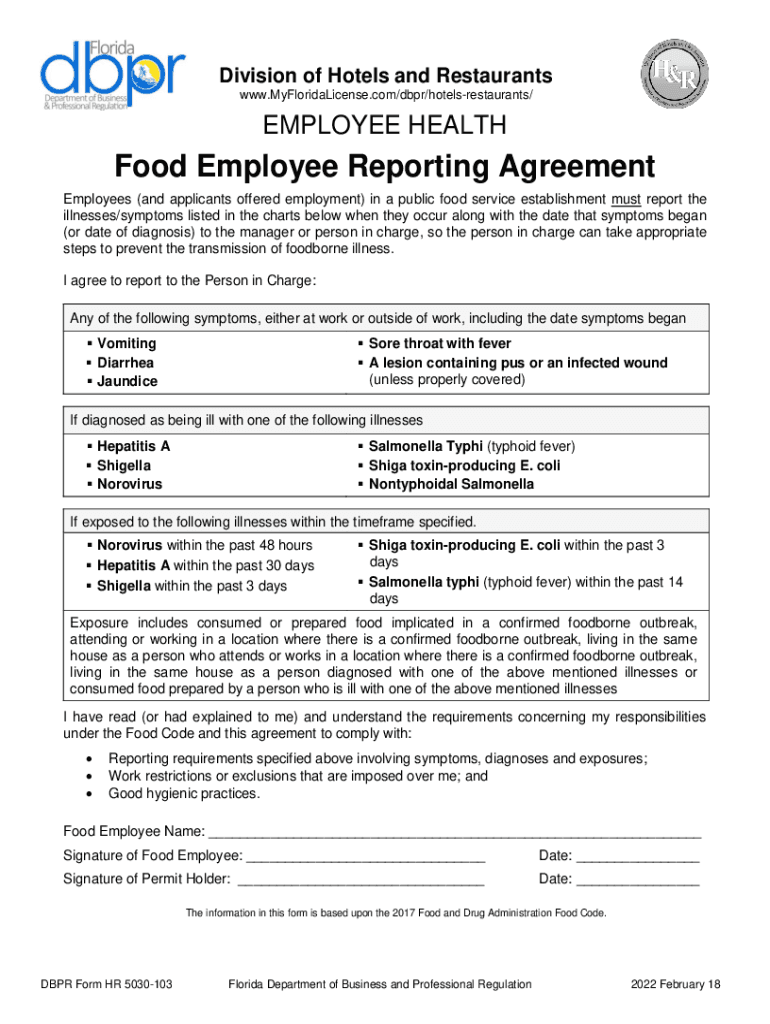
The DBPR HR-7030 form is a crucial document issued by the Florida Department of Business and Professional Regulation's Division of Hotels and Restaurants. It serves as a health and safety compliance agreement for employees working in Florida's public food service sector. The form is a formal pledge by the employees to adhere to stringent health standards, ensuring the safety and well-being of patrons and the compliance of establishments with state regulations.
Key Components of the Form
- Employee Commitments: Employees agree to follow hygienic practices, report health issues, and understand the implications of non-compliance.
- Employer Responsibilities: Outlines the employer's duty to educate staff about public health standards and maintain compliance documentation.
- Legal Framework: Details the state laws and regulations governing public food services and how they pertain to employees.
Steps to Complete the DBPR HR-7030 Division of Hotels and Restaurants
Filling out the DBPR HR-7030 form involves a systematic approach to ensure accuracy and compliance with state regulations.
- Acquire the Form: Retrieve the DBPR HR-7030 form from the official Division of Hotels and Restaurants website or through the employer.
- Personal Information Section: Fill in personal details, including name, contact information, and employment details.
- Health Declaration: Check the boxes corresponding to health declarations, affirming understanding and commitment to health protocols.
- Review and Sign: Carefully review all sections for accuracy before signing. Employee signature signifies agreement to adhere to specified health standards.
- Submission: Submit the document to the employer or as directed by the company policy.
Common Mistakes to Avoid
- Incomplete Information: Every field is mandatory; avoid leaving sections blank.
- Inaccurate Health Declarations: Honest health disclosures are essential for workplace safety.
Importance and Benefits of Using the DBPR HR-7030 Division of Hotels and Restaurants
The DBPR HR-7030 form is not merely a bureaucratic requirement; it plays a significant role in maintaining high standards in the food service industry.
- Public Health Safety: Ensures preventive measures are in place to protect food consumers from health risks.
- Regulatory Compliance: Helps businesses and employees align with Florida's legal requirements, mitigating risks of fines or closure.
- Trust and Reputation: Companies demonstrating strong health compliance can bolster their reputation and build consumer trust.
Important Terms Related to DBPR HR-7030 Division of Hotels and Restaurants
Understanding key terminology associated with the DBPR HR-7030 form is crucial for both employers and employees.
- Public Food Service Establishments: Facilities that provide food to the public, including restaurants, cafes, and food trucks.
- Health Declaration: A statement affirming the employee’s health status and commitment to health protocols.
- Non-Compliance Consequences: Potential legal actions or fines for failing to adhere to health and safety regulations.
State-Specific Rules for the DBPR HR-7030 Division of Hotels and Restaurants
Florida enforces specific regulations that businesses and employees must follow, with the DBPR HR-7030 form acting as a key component in the compliance process.
- Mandatory Training: Employers are required to offer training sessions on health and safety standards.
- Regular Health Monitoring: Employees must undergo regular health checks and report any conditions that may compromise food safety.
- Documentation and Reporting: Businesses must maintain updated records of completed forms and report any incidents promptly.
Legal Use of the DBPR HR-7030 Division of Hotels and Restaurants
Compliance with the DBPR HR-7030 form isn’t just a company policy; it has specific legal implications.
- Enforcement by Law: The Division of Hotels and Restaurants possesses the authority to impose penalties on establishments that fail to comply.
- Employee Rights: Protects employees by ensuring they work in a safe environment with fair health practices.
- Employer Obligations: Legally binds employers to educate and uphold health standards within their operations.
Examples of Using the DBPR HR-7030 Division of Hotels and Restaurants
Real-world applications of the DBPR HR-7030 show its importance in the food service industry.
- Case Studies: Restaurants implementing the form reduced incidents of foodborne illnesses significantly after integrating compliant health monitoring processes.
- Implementation Scenarios: Fast-food chains utilize the form as part of their onboarding process to emphasize commitment to public health from the start of employment.
Digital vs. Paper Version of the DBPR HR-7030 Division of Hotels and Restaurants
In today's digital age, the option between paper and digital forms has broadened how businesses manage compliance documents.
- Accessibility: Digital forms are easily accessible and can be completed and signed electronically, making them efficient for broad use.
- Record-Keeping: Digital records are easier to store and retrieve, reducing paperwork and physical storage requirements.
- Environmental Impact: Digital versions contribute to less paper waste, aligning with sustainable business practices.