






Definition & Meaning
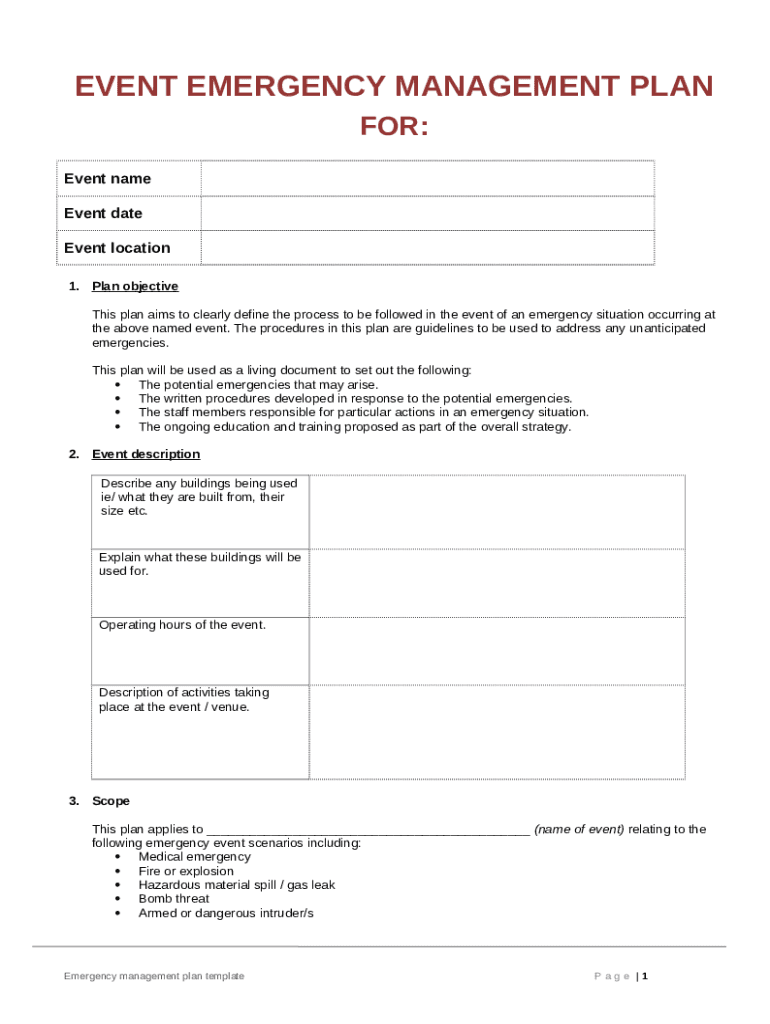
The "Event Management Plan Template example" is a structured guide used to design and execute successful events. It serves as a comprehensive tool for event organizers to outline every critical aspect of an event, from logistical planning to risk management. The template facilitates meticulous planning and ensures that all components of the event are addressed, enabling efficient management and execution. By utilizing this template, organizers can achieve consistency across multiple events, streamline communication among team members, and ensure compliance with regulations.
Sample Components Found in an Event Management Plan Template:
- Event objectives and goals
- Detailed budget estimates
- Venue and logistics planning
- Risk management and emergency preparation
- Marketing and communication strategies
- Scheduling and timelines
Key Elements of the Event Management Plan Template example
The Event Management Plan Template includes several essential components that serve as the foundation for efficient event planning and execution. Understanding each element can significantly boost the success of your event.
Essential Components:
- Event Details: A section covering the event name, date, location, and description. This segment provides a snapshot of the event in question.
- Scope and Objectives: Clear objectives are set to guide the planning team and measure success. Specific goals provide direction and facilitate decision-making.
- Budget Overview: A detailed budget planner, including estimated expenses and projected income. This helps in avoiding financial miscues and aligning the budget with objectives.
- Logistics and Operations Plan: Covers venue arrangements, transport, accommodation if applicable, and resource allocation. Ensures smooth execution of various event aspects.
- Risk Assessment: Identifies potential risks and outlines strategies to mitigate them. This ensures preparedness in case of emergencies.
Steps to Complete the Event Management Plan Template example
Completing the Event Management Plan Template involves a series of steps that guide the planner through all necessary details, ensuring no aspect is overlooked. The process typically follows:
- Define Event Objectives: Start by succinctly stating the purpose and goals of your event. This provides a foundation for the planning process.
- Create a Budget: Develop a comprehensive financial plan that accounts for all anticipated costs and revenues.
- Select a Venue: Choose an appropriate location that meets the needs of your event and confirm availability.
- Plan Logistics: Address the logistical considerations, including transportation, equipment rental, and staff requirements.
- Develop a Marketing Plan: Outline strategies for promoting your event to target audiences.
- Prepare Emergency Plans: Establish protocols for handling potential emergencies, aligning with local regulations and guidelines.
Who Typically Uses the Event Management Plan Template example
The Event Management Plan Template is widely utilized by various professionals involved in the organization and execution of events. Understanding who uses this template can provide insights into its practical applications.


Primary Users:
- Event Planners: Professionals responsible for conceptualizing and executing various types of events, from corporate gatherings to social functions.
- Marketing Teams: Professionals who integrate event plans into larger marketing strategies to boost brand engagement.
- Venue Managers: Individuals coordinating logistics and facilities to ensure events run smoothly.
- Project Managers: Professionals overseeing the event planning process, ensuring all tasks are executed on time and within scope.
Legal Use of the Event Management Plan Template example
Legal considerations play a crucial role in the development and execution of an Event Management Plan. Ensuring compliance with legal requirements minimizes risks and fosters a smooth execution.
Legal Considerations:
- Permits and Licenses: Confirm all necessary permits and licenses have been obtained for the event location and activities.
- Contractual Obligations: Ensure all contracts with vendors, sponsors, and stakeholders are legally binding and clearly defined.
- Health and Safety Regulations: Adhere to local laws and regulations regarding health and safety to protect all participants.
- Insurance Requirements: Obtain adequate insurance coverage to mitigate risks and safeguard all aspects of the event.
State-Specific Rules for the Event Management Plan Template example
When planning events within the United States, liaising with state-specific regulations helps avoid legal complications and enhances the event's success.
State Variations:
- Licensing Requirements: Different states may have specific licensing mandates for public gatherings, especially those involving alcohol distribution.
- Noise and Sound Ordinances: States or cities might have specific regulations regarding permissible sound levels during events.
- Crowd Control Guidelines: Regulations can vary concerning crowd size and control measures, requiring planners to be aware of state-specific demands.
- Emergency Protocols: State-by-state variation in emergency response requirements may influence standard operating procedures for events.
Examples of Using the Event Management Plan Template example
Examples provide practical insights into successfully using the Event Management Plan Template to achieve desired outcomes.
Event Scenarios:
- Corporate Conferences: Using the template to meticulously plan speaker schedules, attendee logistics, and networking sessions.
- Weddings: Employing the template for everything from vendor management to ensuring seamless transitions between ceremony and reception.
- Festivals: Utilizing the plan for comprehensive management of multiple stages, food vendors, security staff, and crowd control.
- Fundraising Galas: Leveraging the template to coordinate donor registration, auction logistics, and post-event follow-up.
Software Compatibility
Software compatibility plays a pivotal role in managing and executing an Event Management Plan seamlessly. Integrating technological tools boosts productivity and collaboration.
Compatible Software:
- Project Management Tools: Platforms like Trello or Asana sometimes support the integration of event planning templates to enhance task allocation and oversight.
- Document Management Systems: DocHub and similar platforms can be employed for document sharing and approval processes directly related to event management.
- Budgeting Software: Using financial applications like QuickBooks can help manage the financial aspects of the event plan, ensuring budget adherence.
- Communication Software: Tools such as Slack or Microsoft Teams can enhance team communication, ensuring all participants are informed and aligned.