






Definition and Meaning
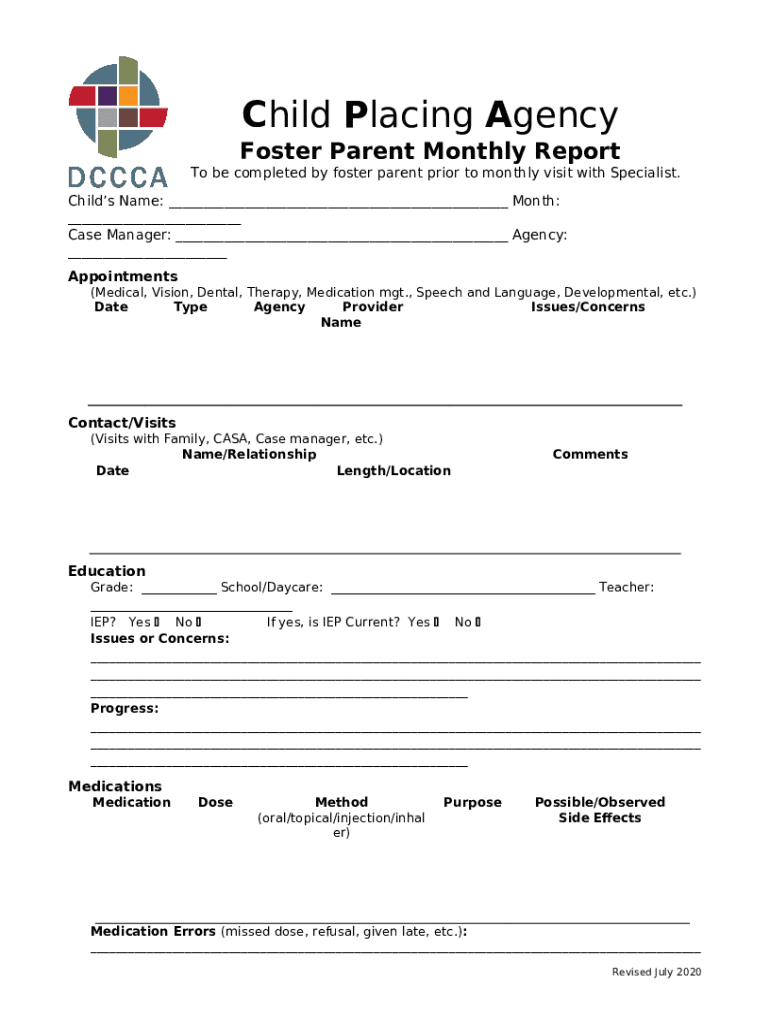
The "Foster Family Monthly Visit Report for Child" is a structured document intended to capture vital information about a child's well-being and activities during each month in foster care. It serves as a critical tool for communication between foster parents and social workers, ensuring that the child's needs are being met. The report typically includes details about the child's health, education, and emotional development, providing insights that support the continued care and monitoring of the child's progress and adjustment in their foster environment.
Detailed Purpose
- Health Monitoring: Evaluates the child’s physical health, including any medical appointments and treatments.
- Education Progress: Tracks the child’s academic performance and school attendance.
- Emotional and Social Development: Reports on interactions with peers and emotional behaviors observed during the month.
- Safety and Well-Being: Assesses the child’s environment to ensure their safety and overall well-being.
How to Use the Foster Family Monthly Visit Report for Child
Foster parents can utilize this report as a detailed record of the child's life and milestones over the past month. It serves various purposes, such as providing structured feedback to social workers and aiding in the child's care plan adjustments.
Key Steps in Usage
- Documentation: Begin by compiling all relevant information regarding the child's activities, health, and development over the past month.
- Feedback Integration: Include insights obtained from educational institutions and healthcare providers to enrich the report's content.
- Review Process: Foster parents should review the report collaboratively with the case manager to ensure comprehensive coverage.
Steps to Complete the Foster Family Monthly Visit Report for Child
Completing this report involves systematic collection and documentation of a month’s worth of data regarding the child’s activities and well-being.
Comprehensive Instructions
- Basic Information: Fill in the child’s name, foster parent's name, and case manager information.
- Health Section: Document all medical, dental, and vision appointments, including any health issues or changes.
- Education Section: Record academic performance, school attendance, and any notable achievements or concerns.
- Behavioral Observations: Note any changes in behavior or emotional responses that indicate the child’s adaptation and development.
Key Elements of the Foster Family Monthly Visit Report for Child
The structure of the report ensures that all critical areas are covered comprehensively to provide an accurate picture of the child’s status in foster care.
Main Components
- Personal Information: Includes names and relevant dates to keep the report organized.
- Health and Appointments: Tracks medical history and appointments.
- Educational Progress: Assesses the child’s work and extracurricular involvement.
- Behavior Assessment: Observes emotional and behavioral development.
- Social Interactions: Describes relationships with peers and adults.
Legal Use of the Foster Family Monthly Visit Report for Child
The report is a legal document that aids in ensuring compliance with child welfare laws and standards. It plays a pivotal role in the ongoing assessment and safety planning for the child.
Legal and Compliance Aspects
- Data Protection: Ensures confidentiality of the child’s personal information.
- Accurate Reporting: Maintains an accurate and honest record of the child's month-to-month progress.
State-Specific Rules for the Foster Family Monthly Visit Report for Child
While the report serves a universal purpose, state-specific regulations may influence how foster care agencies implement and manage these reports.
Variations in Procedures
- State Guidelines: Each state may have distinct requirements for the format and content of the report.
- Submission Requirements: Differences exist in how the document must be submitted and reviewed.
Examples of Using the Foster Family Monthly Visit Report for Child
The practical application of the report includes using it as a tool to facilitate meetings with social workers or as evidence in legal proceedings related to foster care assessments.
Practical Scenarios
- Case Evaluations: Utilized during reviews with social workers to discuss the child’s needs and future planning.
- Legal Disputes: Can serve as documentation in court-related proceedings to advocate for the child’s best interests.
Who Typically Uses the Foster Family Monthly Visit Report for Child
This report is primarily used by foster parents, social workers, and child welfare agencies to ensure all parties are informed about the child’s care and development.


User Roles
- Foster Parents: Document daily observations and experiences with the child.
- Social Workers: Use the report to assess the child’s situation and make informed decisions.
- Agencies: Utilize the gathered information to track outcomes and maintain compliance with child welfare policies.
Required Documents
Several documents and pieces of information should accompany the completion of the monthly visit report to provide a holistic view of the child's current circumstances.
Essential Documentation
- Medical Reports: Include recent visit summaries from healthcare providers.
- Academic Records: Attach school reports and any relevant teacher feedback.
- Behavioral Assessments: Provide any notes or reports from psychological evaluations.
Important Terms Related to Foster Family Monthly Visit Report for Child
Understanding key terminology is crucial for accurately completing and interpreting the report.
Key Definitions
- Case Manager: A professional responsible for overseeing the care provided to the child.
- Foster Parent: The individual or couple providing a home to the child through foster care.
- Emotional Development: An area of focus in the report assessing the child's emotional growth and stability.