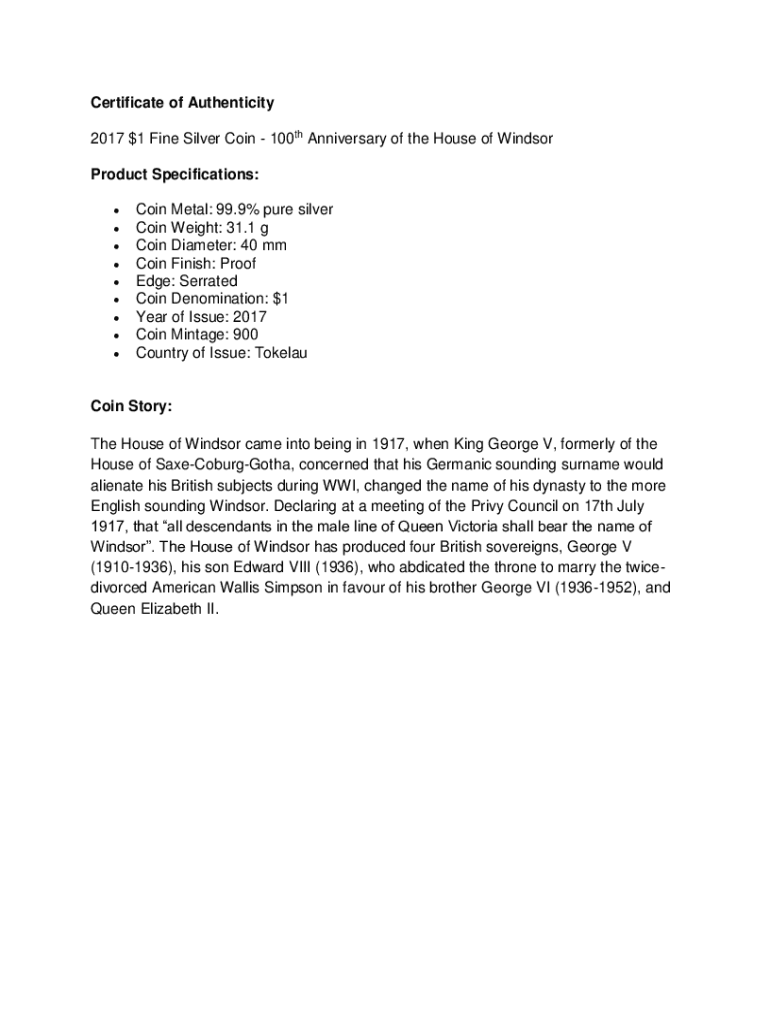







Definition & Meaning
The Certificate of Authenticity for the 2017 $1 Fine Silver Coin serves as a formal document verifying the coin's legitimacy and specified attributes. This certificate includes crucial details such as the coin's metal composition, weight, diameter, finish, and mintage. Created to authenticate the commemorative coin for the 100th Anniversary of the House of Windsor, the certificate provides collectors and investors with assurance of their coin's authenticity. Understanding its purpose is essential for anyone interested in numismatics, ensuring that the coin meets genuine standards as a valuable collector's item.
Key Elements of the Certificate
The Certificate of Authenticity encompasses several key elements that provide full disclosure of the coin's characteristics:
- Metal Composition: Details the specific metals used in crafting the coin, highlighting its value.
- Weight: Specifies the coin's weight, confirming it meets the standards for fine silver coins.
- Diameter: Indicates the coin's size, allowing for proper categorization.
- Finish: Describes the coin's surface quality, which contributes to its aesthetic appeal.
- Mintage: Reports the total number of coins produced, influencing its rarity and value in the market.
How to Use the Certificate
Utilizing the Certificate of Authenticity involves understanding its role in the verification process:
- Verification: Use the certificate to verify the authenticity and specifications of the coin before purchase.
- Resale: Present the document when selling to assure buyers of the coin's authenticity.
- Insurance: Employ the certificate as part of documentation necessary for insuring the coin.
- Collection: Include it in your collection record to maintain comprehensive details about each coin.
How to Obtain the Certificate
Acquiring the Certificate of Authenticity generally occurs through the initial purchase of the coin. Retailers or mints typically provide the document alongside the sale of the 2017 $1 Fine Silver Coin. If misplaced, owners may request a duplicate from the issuing mint, though proof of purchase may be required. Collectors should always ensure that the certificate accompanies the coin to preserve its integrity and value.
Steps to Complete the Certificate
Completing the Certificate of Authenticity involves verifying the information provided and ensuring its proper storage:
- Examine Details: Review the certificate for accuracy, confirming all details match the coin in possession.
- Secure Storage: Keep the certificate in a safe location, ideally with the coin, to prevent loss or damage.
- Document Any Changes: Note any significant changes, such as ownership transfer, and update records accordingly.
Who Typically Uses the Certificate
The primary users of the Certificate of Authenticity include:
- Coin Collectors: Individuals who collect coins for personal interest or investment.
- Investors: Those purchasing coins as a financial asset, requiring verification for valuation.
- Dealers: Retailers and dealers in numismatics who authenticate and resell coins to collectors.
- Appraisers: Professionals who assess the value of coins for insurance or resale purposes.


Legal Use of the Certificate
The Certificate of Authenticity serves various legal purposes:
- Verification of Value: Provides evidence during transactions, such as sales or estate evaluations, to confirm the coin's worth.
- Ownership Transfer: Acts as supporting documentation in legal transfers of ownership.
- Insurance Claims: Facilitates insurance claims by substantiating the legal ownership and valuation of the coin.
Important Terms Related to the Certificate
Understanding related terminology is crucial for effectively using the certificate:
- Mintage: The number of coins produced; influences rarity.
- Commemorative Coin: A coin issued to honor a significant event or anniversary.
- House of Windsor: The British royal house, commemorated by the coin.
- Authentication: The process of verifying the coin as genuine.
- Certificate Holder: The individual or entity currently possessing the authenticated coin.